
by Ahmed al-Saeed
CAIRO, May 30 (Xinhua) — When people ask why someone like me, an Egyptian, has spent so many years translating Chinese books, I could offer a tidy answer: I studied the language, lived in China, worked in publishing, and translation is part of my profession.
But life is rarely about neat plans. It is more often about chance encounters between people, between places, and sometimes between civilizations. Reflecting on my journey, I realize I did not choose this path the way one selects a job. It formed gradually beneath my feet as I walked.
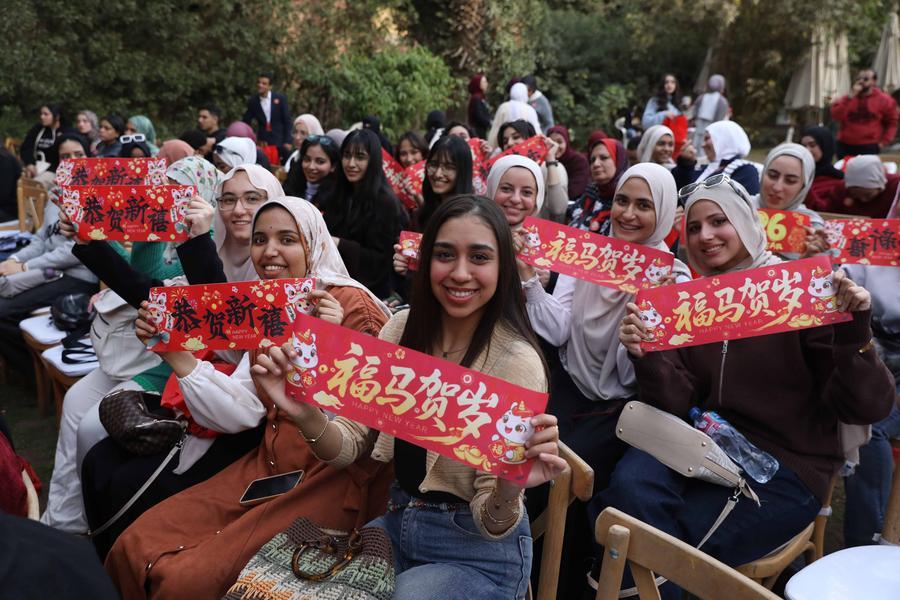
I began studying Chinese at Al-Azhar University in Cairo in the early 2000s. At the time, China still felt distant and unfamiliar to many Arabs, and was often associated with cheap goods and an impenetrable language. Chinese literature and philosophy were rarely discussed, and fewer still could imagine a future in which Arabs would seriously engage with Chinese texts.
As a young student, I resisted a narrow view of language. To me, it was never merely a tool for transactions; it was a doorway into an entirely different worldview. My early exposure to Chinese culture was limited to the textbook figures, such as Lu Xun and Ba Jin. The real turning point came later, when I traveled to China and began reading out of curiosity rather than obligation.
One of the first works that truly resonated with me was a simple literary magazine called The Reader. It contained short reflections on family, memory, work, and daily life — nothing grand or ideological, just quiet fragments of human experience. I remember reading it on a train and realizing, for the first time, that Chinese was no longer merely a system of characters and tones. It was a living voice. A human voice.
That moment transformed my relationship with the language. Chinese ceased to be an academic subject and became a cultural experience. I entered literature no longer as a student fulfilling requirements, but as a reader searching for meaning.
I was drawn to writers like Liu Zhenyun, Wang Xiaobo, Su Tong, and Mo Yan. From small towns and quiet tragedies to absurd situations and enduring dignity, each revealed a distinct facet of Chinese society. They spoke not in slogans, but of ordinary lives.
Slowly, through these works, I came to understand that China was not only an economic miracle or an ancient civilization. It was also a living, complex society shaped by contradictions, humor, and resilience. From that understanding, the foundation of my translation work emerged: translation is not simply the transfer of words. It is the transfer of experience.
When I arrived in China over a decade ago, the world was shifting. China was rising economically and seeking a broader cultural presence, while the Arab world was searching for stability and direction. China needed a cultural voice in the Arab world, and the Arab world needed to see China beyond its stereotypes. I found myself standing at that intersection.
Our early publishing efforts were modest, with small print runs. Bookstores were indifferent, and readers were curious yet hesitant. Many asked: Why read Chinese books? What could they possibly teach us? At that time, China remained a distant presence in the Arab imagination.
But history moved quickly. Chinese companies became visible in Arab cities; tourism and diplomacy expanded. Curiosity slowly deepened into genuine interest.
Today, I receive messages from readers across more than 20 Arab countries — students, entrepreneurs, and people who simply want to understand how a once-poor nation transformed itself into a global power while preserving its cultural continuity. Each message feels like a quiet victory, not for me, but for the idea of translation itself.
Through this work, I discovered how deeply ideas are rooted in history. Words that appear simple often carry centuries of accumulated meaning. Take “development”: in many Western contexts, it suggests growth rates and efficiency. In much Chinese writing, it is bound up with stability, harmony, gradual reform, and social balance. The same word exists, but the philosophies diverge.
Translating both literary and political texts, I often felt I was moving between two distinct historical experiences. Like many developing nations, Egypt bears the scars of colonialism and interrupted modernization. China, too, has endured humiliation and poverty, but it charted its own course of recovery. Between the lines of Chinese texts, I sensed a quiet message: there is no single road to modernity.
That idea carries immense weight for Egypt and the broader Global South. For decades, we were told there was only one model of success: follow, you rise; reject, you fall. The Chinese experience suggests otherwise. Each country must find a path rooted in its own history and culture. Borrow tools, yes. Learn from others, yes. But do not borrow someone else’s destiny.
For many readers of my translation, Chinese texts offer a rare non-Western perspective on governance and development — one that does not claim universal solutions, but insists on the sovereignty of experience and each nation’s right to forge its own path.
As I translated these ideas, I found myself thinking about Egypt more than China. Chinese texts became a mirror, reflecting questions back at me: What does development mean for us? What kind of modernity suits our society? What must we preserve, and what must we allow to change? Translation had become something more than a profession. It had become a long, unfinished conversation with myself.
Born and raised in Egypt, I discovered through translation a second home of thought: one defined by patience, balance, and a long historical vision. China became, for me, a school of thinking and a reminder that different civilizations should not be forced into identical paths.
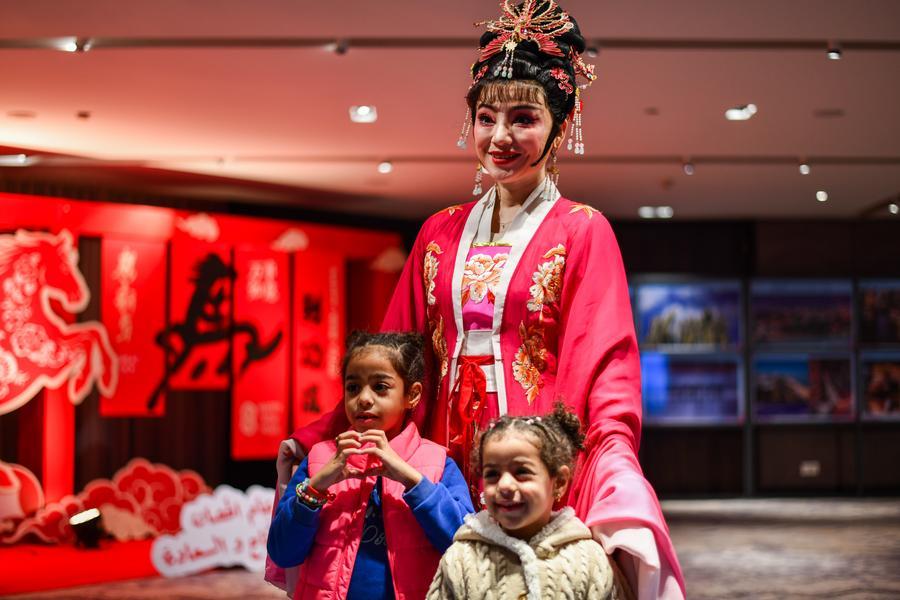
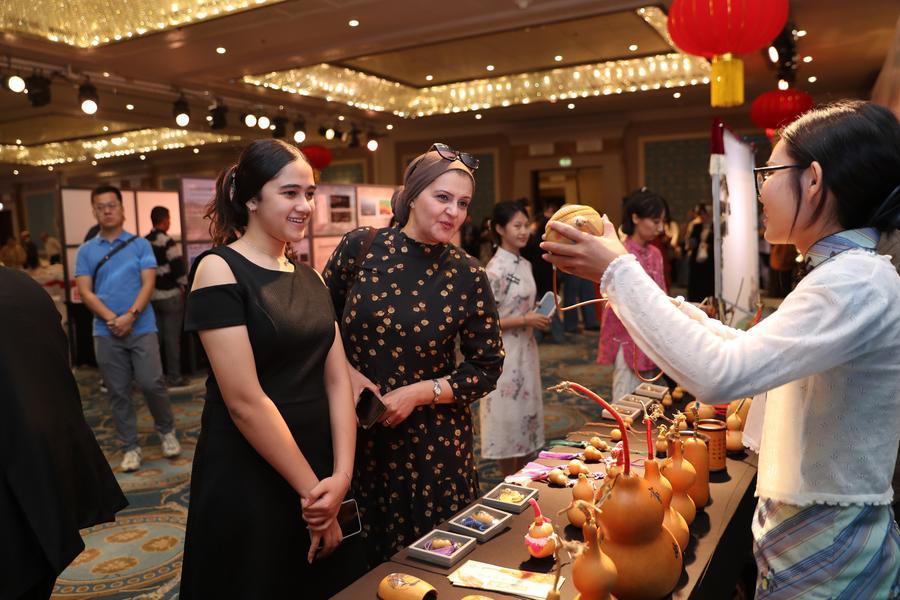
Over time, my sense of the relationship between Egypt and China deepened. These are not simply two states signing agreements. They are ancient civilizations that have survived millennia of upheaval. When an Egyptian reader opens a Chinese book in Arabic, something more than reading takes place. It is a conversation between the Nile and the Yellow River, between pyramids and pagodas — two long historical memories recognizing one another across time.
After years of translation, I no longer view cultures as isolated worlds. I see them as chapters in a shared human story — different scripts, different languages, but bound within the same book. Translation has taught me that humility and wisdom carry no passport. A sentence penned 2,000 years ago in another tongue can still comfort a reader on the other side of the world.
Above all, it has taught me this: humanity does not advance through the triumph of one civilization over another, but through the patient conversation between them.
That is why I translate Chinese works into Arabic. Not because I am Egyptian. Not because the books are Chinese. But because somewhere between the two lies a road that belongs to all of us. And someone must quietly keep that road open.
Editor’s note: Ahmed al-Saeed is an Egyptian sinologist, chairman of Bayt Al-Hekma Cultural Group in Egypt.■