
Improving train safety in Indonesia: measures to be taken quickly

Greater Jakarta is once again in mourning after a major train disaster that underscores the glaring obsolescence of the infrastructure and the fatal recklessness of many passengers.
 Last Tuesday evening, a collision of unprecedented violence occurred when an express train traveling from Jakarta to Surabaya crashed head-on into a stationary commuter train, despite instructions from the operator Kereta Api Indonesia (KAI) to regulate traffic.
The impact was particularly devastating at the rear of the train, obliterating the women’s carriage and leaving a tragic toll of 15 dead and more than 80 injured.
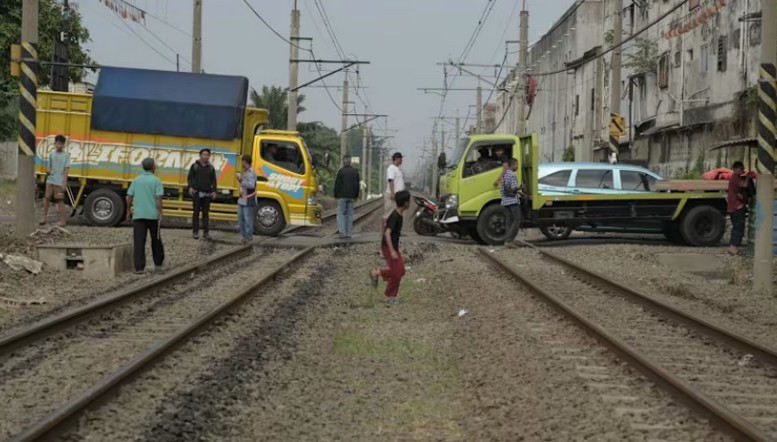
This tragedy has reignited the debate about the dangers of level crossings, where the sight of vehicles forcing their way through barriers, ignoring horns and rail vibrations, is a deadly daily occurrence.
 Faced with the outrage of human rights groups, President Prabowo Subianto has pledged to begin the gradual elimination of these critical crossing points throughout the country.
For experts, the solution can only be structural: it requires the physical separation of tracks for long-distance express trains and commuter rail networks, as well as massive investment in the construction of bridges and tunnels.
Furthermore, the ministerial proposal to move women-only carriages to the middle of trains for better protection in the event of a frontal or rear-end collision is generating technical debate, with specialists fearing major logistical complications during emergency evacuations.
In 2026, this tragedy compels Indonesia to translate its promises into concrete projects so that the railways cease to be a constant source of risk.
It’s a common sight at many level crossings in Greater Jakarta: cars, motorcycles, and trucks accelerate instead of slowing down when the barriers are lowered and the warning bells signal the approach of a train.

