
Welcome to Foreign Policy’s South Asia Brief.
The highlights this week: Indian National Security Advisor Ajit Doval discusses energy security in Abu Dhabi, Pakistan’s Iran mediation efforts are on hold after a second round of talks failed to materialize, and Afghanistan and Pakistan accuse each other of renewed cross-border violence.
New Delhi and Abu Dhabi Talk Energy
Indian National Security Advisor Ajit Doval traveled to Abu Dhabi to meet with Emirati President Mohamed bin Zayed Al Nahyan over the weekend. The trip was New Delhi’s latest high-level engagement with the Gulf countries amid the Iran war, and it may hint at significant steps that India is taking on energy security.
Like many of its neighbors in South Asia, India has been hit hard by recent energy shocks. The demands of a large and growing population, heavy dependence on oil and gas imports from the Middle East, and insufficient supplies at home have made India highly vulnerable to the Iran war’s ripple effects.
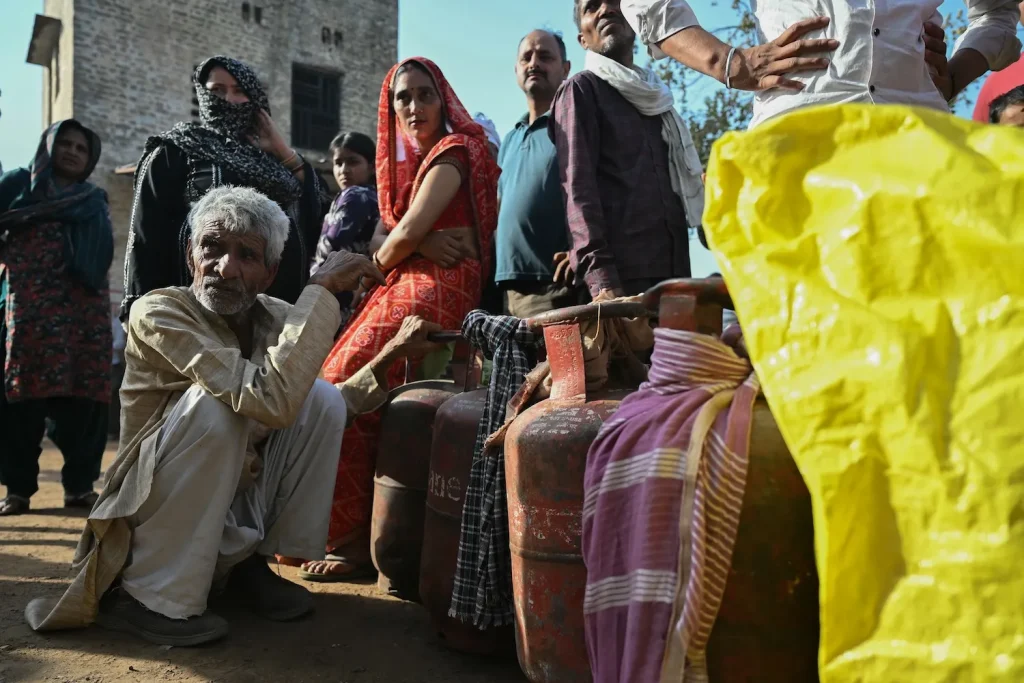
The starkest manifestation of India’s worsening energy security is its liquefied petroleum gas (LPG) crisis: More than 330 million Indian households depend on LPG for cooking, and shortages have prompted New Delhi to direct local producers to reduce supplies for businesses to ensure household LPG needs are met. (The United Arab Emirates is India’s top LPG supplier.)
India, unlike even more vulnerable neighbors such as Bangladesh, has options to cushion the blow. It still produces coal—its most consumed commercial fuel—at a robust rate; in December, India decided to export coal for the first time. The government is also seizing on the LPG crisis to address gaps in pipeline infrastructure to hasten a shift toward greater use of piped natural gas.
Still, the sheer scale of India’s energy demand—especially with temperatures starting to soar in recent weeks—amplifies how much more the country must do to address its needs against the backdrop of continued volatilities in global energy markets. Over the weekend, India’s peak power demand rose to 256 gigawatts, a new record.
Indian Prime Minister Narendra Modi has long had a plan to stabilize the country’s energy security, which entails making renewable fuels a substantive part of the energy mix. There has already been considerable success: India has ramped up solar and wind power, aims to begin producing green hydrogen by 2027, and in February 2025 announced a new national mission for nuclear energy.
India’s clean energy shift remains a work in progress, particularly because of infrastructure challenges such as insufficient storage capacity. But it also has a simple need for more supply.
That is where Doval’s recent visit to the UAE comes into play. Local media reported that Doval and Mohamed bin Zayed discussed global energy security concerns. But the reports didn’t explicitly mention the significant amount of clean energy diplomacy between New Delhi and Abu Dhabi in recent years.
At the 2023 U.N. climate summit, the UAE announced that it would develop 6.6 gigawatts of clean energy capacity in India with financing from its $30 billion climate fund. The Abu Dhabi Investment Authority has also made sizable contributions to ReNew and Greenko Group, two top Indian renewable energy firms.
To be sure, the UAE is a lot more than a clean energy partner for India. It has become one of its closest friends in the Middle East. In January, the two inked a $3 billion liquefied natural gas deal and pledged to finalize a strategic defense partnership. There may be an opportunistic dimension to this cooperation, which comes as the UAE’s relations with Pakistan have taken a turn for the worse.
That the relationship is growing so much speaks to the significance of expanding clean energy cooperation. Given the strength of the overall partnership, these collaborations will likely be sustained in the long run.
This could portend a new trend, in which India leverages ties with close friends to boost its clean fuel offerings, and in so doing soften the blow of global energy shocks.
What We’re Following
Pakistan’s mediation on hold. Pakistan’s efforts to mediate a U.S.-Iran peace deal are on pause. The White House called off a Saturday trip to Pakistan by two U.S. negotiators—Jared Kushner and Steve Witkoff—after Iranian Foreign Minister Abbas Araghchi left Islamabad before they were due to arrive. (Araghchi went back to Pakistan on Sunday but stayed only briefly before traveling to Russia.)
U.S. President Donald Trump said the door remains open for talks with Iran, but he also suggested that they could take place by phone—seemingly ruling out Pakistan hosting a second round of talks anytime soon. In another indication that talks won’t be resuming now, Pakistani authorities on Monday eased security and traffic restrictions in Islamabad.
Pakistan’s government has said little publicly about its role in talks moving forward. However, given its strong interest in the Iran war ending, it will likely remain active in efforts to bring the two sides back together. Islamabad’s challenge will be maintaining its offer to host, if and when they resume, without getting dragged into U.S.-Iran tensions.
Another cease-fire at risk. On Monday, Afghanistan and Pakistan accused each other of cross-border violence. Taliban officials said Pakistan killed seven people and wounded 85 more in mortar and rocket attacks in the eastern province of Kunar, with the targets including a university in the provincial capital.
Pakistan rejected the claims that it targeted the university or Afghan civilians—though it didn’t say it didn’t carry out strikes—and accused the Taliban of injuring at least three civilians in an operation in Pakistan’s South Waziristan region. If true, these incidents would mark the first known cases of hostilities since China mediated talks between the two sides this month.
Afghanistan and Pakistan agreed to a cease-fire in March, which now appears in doubt. It’s unclear what would have prompted resumed fighting, though Afghanistan’s TOLOnews reported that it might be linked to Pakistani security forces reportedly shooting a child on Sunday near the Afghan border city of Spin Boldak.
Beijing provided no timetable for future talks, but another rash of violence could prompt Chinese officials to try to reconvene them. Reengaging in conflict now is risky for Pakistan, especially as the U.S.-Iran cease-fire remains fragile. Islamabad seemingly wouldn’t want to fight one war while worrying about spillover risks from another.
Top U.S. official to visit Nepal. Sergio Gor, the U.S. ambassador to India and the special envoy for South and Central Asia, will arrive in Nepal on Thursday for a four-day visit, according to Nepali reports. Given that Gor is very close to Trump, the visit has special significance; it is also his second known trip within the region as special envoy.
Paul Kapur, the U.S. assistant secretary of state for South and Central Asia, was in Kathmandu last week. His meetings focused on trade, technology, and U.S. investment.
It’s unclear what will be on the agenda for Gor, but he will likely discuss an infrastructure grant from the Millennium Challenge Corp. (MCC), which was spared from the Trump administration’s massive cuts to U.S. development spending. The United States added an additional $50 million to the roughly $500 million MCC package last year.
Nepal’s parliament refused to ratify the grant for five years, until 2022, fearing that it would embroil the country in U.S.-China competition. Indeed, the Trump administration may see it as a way to push back against Chinese infrastructure projects. Nepal signed a framework agreement to advance China’s Belt and Road Initiative in the country in 2024.
A notable side story in this recent diplomacy relates to Nepali Prime Minister Balen Shah, who was elected in March on a promise to shake up the country’s politics. True to his pledge, Shah has reportedly said he will only meet with visiting foreign dignitaries of equal or similar rank to himself—suggesting that he might not meet Gor. (He didn’t meet Kapur last week.)
Under the Radar
Bangladesh is suffering from the energy security impacts of the Iran war. But there are some indications the country has found a workaround, at least on a micro level.
This week, the Daily Star reported on how farmers, traditionally heavily dependent on diesel-fueled technology, have started to use irrigation pumps that run on solar power. Unlike in Pakistan, where a recent uptake in solar panels was consumer-driven, a range of state actors have sought to facilitate Bangladeshi farmers’ access to solar.
They include the Bangladesh Agricultural Development Corp., a semi-autonomous part of the Agriculture Ministry, and Infrastructure Development Co., a state-run renewables investor. Private companies are also involved, including Salek Solar Power, which runs dozens of solar pumps.
However, a troubling trend lurks behind this good news story: The number of new solar pumps in Bangladesh is decreasing, and in some parts of the country no new pumps have been launched since 2022. Unless steps are taken to maintain old pumps and manufacture new ones, the country’s mini-solar surge could eventually grind to a halt.
FP’s Most Read This Week
Regional Voices
In the Print, journalist Saptak Datta discusses how in the Indian state of West Bengal the greatest rivalries now lie in politics, not soccer. Soccer matches “were the arenas of rivalry, not polling booths, political speeches and welfare promises,” he writes. “But football no longer occupies the same space in West Bengal’s everyday life. The political field has taken over.”
In the Express Tribune, writer Saira Samo warns of Pakistan’s hidden mental health crisis. “Recent estimates suggest that nearly four in ten Pakistanis struggle with some form of mental disorder. This should be enough to lift the issue from the private domain to the national agenda,” she writes.
A Kathmandu Post editorial criticizes efforts to remove riverside settlements in Nepal. “Many people might find the sight of bulldozers swiftly bringing down riverside structures satisfying, signs of government efficiency and responsibility. But the way it has bypassed due process is a worrying sign,” it argues.