
India’s boldest marketing moments are not always its smartest ones. At a time when fake resignations, staged controversies and engineered misdirects have become standard entries in the marketing playbook, the industry is beginning to ask questions: is the chase for attention quietly costing brands something far more valuable?
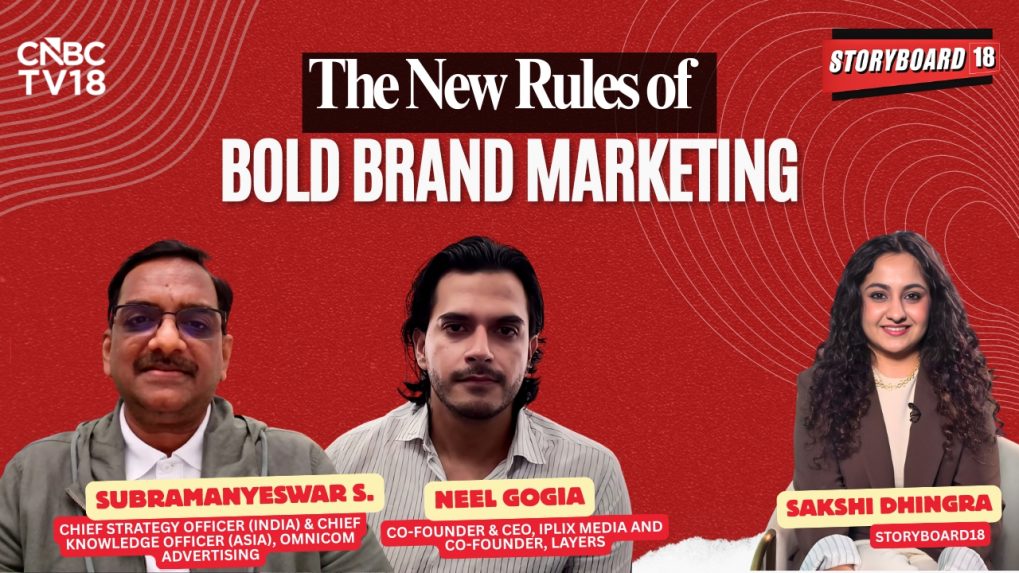
That was the thread running through a recent Storyboard18 conversation with Subramanyeswar S, Chief Strategy Officer India and Chief Knowledge Officer Asia at Omnicom Advertising, and Neel Gogia, Co-Founder and CEO of IPLIX Media and Co-Founder of Layers, as part of a wider panel on bold brand marketing in India.
Subramanyeswar set the tone early. “Indian consumers are very smart because they have an extraordinary instinct for authenticity, perhaps because we are an old civilisation and we have seen performance before.” India, he said, is not simply a market of consumers. It is a market of interpreters. “Every campaign here gets decoded, socially, culturally and emotionally. The brands that truly win in India are not the brands that manufacture attention endlessly, but the brands that understand the emotional grammar of Indian life.”
It is a distinction that matters more now than ever. With over 900 million internet users and a social media landscape that can turn a brand moment into a national conversation within hours, the pressure on marketers to manufacture virality has never been higher. But Subramanyeswar’s argument is that speed and scale have made Indian consumers sharper, not more gullible.
On what separates campaigns that endure from those that merely trend, he was direct. “Attention is rented, affinity is owned. And the rent expires quickly.” Controversy gets attention. Discounts get attention. Outrage gets attention. But affinity, he said, “comes from emotional alignment, from people feeling this brand understands me.”
The observation lands at a moment when India’s D2C and startup ecosystem is investing heavily in gimmick led campaigns, betting that a 48-hour spike in search volume translates into long term brand equity. Subramanyeswar pushed back on that logic with force. “When a stunt becomes bigger than the brand promise, the campaign becomes hollow theatre. One major mistake brand make today is confusing unpredictability with originality. Doing something bizarre is not necessarily great. Sometimes the most powerful thing a brand can do is not shock people but understand them deeply.”
He also raised a concern that is rarely discussed openly inside agency corridors. The rise of what he called the award case study economy, where campaigns are increasingly designed for jury rooms rather than living rooms. “Consumers can sense when a campaign is performative rather than purposeful. Cleverness impresses people for a day. Conviction impresses them for a year.”
Read more: Clickbait or clever? Hyphen’s Kriti Sanon exit stunt tests the limits of teaser marketing
Neel Gogia, who works with some of India’s biggest creators across IPLIX Media and Layers, brought the ground reality of the creator economy into the conversation with equal candour. The picture he painted was one of a persistent gap between what brands say they want and what they are actually willing to allow. Every brand that approaches IPLIX, he said, asks for the same combination of creative liberty and viral reach. The reality, however, is consistently different. “99% of the time, creative liberty is defined by 20 to 30 conditions the brand usually provides.” The result is branded content that routinely underperforms a creator’s organic posts, not because the creator lacks talent but because the brief leaves no room for authenticity.
Gogia pointed to a telling example from his own network. A prominent creator recently shot a Samsung campaign entirely on a phone, sitting in a local shop, mimicking a neighbourhood shopkeeper alongside a friend visiting from London. The video crossed 30 million views. No production crew. No high-end equipment. No elaborate concept. “The more real and authentic you are, the higher the chances people watch the video till the end. The algorithm gets the signal, let’s spread this to more people.”
Also read: From Hyphen to PUMA: When teasers turn tricky
The lesson, both agreed, cuts across categories and budgets. In a media environment where Indian consumers are simultaneously the most emotionally responsive and the most culturally discerning audience in the world, the brands that will win the next decade are not the ones manufacturing the loudest moments. They are the ones earning the deepest ones.
In a market as sharp as India, being genuine is the boldest move a brand can make.
First Published on