
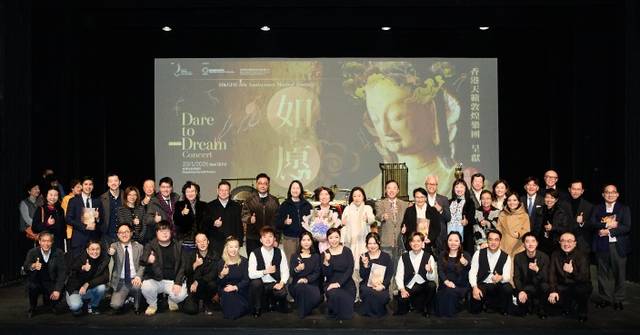
As a Hong Kong-based ensemble devoted to creating music inspired by Dunhuang’s cave art, the Hong Kong Gaudeamus Dunhuang Ensemble harnesses the beauty of Dunhuang culture and the unique charm of traditional Chinese heritage through music. In an interview with Bastille Post, the ensemble’s core creative members outlined their guiding philosophy of “Preservation, Protection, and Innovation”. Their goal, they said, is not only to preserve the essence of traditional culture but also to draw fresh inspiration from contemporary trends and artistic expressions, bringing Dunhuang’s culture and ancient music to audiences around the world.
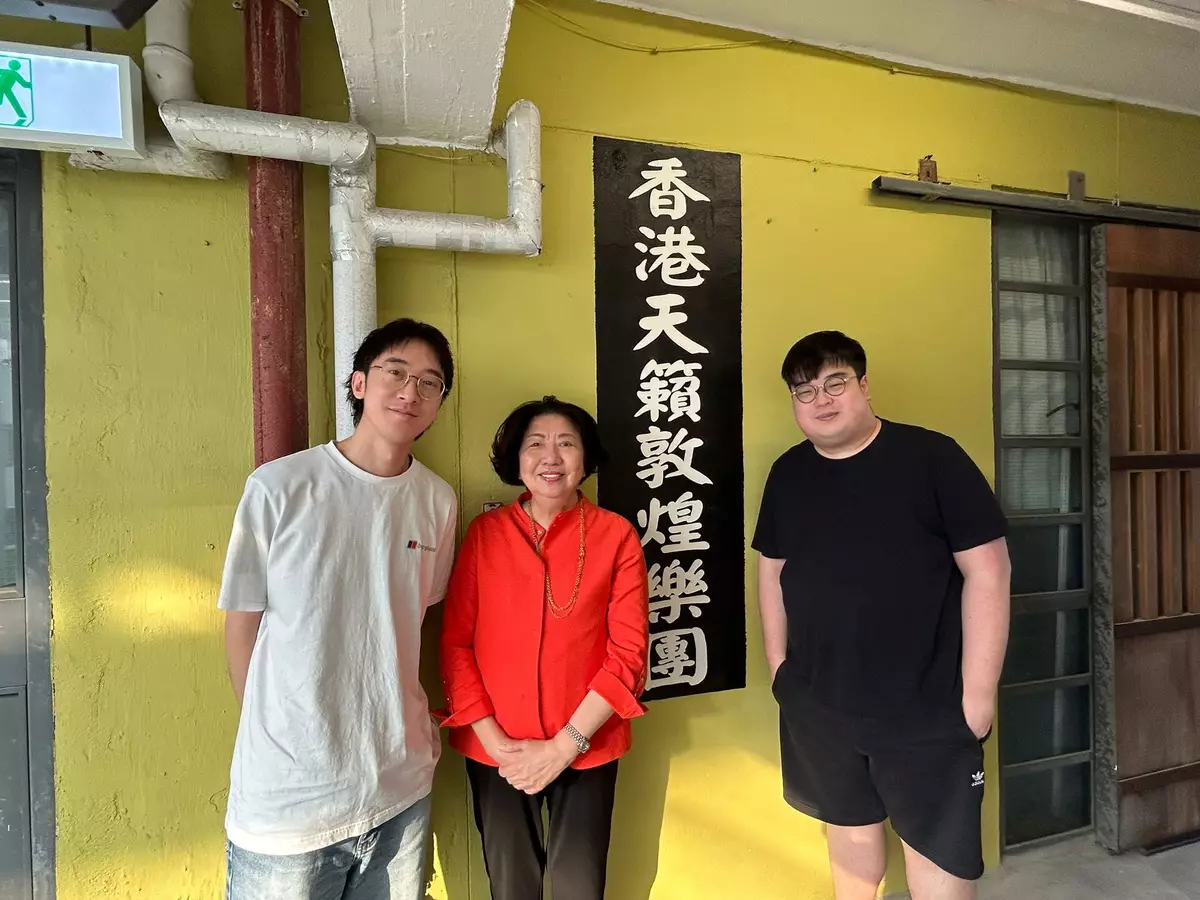
Ms. Leonie Ki, the founder of the Hong Kong Gaudeamus Dunhuang Ensemble (center), Mr. Kam Shing Hei, the ensemble’s Artistic Director (left), Mr. Chu Kai Yeung, the ensemble’s Deputy Artistic Director (right), Photo by Bastille Post
Music as a Vessel: Preserving Dunhuang’s Millennia-Old Legacy
Click to Gallery
Ms. Leonie Ki, the founder of the Hong Kong Gaudeamus Dunhuang Ensemble (center), Mr. Kam Shing Hei, the ensemble’s Artistic Director (left), Mr. Chu Kai Yeung, the ensemble’s Deputy Artistic Director (right), Photo by Bastille Post
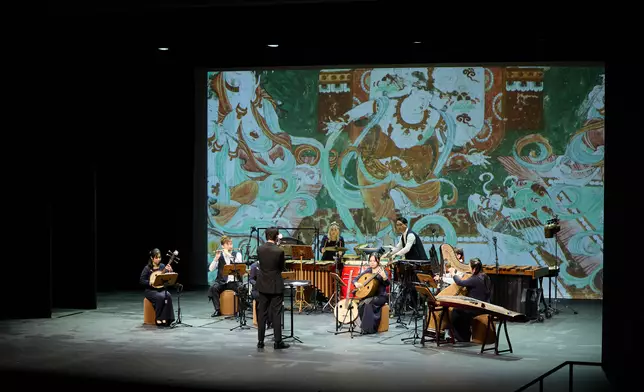
The Hong Kong Gaudeamus Dunhuang Ensemble is dedicated to promoting Dunhuang’s art and culture through music. Photo source: the Hong Kong Gaudeamus Dunhuang Ensemble
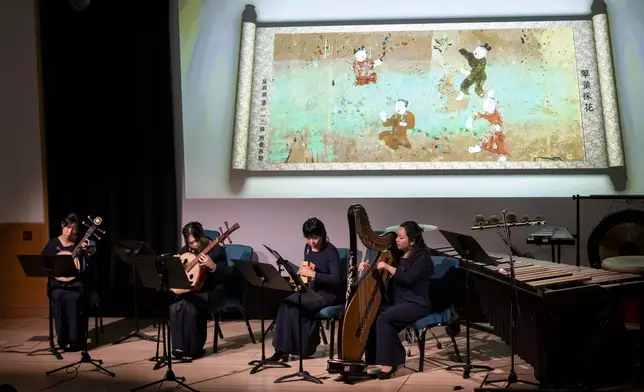
The performance of “Water Drum”, Photo source: the Hong Kong Gaudeamus Dunhuang Ensemble
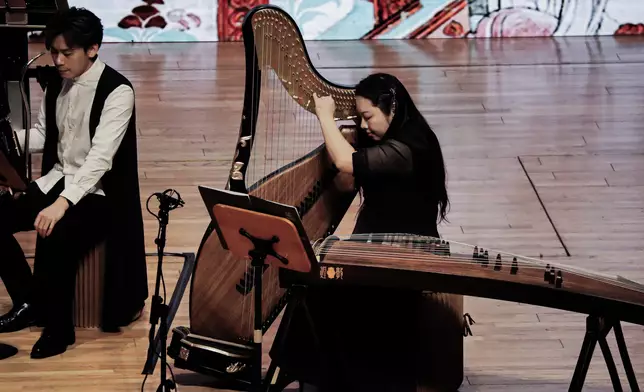
Konghou, Photo source: the Hong Kong Gaudeamus Dunhuang Ensemble
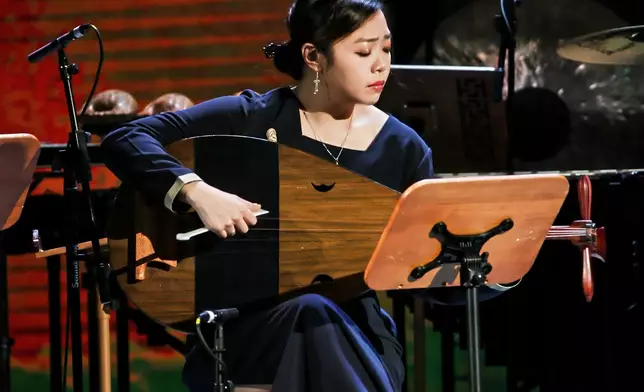
Quxiang Pipa, Photo source: the Hong Kong Gaudeamus Dunhuang Ensemble
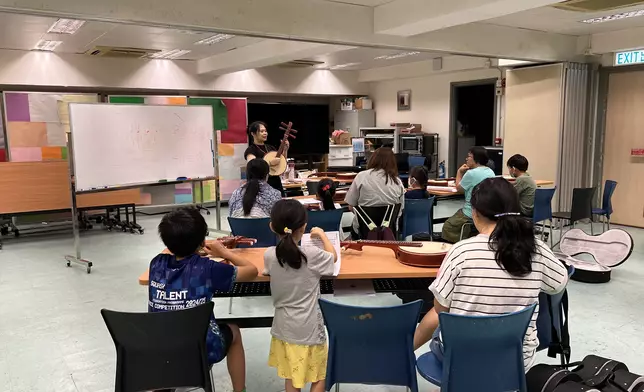
In recent years, the ensemble has collaborated with the Leisure and Cultural Services Department (LCSD) through the “18dART — Community Arts Scheme”, launching a series of performing arts and cultural education activities in the Sham Shui Po district. Photo source: the Hong Kong Gaudeamus Dunhuang Ensemble
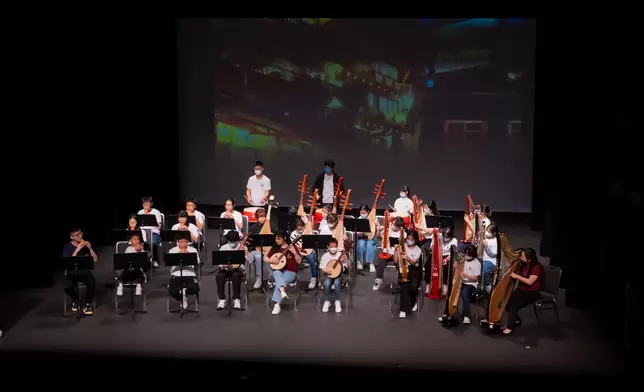
The cultural education activities in the Sham Shui Po district include educational performances, ancient instrument classes, exhibitions, lectures, workshops, and concerts. Photo source: the Hong Kong Gaudeamus Dunhuang Ensemble
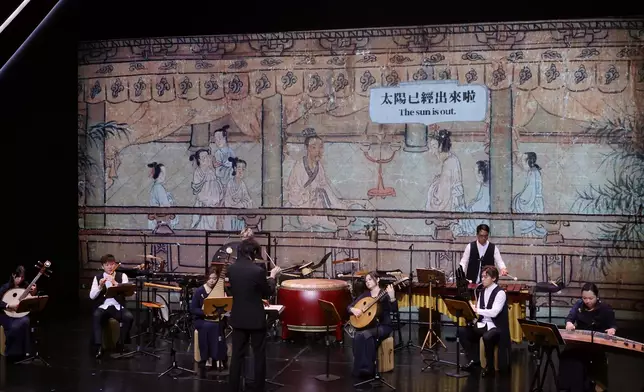
The ensemble incorporates popular contemporary elements, such as emojis and emoticons favored by young people, into the arrangement of traditional ancient scores, infusing classical music with innovative vitality. Photo source: the Hong Kong Gaudeamus Dunhuang Ensemble
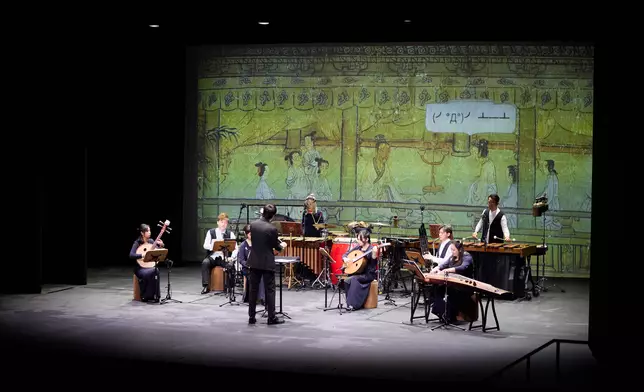
Photo source: the Hong Kong Gaudeamus Dunhuang Ensemble
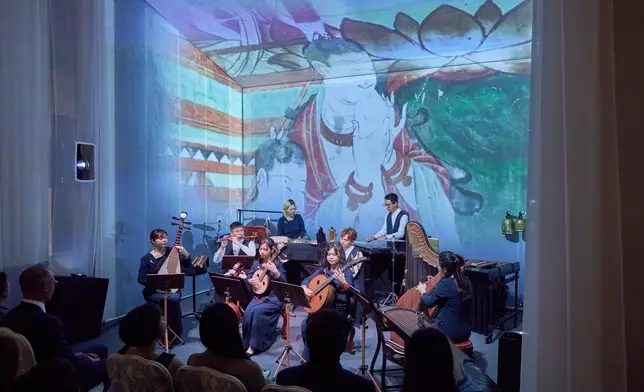
No. 1 Cultural Grotto – Nature’s Concerto: “Music from Heaven, Earth & Man”, Photo source: the Hong Kong Gaudeamus Dunhuang Ensemble
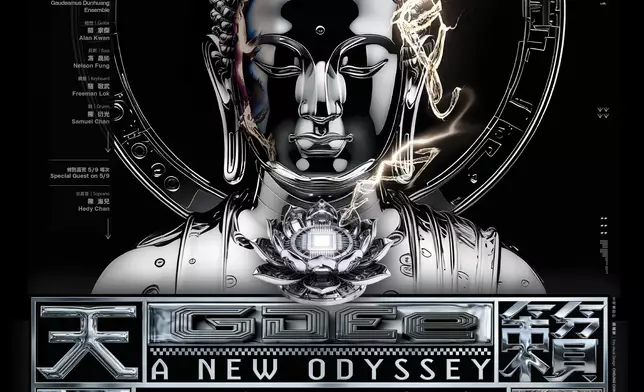
GDEe: “Elysium, a New Odyssey” Concert, Photo source: the Hong Kong Gaudeamus Dunhuang Ensemble
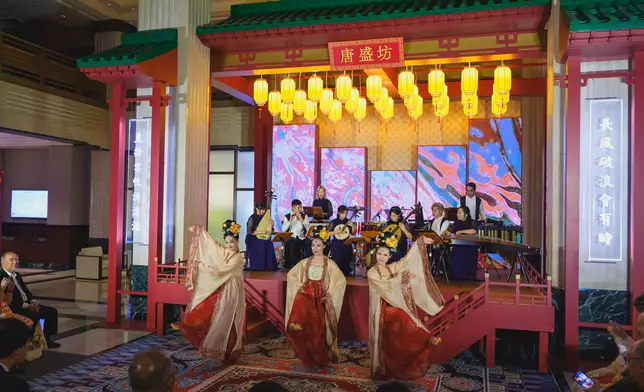
Spreading Chinese cultural charm should not focus solely on preserving and inheriting indigenous culture; rather, it ought to embrace a broader cultural vision by integrating the essence of contemporary society and the spirit of times. Photo source: the Hong Kong Gaudeamus Dunhuang Ensemble
The ensemble aims to let the beautiful cultural legends of Dunhuang reach the hearts of ever-wider audiences, allowing the voice of China to resound melodiously on the world stage. Photo source: the Hong Kong Gaudeamus Dunhuang Ensemble
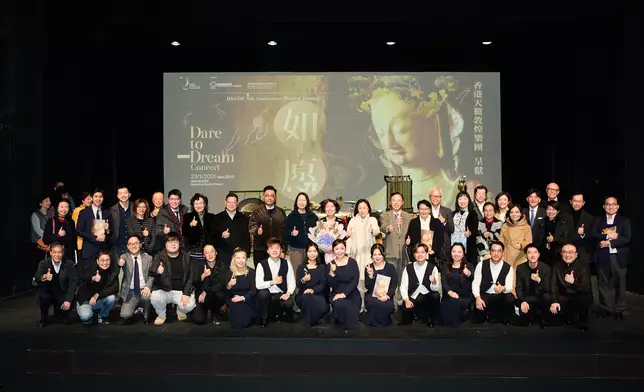
The ensemble seeks to “project China’s voice outward and spread the charm of China’s culture”. Photo source: the Hong Kong Gaudeamus Dunhuang Ensemble
Looking back on the ensemble’s founding journey, founder Ms. Leonie Ki shared her long-held affection for Dunhuang culture. She described it as a repository of a thousand years of profound history and a radiant treasure chest of traditional Chinese culture. Inside Dunhuang’s hundreds of grottoes, vibrant murals depict magnificent scenes of music and dance, rendered with spiritual vitality. Yet, as she lamented, the artistic world captured in these murals remains silent. Bound by the technological limitations of antiquity, even murals that vividly portray musical performances could not preserve the actual sounds and rhythms of their time.
For years, Ms. Ki actively explored ways to revitalize traditional arts, hoping to join forces with fellow music enthusiasts to forge a path for the modern preservation of traditional music. Finally, in May 2018, the Hong Kong Gaudeamus Dunhuang Ensemble was officially established, dedicated to promoting Dunhuang’s art and culture through music.
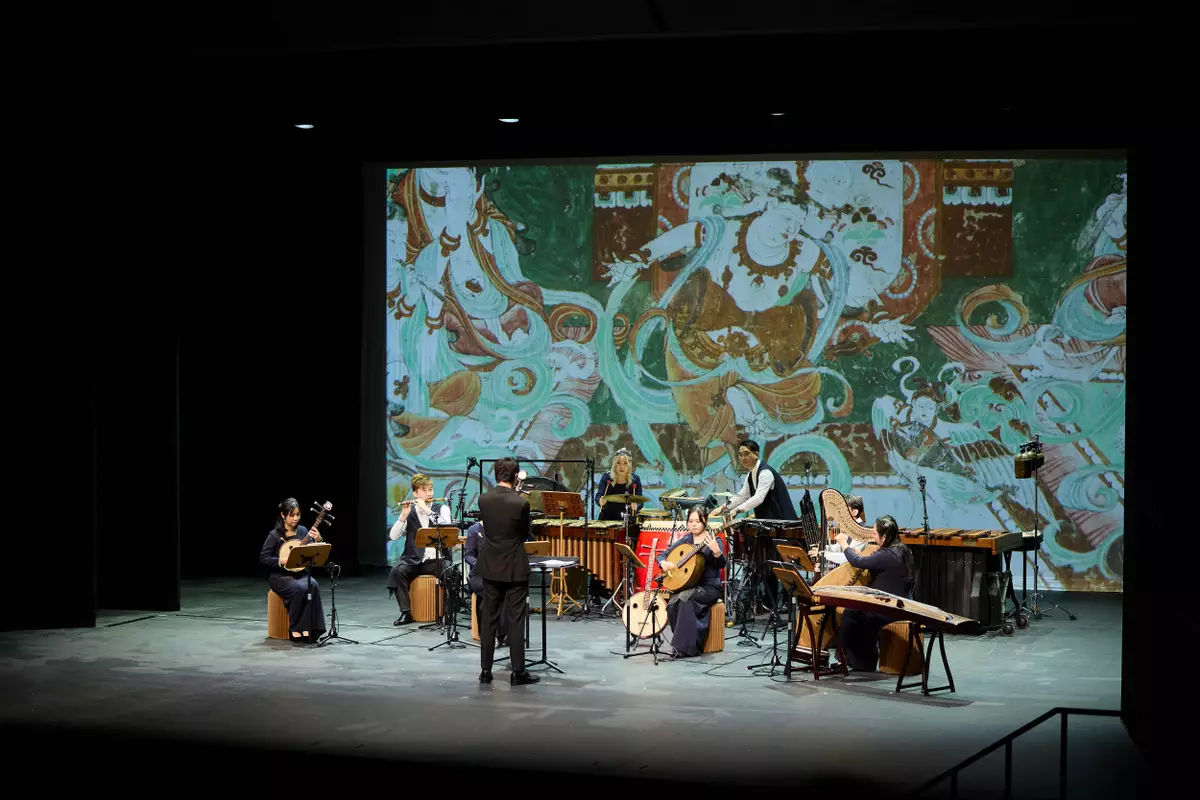
The Hong Kong Gaudeamus Dunhuang Ensemble is dedicated to promoting Dunhuang’s art and culture through music. Photo source: the Hong Kong Gaudeamus Dunhuang Ensemble
In their compositions, the ensemble draws inspiration from Dunhuang’s murals, fusing visual motifs with ancient musical scores passed down through generations. Through flowing melodies, they convey the charm of traditional Chinese instruments such as pipa, guzheng, and dizi. Mr. Kam Shing Hei, the ensemble’s Artistic Director, cited his own signature piece, “Water Drum” as an example of how visual imagery can be translated into musical language.
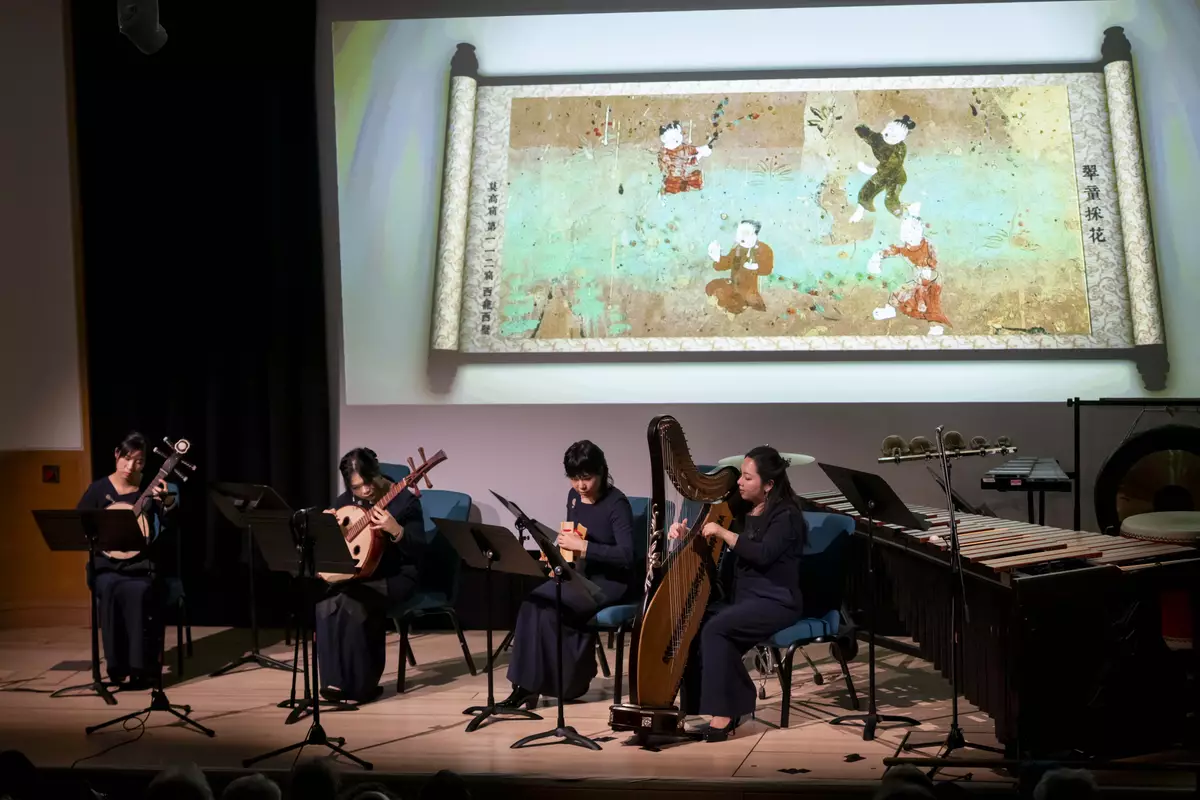
The performance of “Water Drum”, Photo source: the Hong Kong Gaudeamus Dunhuang Ensemble
He explained that when composing this piece, he drew from murals depicting the lively daily lives of residents, from children playing football, to tea drinkers leisurely playing chess, and elderly women working in the fields. To capture the energy of life, he employed an alternating interplay between high and low registers, allowing melodic motifs to continuously shift keys and transpose. In this way, a captivating melody that uses tonal and pitch variations to create a vivid, three-dimensional musical impression is released, deepening the audience’s imagination of the ordinary lives depicted in the Dunhuang murals.
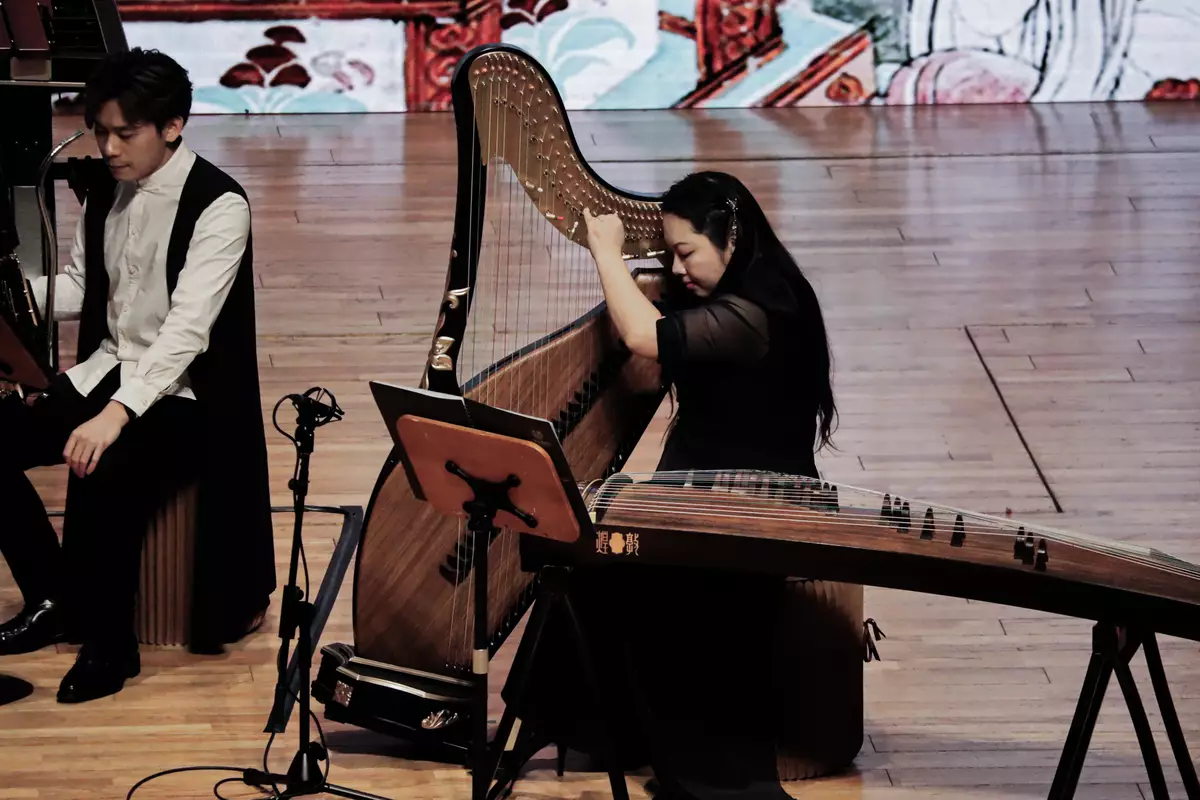
Konghou, Photo source: the Hong Kong Gaudeamus Dunhuang Ensemble
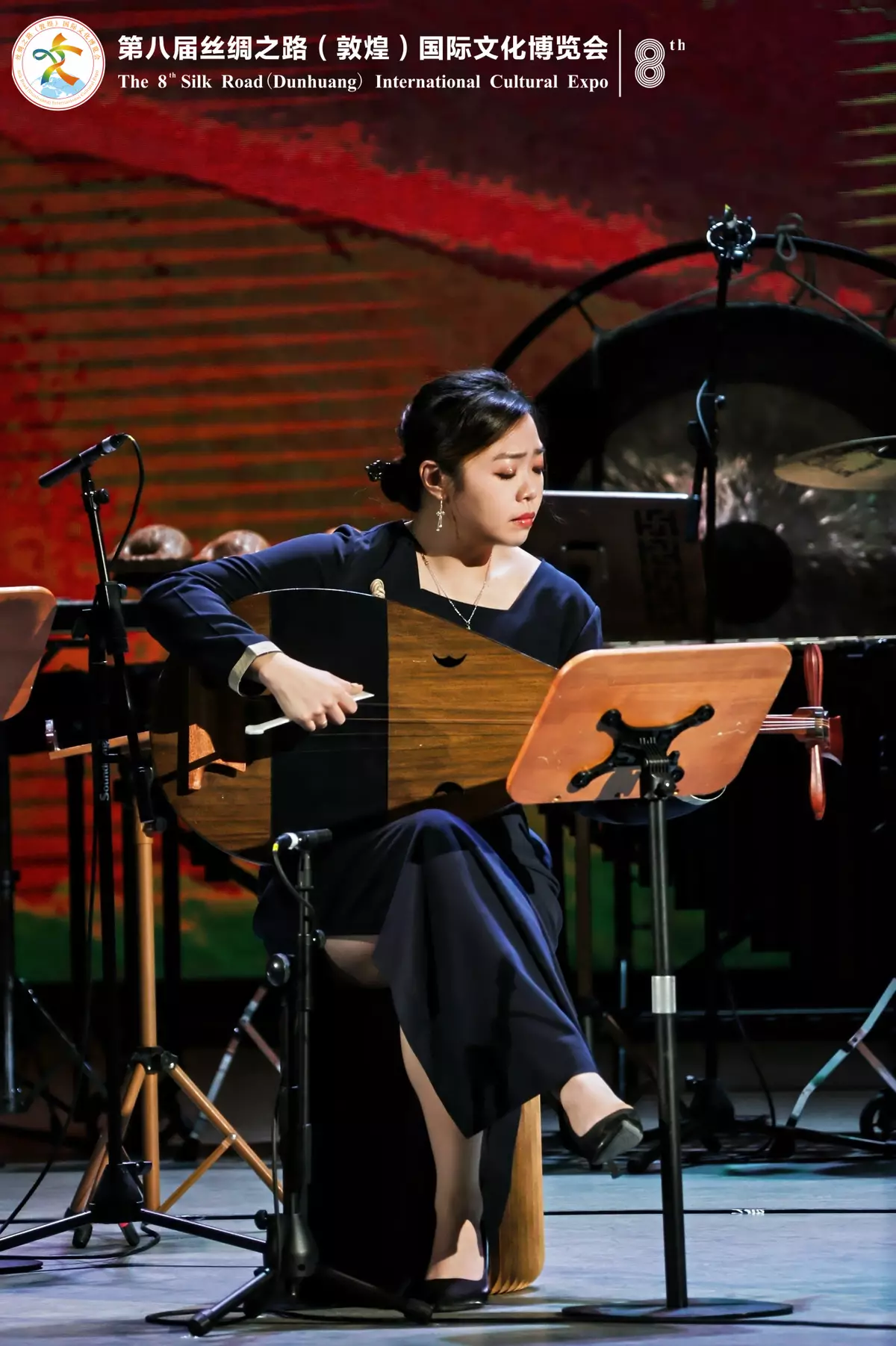
Quxiang Pipa, Photo source: the Hong Kong Gaudeamus Dunhuang Ensemble
In terms of instrumentation, the ensemble members strive to recreate the grand musical processions seen in the Dunhuang murals, showcasing a diverse array of instrumental combinations. Alongside standard traditional instruments like guzheng, pipa, and dizi, they incorporate distinctive ancient instruments, such as konghou and quxiang pipa, to perform sounds that have resonated across a millennium.
Mr. Kam noted that while there is considerable research and replication work being done on these niche instruments, attempts to use them for original composition remain rare. To fill this artistic gap, the ensemble’s members meticulously studied the playing techniques and tonal characteristics of these instruments, composing bespoke pieces tailored specifically to them. By letting familiar traditional instruments complement these lesser-known ancient counterparts, they aim to reawaken melodies long lost to time. “Our creative inspiration comes directly from the musical ensembles depicted in the Dunhuang murals,” he explained. In his view, by closely emulating the diverse instrumental configurations found in the murals, they can pair rarely seen ancient instruments with classic ones, bringing these unique sounds to a wider audience.
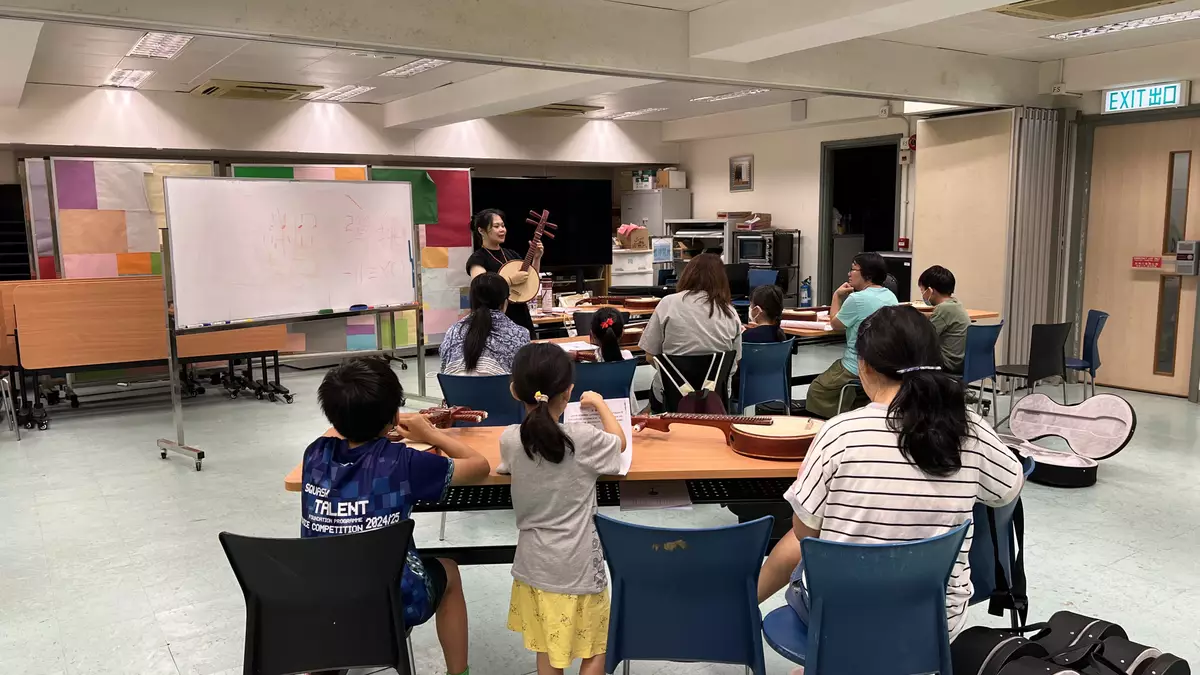
In recent years, the ensemble has collaborated with the Leisure and Cultural Services Department (LCSD) through the “18dART — Community Arts Scheme”, launching a series of performing arts and cultural education activities in the Sham Shui Po district. Photo source: the Hong Kong Gaudeamus Dunhuang Ensemble
Beyond stage performances, these ancient instruments are also brought directly into the lives of Hong Kong residents. Through live demonstrations and interactive presentations, ensemble members allow citizens to appreciate the profound depth of traditional Chinese music. In recent years, the ensemble has collaborated with the Leisure and Cultural Services Department (LCSD) through the “18dART — Community Arts Scheme”, launching a series of performing arts and cultural education activities in the Sham Shui Po district. These include educational performances, ancient instrument classes, exhibitions, lectures, workshops, and concerts. Starting this year, the ensemble has the distinct honor of being selected for the LCSD’s “Venue Partnership Scheme”, becoming a three-year venue partner of the Sha Tin Town Hall. Hoping to continue developing diverse activities that benefit an even wider segment of the public, the ensemble’s Deputy Artistic Director, Mr. Chu Kai Yeung, remarked, “Whether adults or children, the willingness of citizens to participate is the very nourishment that allows ancient musical instruments to stay alive in the modern era.”
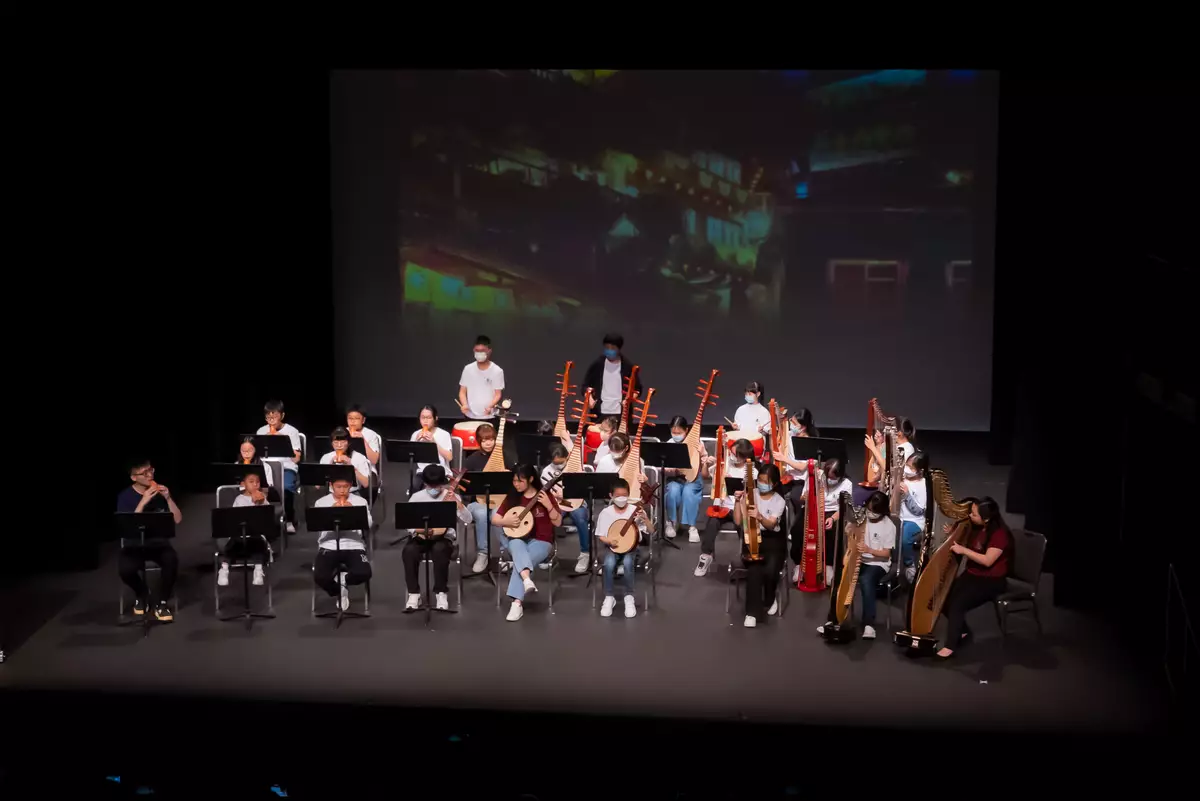
The cultural education activities in the Sham Shui Po district include educational performances, ancient instrument classes, exhibitions, lectures, workshops, and concerts. Photo source: the Hong Kong Gaudeamus Dunhuang Ensemble
Innovation Meets Heritage: Energizing Traditional Arts for a New Era
In an era of constantly shifting trends, ensuring that traditional arts remain captivating has become a creative goal that the ensemble members are actively exploring.
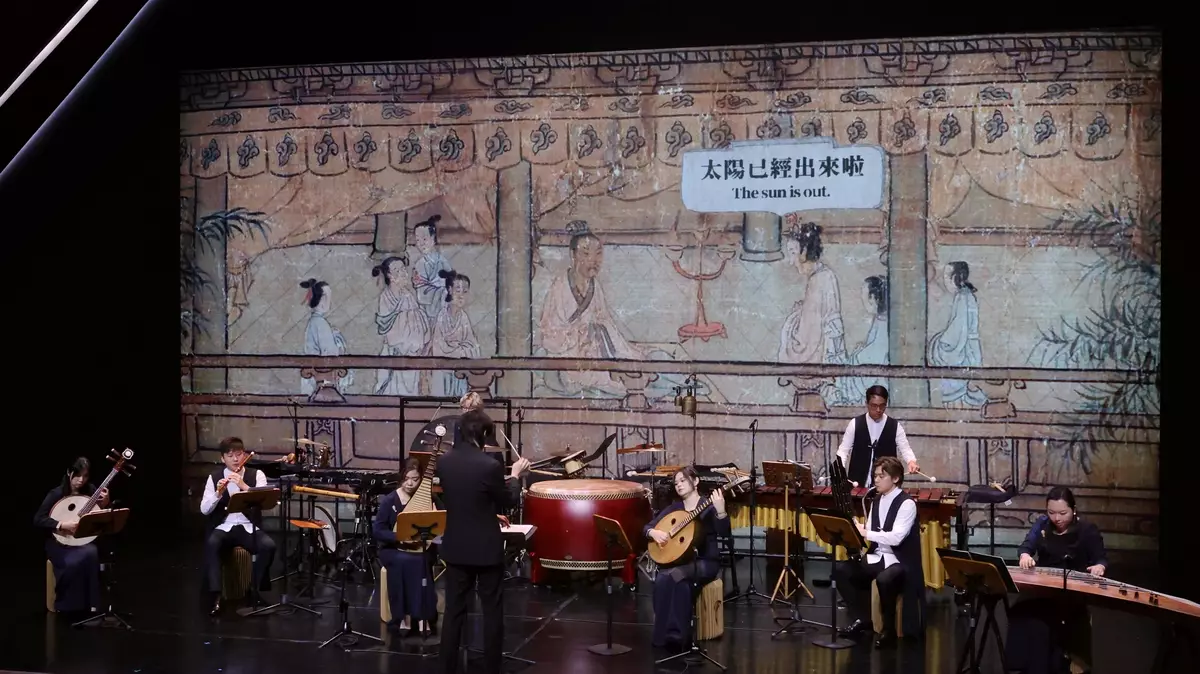
The ensemble incorporates popular contemporary elements, such as emojis and emoticons favored by young people, into the arrangement of traditional ancient scores, infusing classical music with innovative vitality. Photo source: the Hong Kong Gaudeamus Dunhuang Ensemble
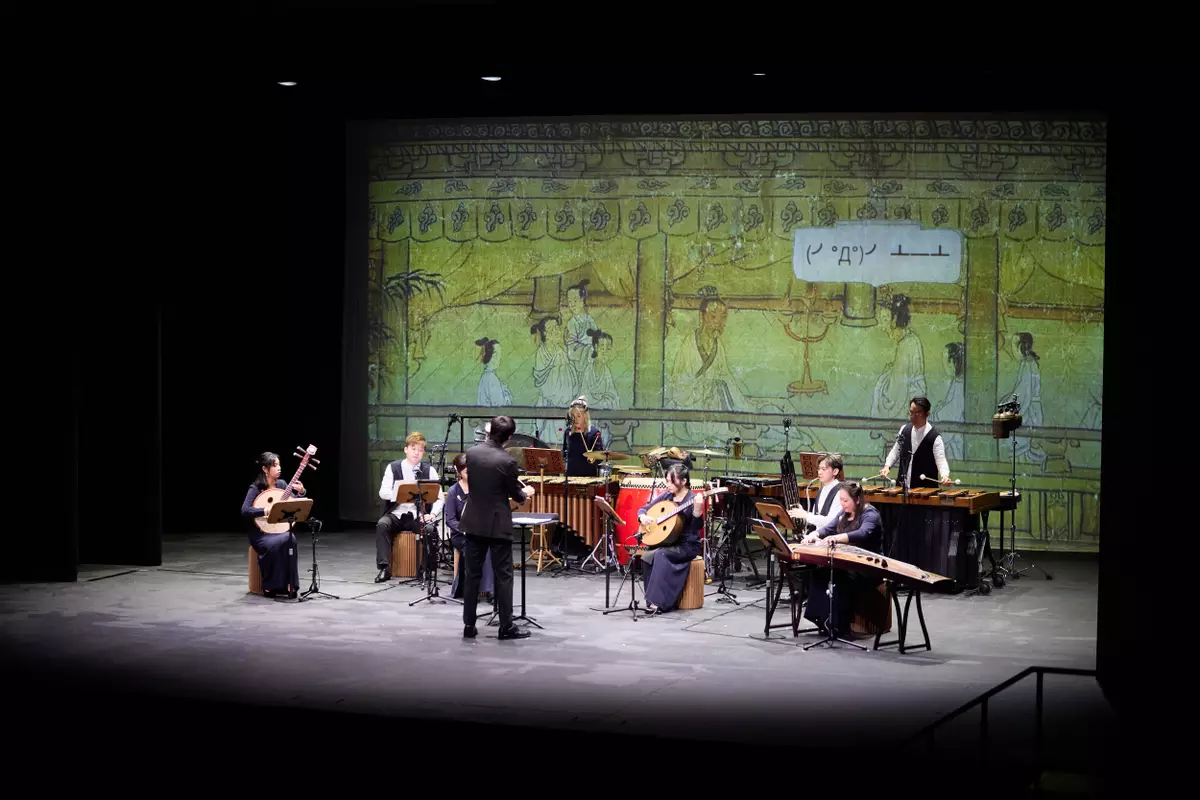
Photo source: the Hong Kong Gaudeamus Dunhuang Ensemble
On one hand, the ensemble incorporates popular contemporary elements, such as emojis and emoticons favored by young people, into the arrangement of traditional ancient scores, infusing classical music with innovative vitality. In “Enduring, Elegant, Empowered”, a piece released in recent years (composed by Mr. Chu Kai Yeung), the ensemble sought to faithfully recreate the imagery from its source material: “Illustrations for the Odes of Qi”, a painting depicting a rooster crowing at dawn and a couple rising from bed. In addition to crafting a light and lively melodic rhythm, the ensemble incorporated a series of animated emoticons and emojis into the stage’s background visuals to illustrate the couple’s shifting psychological states as they wake up. Such an approach not only adds a more three-dimensional and vivid atmosphere to the musical narrative, but also elicits knowing smiles from the audience, allowing them to experience the endearing charm of traditional arts through a humorous blend of ancient and modern.
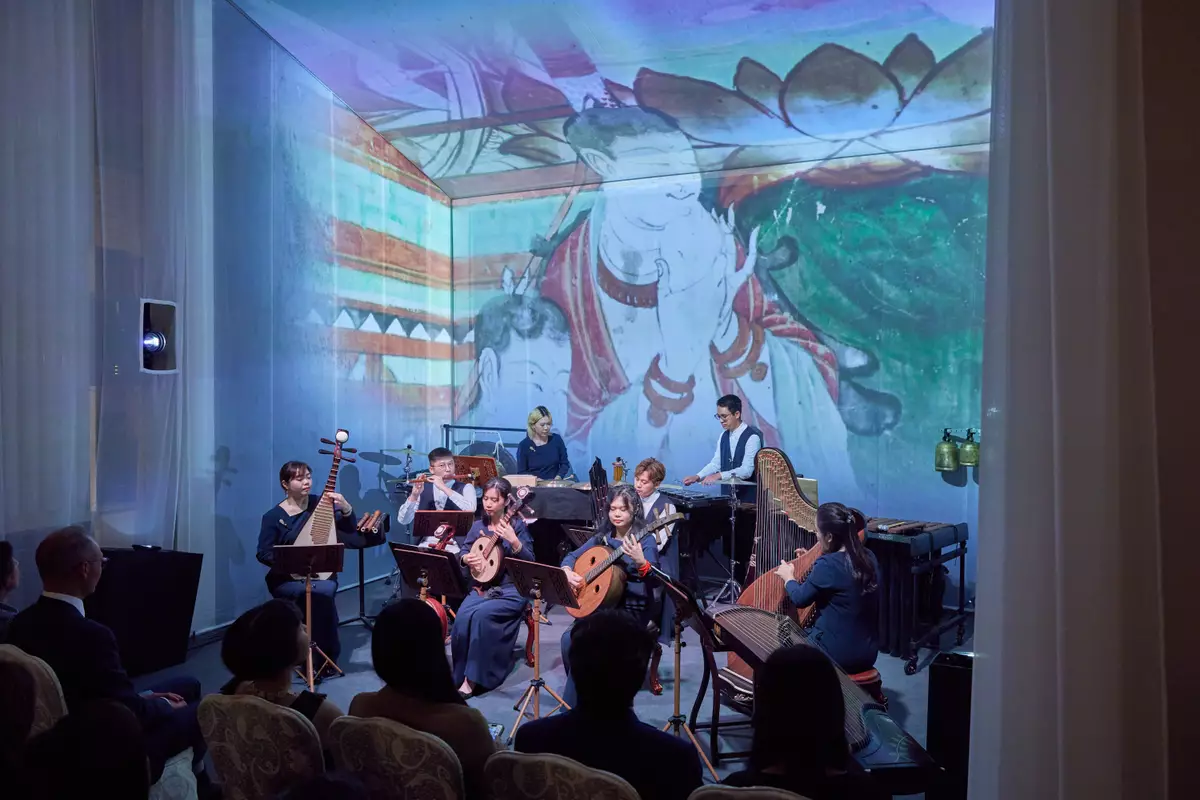
No. 1 Cultural Grotto – Nature’s Concerto: “Music from Heaven, Earth & Man”, Photo source: the Hong Kong Gaudeamus Dunhuang Ensemble
On the other hand, the ensemble actively collaborates with artists from diverse fields to expand its modes of expression beyond musical performance. Installation art, a medium that has garnered significant attention in recent years, represents a major step into cross-disciplinary creation for the ensemble. Their recently launched exhibition, No. 1 Cultural Grotto – Nature’s Concerto: “Music from Heaven, Earth & Man”, blends Dunhuang art and culture with art-tech, immersive performance installations, and unique exhibition formats. Using cross-media visual art elements, the exhibition recreates the grotto spaces where the Dunhuang murals reside, allowing the artistic essence of Dunhuang culture to transcend mere auditory perception and be presented through multi-dimensional media, thereby “conveying its profound artistic value in a more three-dimensional and holistic manner.”
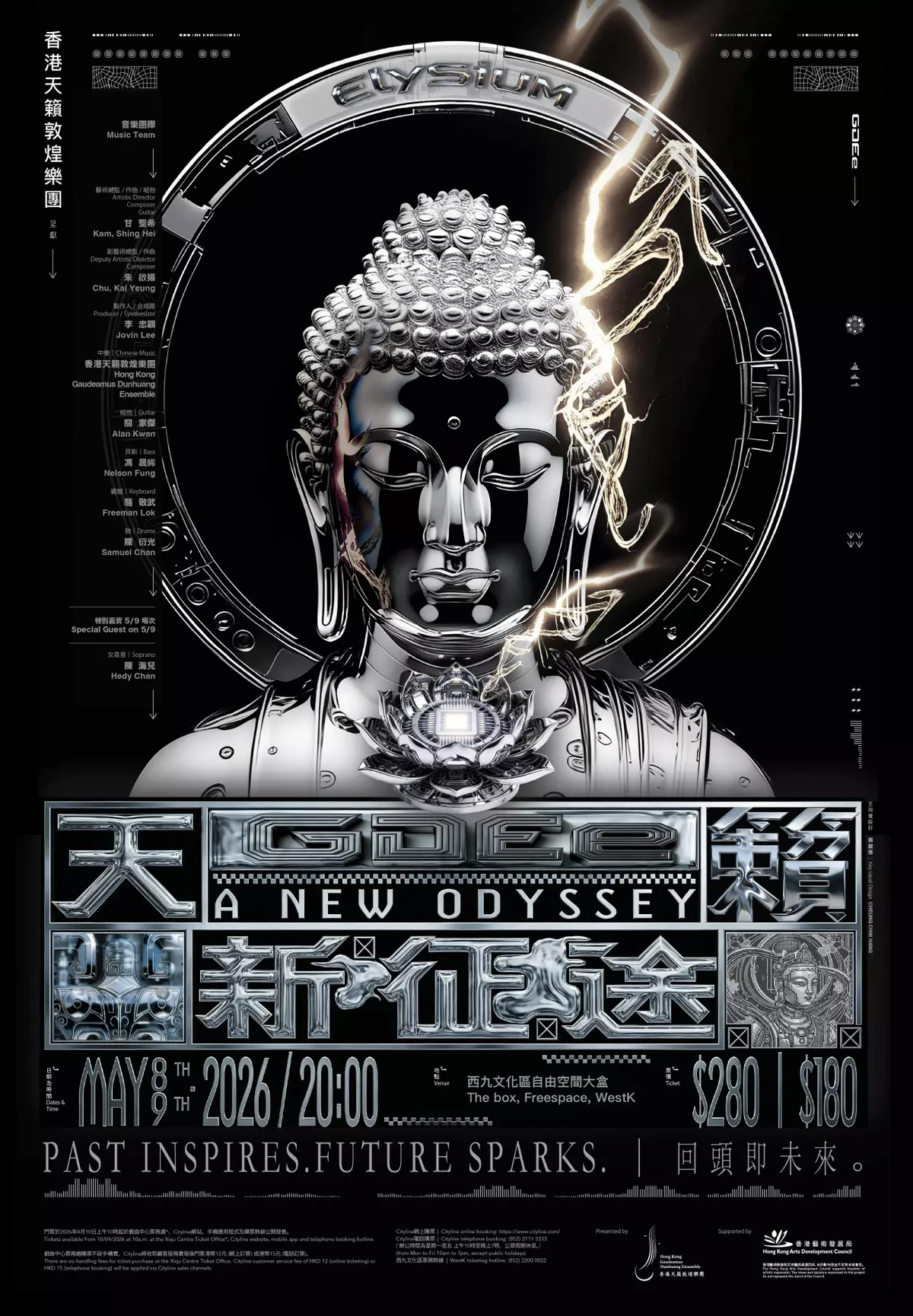
GDEe: “Elysium, a New Odyssey” Concert, Photo source: the Hong Kong Gaudeamus Dunhuang Ensemble
Recently, the ensemble embarked on a brand-new creative experiment: fusing traditional Chinese music with electronic music in the performance, GDEe: “Elysium, a New Odyssey” Concert. The concert aims to embed traditional artistic themes within the rhythms of electronic music, reshaping the auditory experience of Dunhuang’s musical repertoire and charting a new artistic course for traditional culture.
From Hong Kong to the World: Sharing China’s Artistic Voice
Looking to the future, the ensemble’s founder, Ms. Leonie Ki, hopes that the ensemble can leverage Hong Kong’s unique geographical advantage as a nexus where Eastern and Western cultures converge. By using traditional music as their primary medium of expression, the ensemble seeks to “project China’s voice outward and spread the charm of China’s culture”. In her view, Hong Kong’s inclusive and eclectic cultural ethos offers immense inspiration for the ensemble as it undertakes innovative experiments across diverse artistic fields and techniques. She asserts that spreading Chinese cultural charm should not focus solely on preserving and inheriting indigenous culture; rather, it ought to embrace a broader cultural vision by integrating the essence of contemporary society and the spirit of times. In this way, traditional culture can be effectively revitalized through a process of fusion and mutual enrichment, resonating with people from all walks of life.
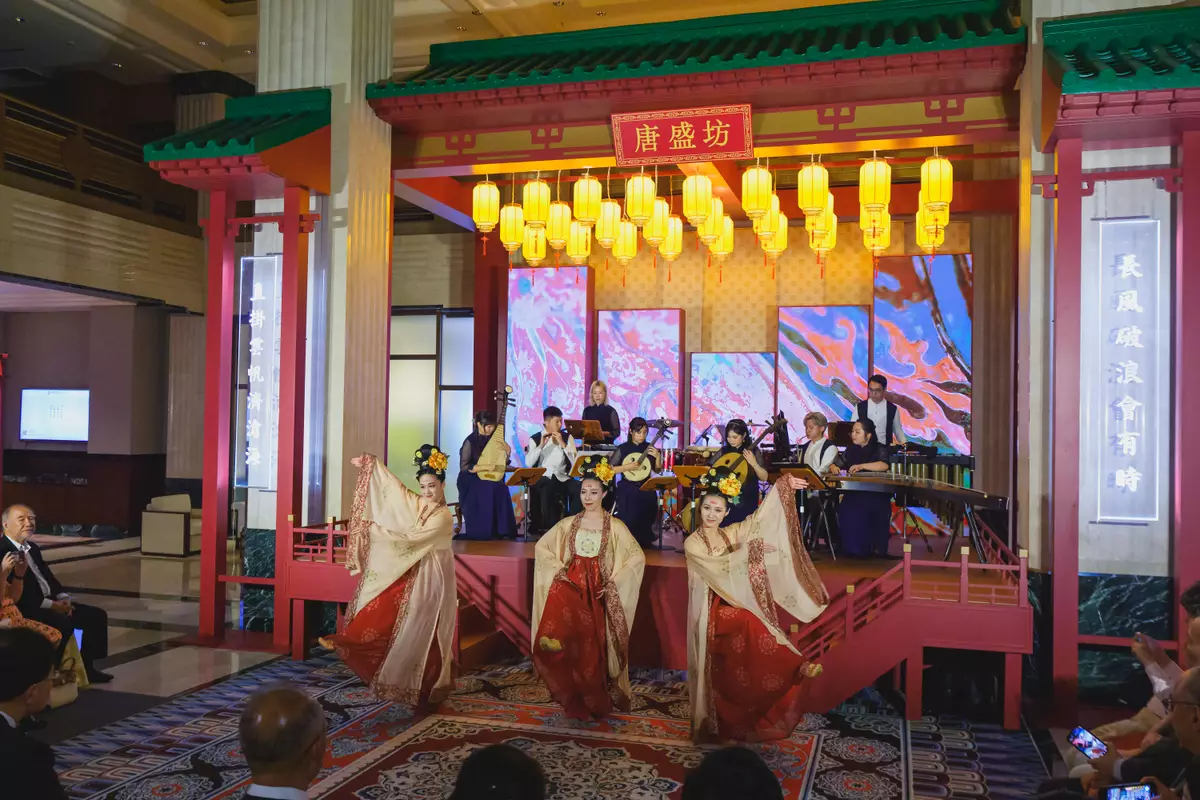
Spreading Chinese cultural charm should not focus solely on preserving and inheriting indigenous culture; rather, it ought to embrace a broader cultural vision by integrating the essence of contemporary society and the spirit of times. Photo source: the Hong Kong Gaudeamus Dunhuang Ensemble
“Beyond the accumulation and distillation of tradition, confidence in one’s own culture ought to be bolstered by an international perspective,” Ms. Ki said. “Only when cultural soft power resonates deeply with the social lives of people across different regions can it truly move hearts and minds, enabling China’s culture to spread far and wide, echoing across the globe.” She affirmed that the ensemble will continue to capitalize on Hong Kong’s status as an international platform, drawing upon the profound heritage of traditional culture rooted in the Mainland while actively exploring diverse interpretive approaches for overseas dissemination. Through this strategy, the beautiful cultural legends of Dunhuang, amplified by Hong Kong’s unique advantage as a bridge between East and West, will reach the hearts of ever-wider audiences, allowing the voice of China to resound melodiously on the world stage.
The ensemble aims to let the beautiful cultural legends of Dunhuang reach the hearts of ever-wider audiences, allowing the voice of China to resound melodiously on the world stage. Photo source: the Hong Kong Gaudeamus Dunhuang Ensemble
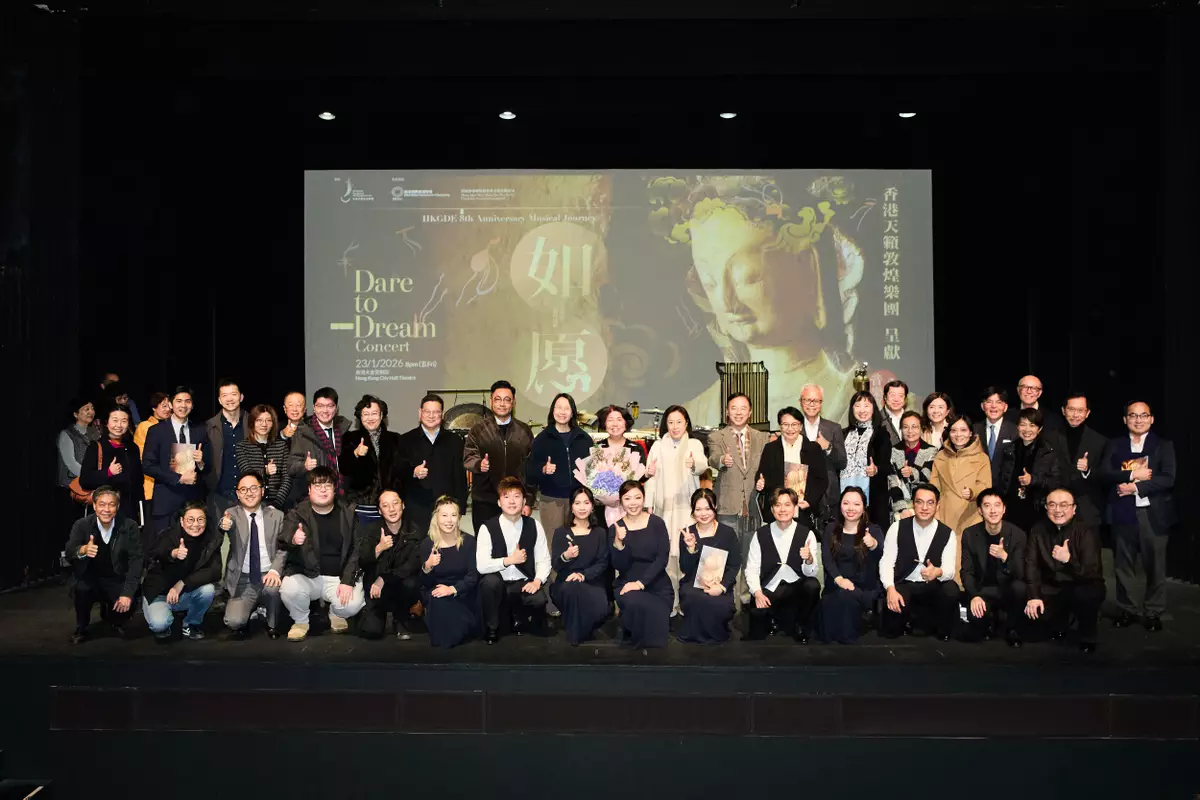
The ensemble seeks to “project China’s voice outward and spread the charm of China’s culture”. Photo source: the Hong Kong Gaudeamus Dunhuang Ensemble
The Hong Kong Gaudeamus Dunhuang Ensemble made its debut in Bangkok, Thailand, presenting a series of cultural exchange activities and performances from March 14 to 15, 2026, at Mahidol University. The program included a keynote lecture, cultural workshop, and concert, all met with enthusiastic participation and warm responses, marking a new milestone in Sino-Thai cultural and artistic exchange.
This event was sponsored by the Hong Kong Economic and Trade Office in Bangkok, with strong support from Thailand’s prestigious Mahidol University. It represents an important step in bringing Dunhuang and Chinese culture to Southeast Asia.
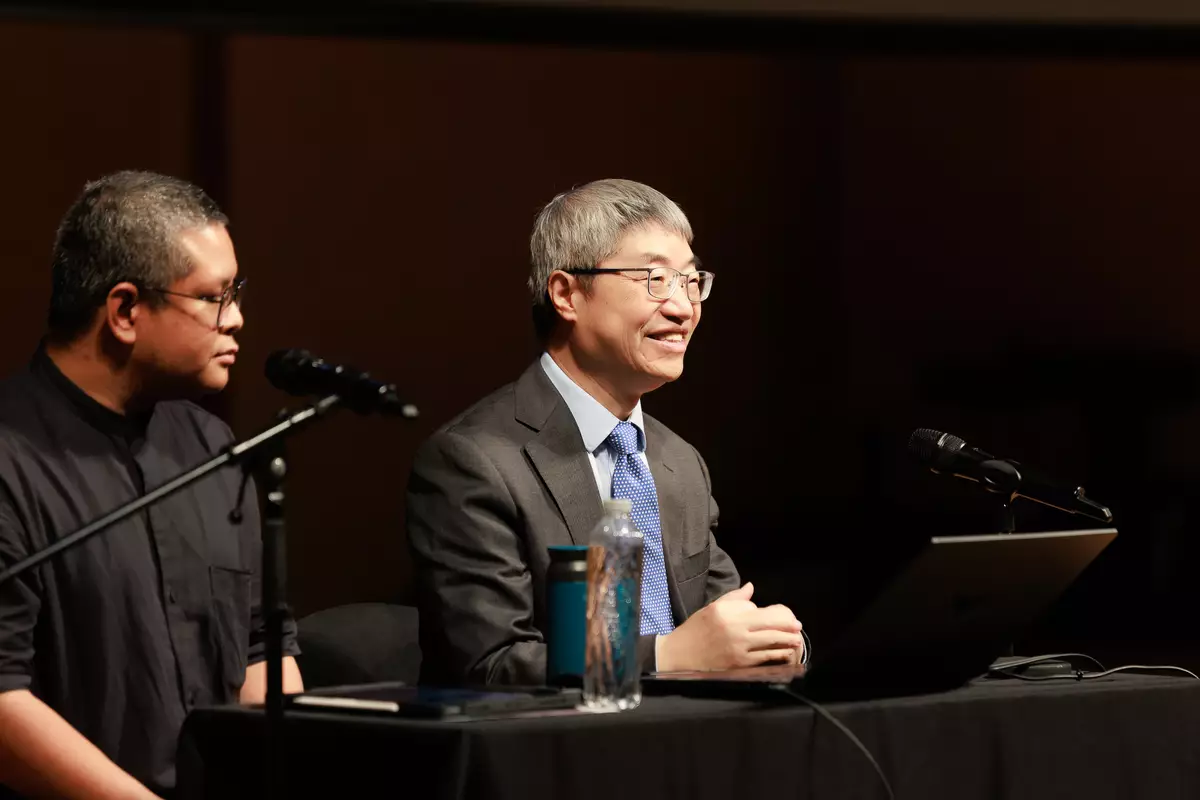
Dr. Zhao Shengliang delivering the lecture “From Dunhuang to the World – The Voice of Cultural Transmission”. Photo source: the Hong Kong Gaudeamus Dunhuang Ensemble
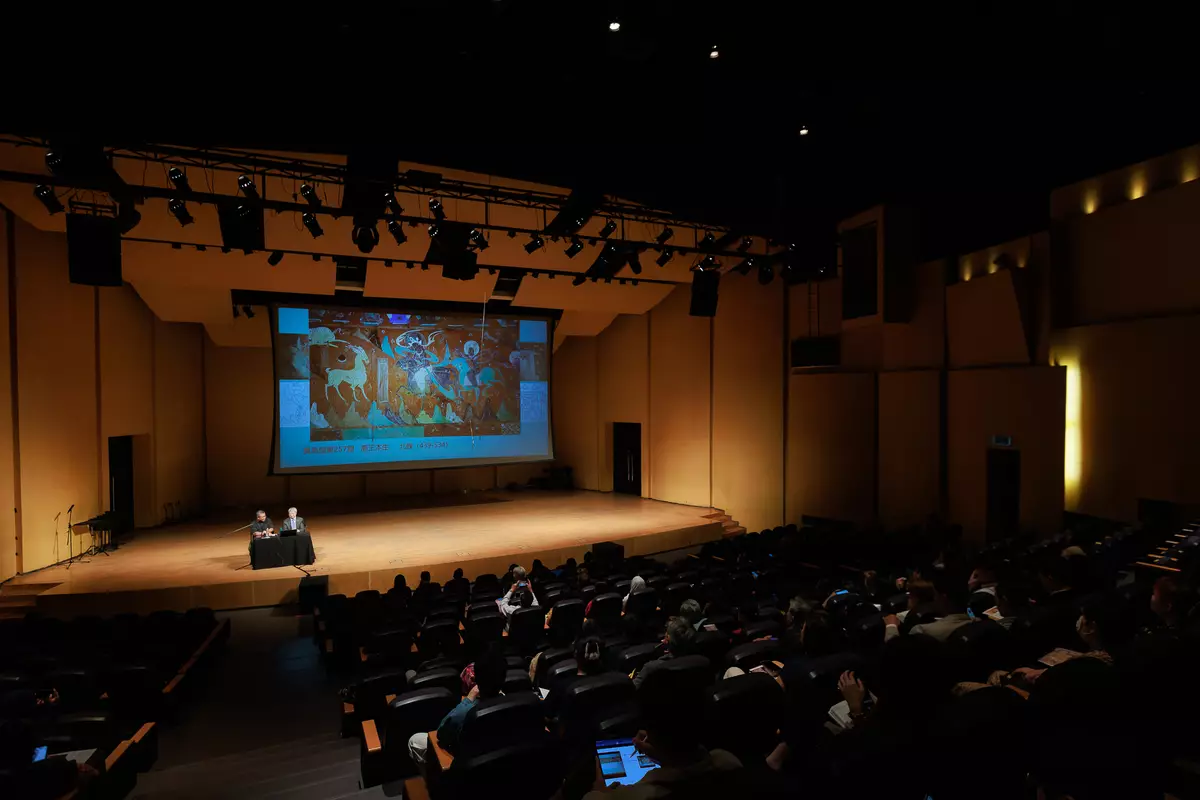
Dr. Zhao Shengliang delivering the lecture “From Dunhuang to the World – The Voice of Cultural Transmission”. Photo source: the Hong Kong Gaudeamus Dunhuang Ensemble
The first event took place on the morning of March 14 at Mahidol University’s Music Auditorium. Dr. Zhao Shengliang, Honorary Advisor of the Ensemble, former Party Secretary of the Dunhuang Academy, and one of the foremost authorities on Dunhuang studies and culture, delivered a lecture entitled “From Dunhuang to the World – The Voice of Cultural Transmission.” He explored Dunhuang’s historical role as a hub of East-West cultural exchange, introduced the rich artistic and musical heritage found in Dunhuang murals, and discussed ongoing efforts to preserve and innovate Dunhuang music and dance. The audience listened attentively, and the lively Q&A session was truly inspiring.
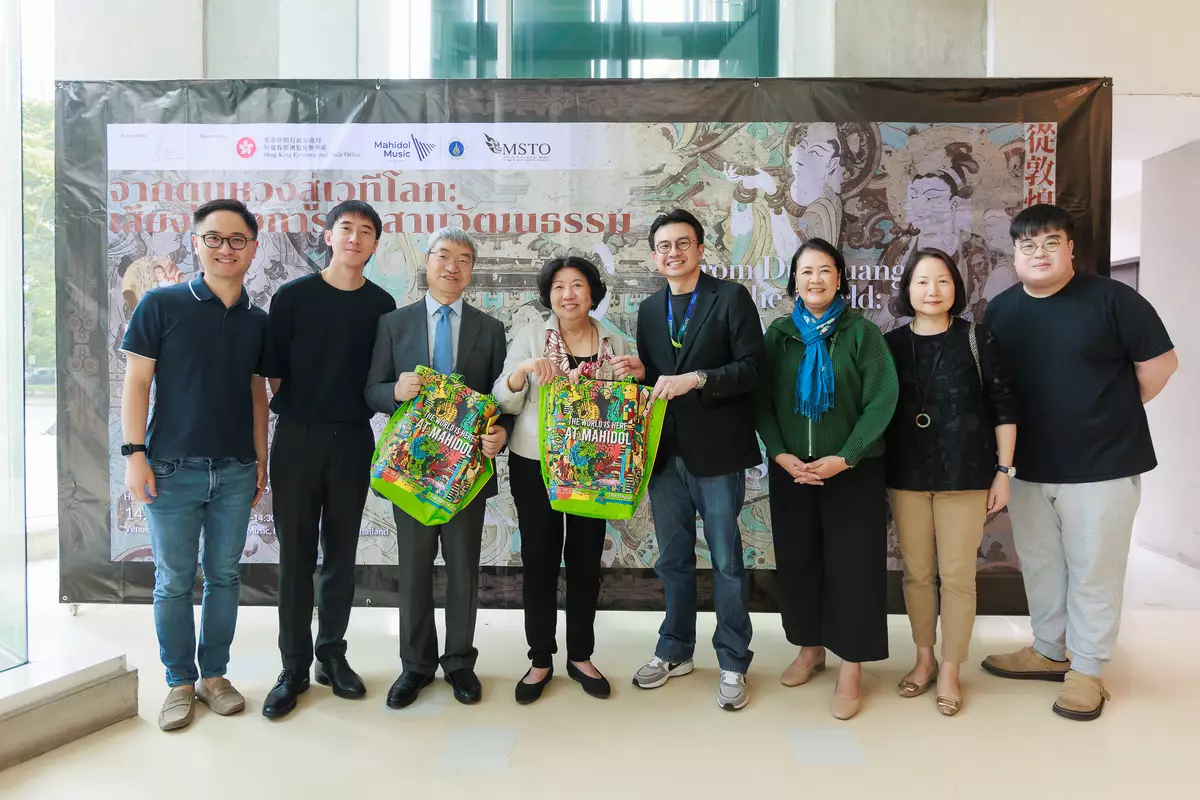
Mahidol University presenting souvenirs to the Ensemble and Dr. Zhao Shengliang after the lecture, Photo source: the Hong Kong Gaudeamus Dunhuang Ensemble
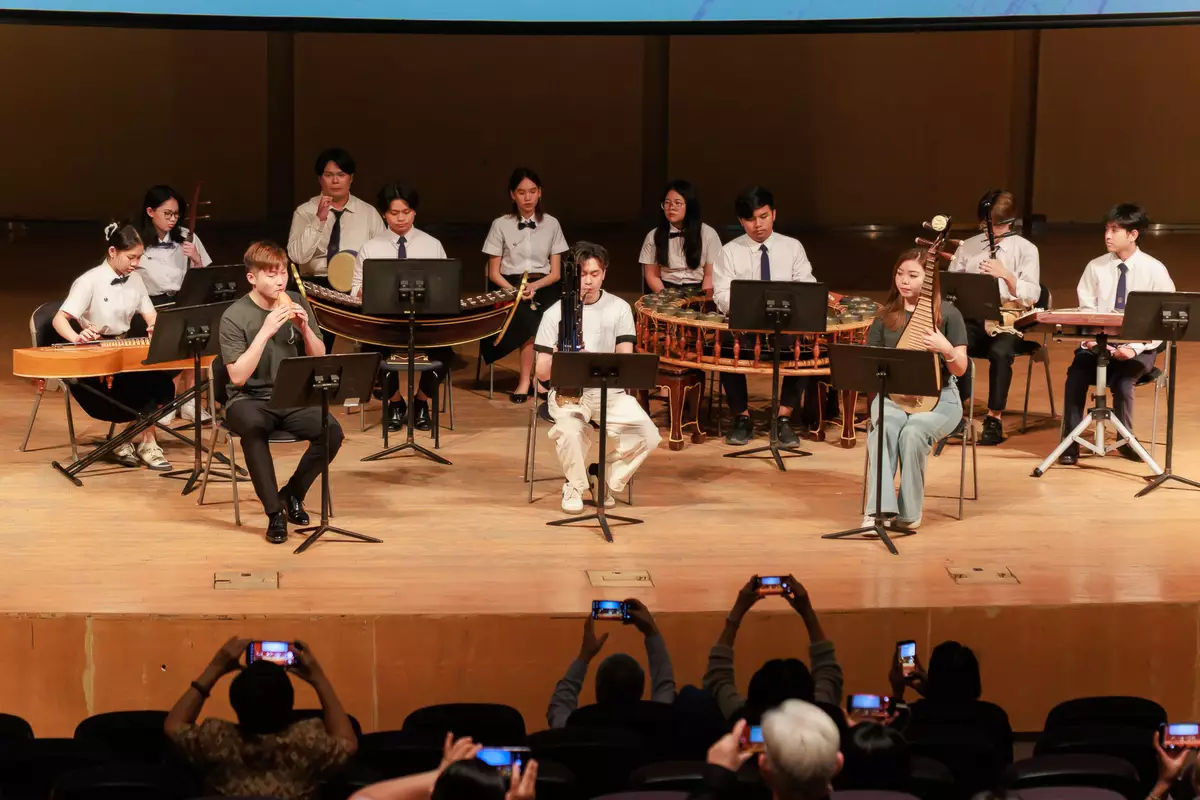
Ensemble musicians performing with Mahidol Thai Traditional Music Ensemble, Photo source: the Hong Kong Gaudeamus Dunhuang Ensemble
That afternoon, the Ensemble hosted a cultural workshop, introducing audience to musical elements found in Dunhuang murals. Musicians demonstrated three ancient instruments depicted in the murals—the Xun, Tang Sheng, and Quxiang Pipa—and performed melodies from ancient Dunhuang scores. The workshop concluded with a joint performance by Ensemble members and Mahidol Thai Traditional Music Ensemble using traditional instruments, showcasing a musical dialogue and fusion between Chinese and Thai cultures.
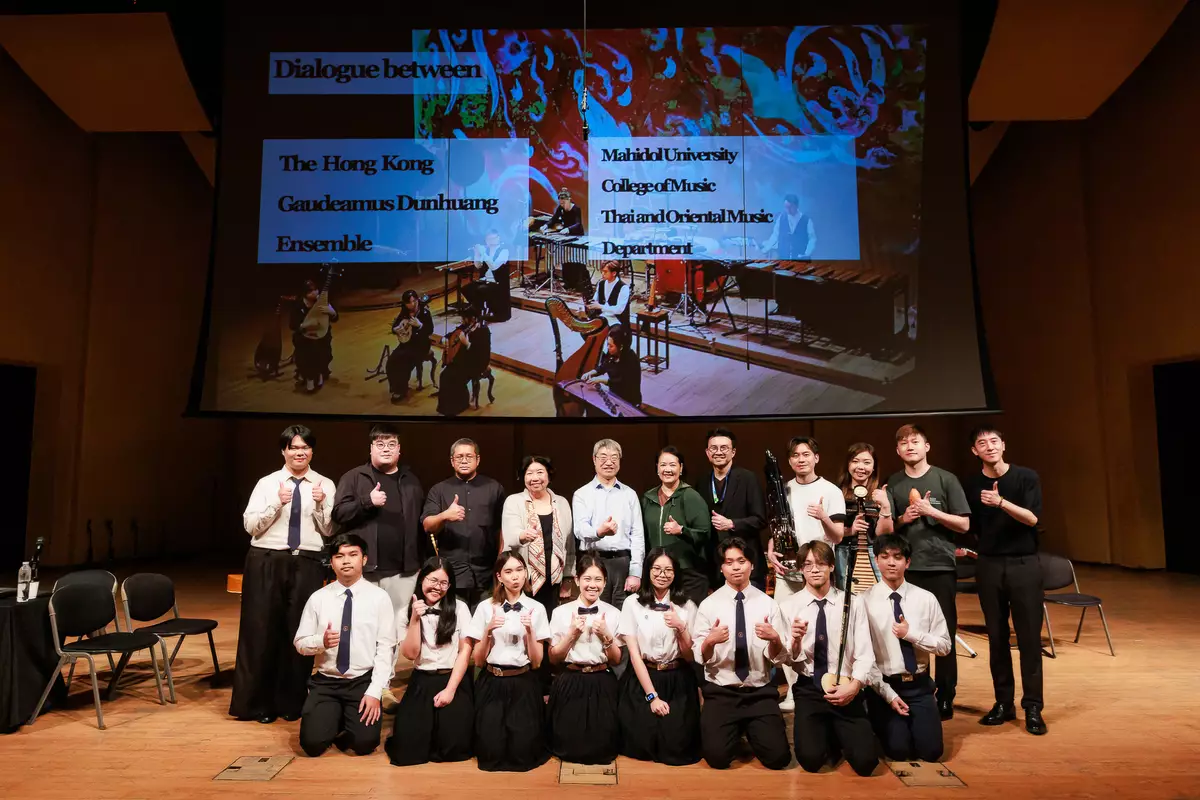
Group photo with Mahidol Thai Traditional Music Ensemble, Photo source: the Hong Kong Gaudeamus Dunhuang Ensemble
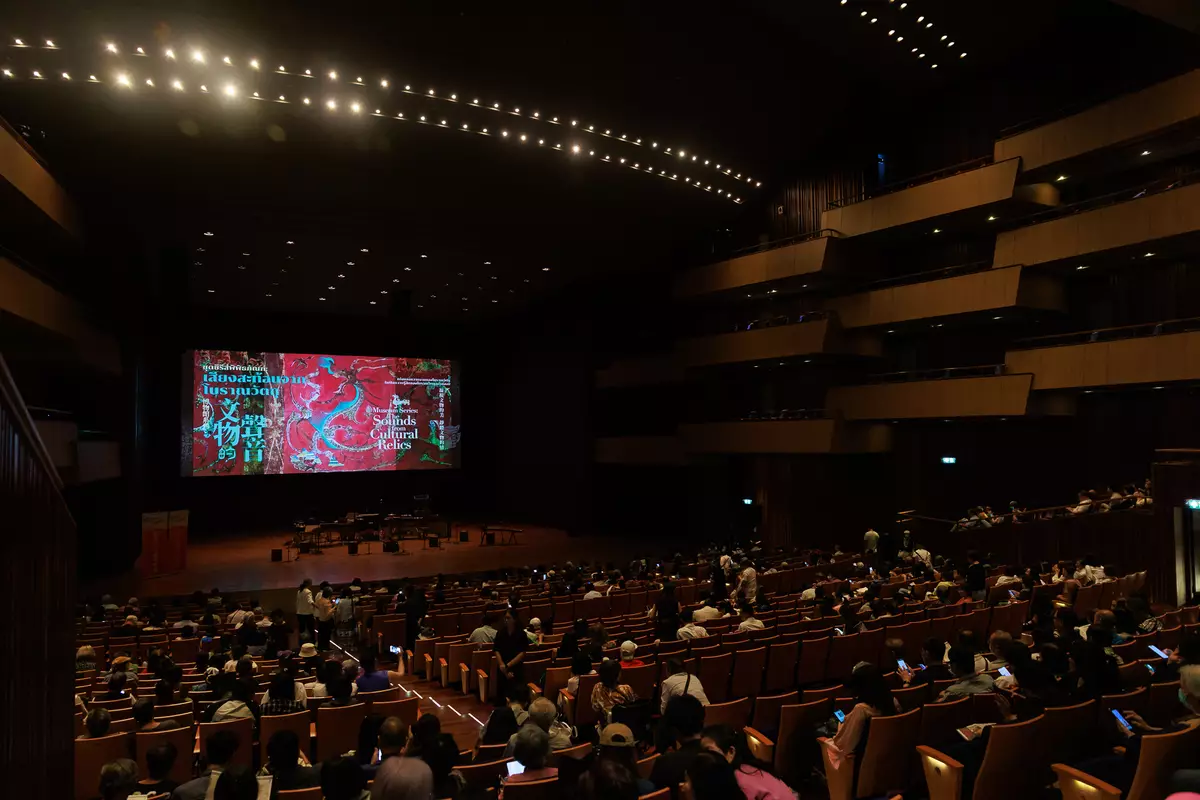
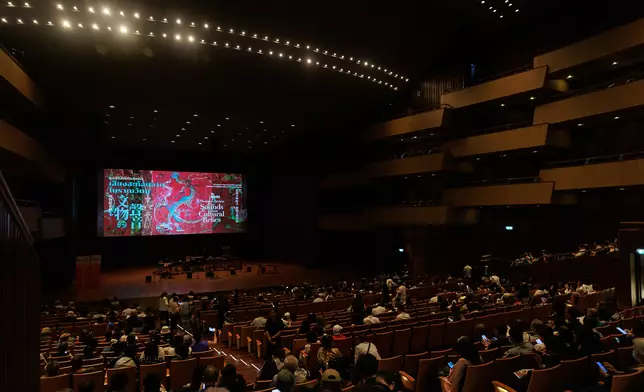
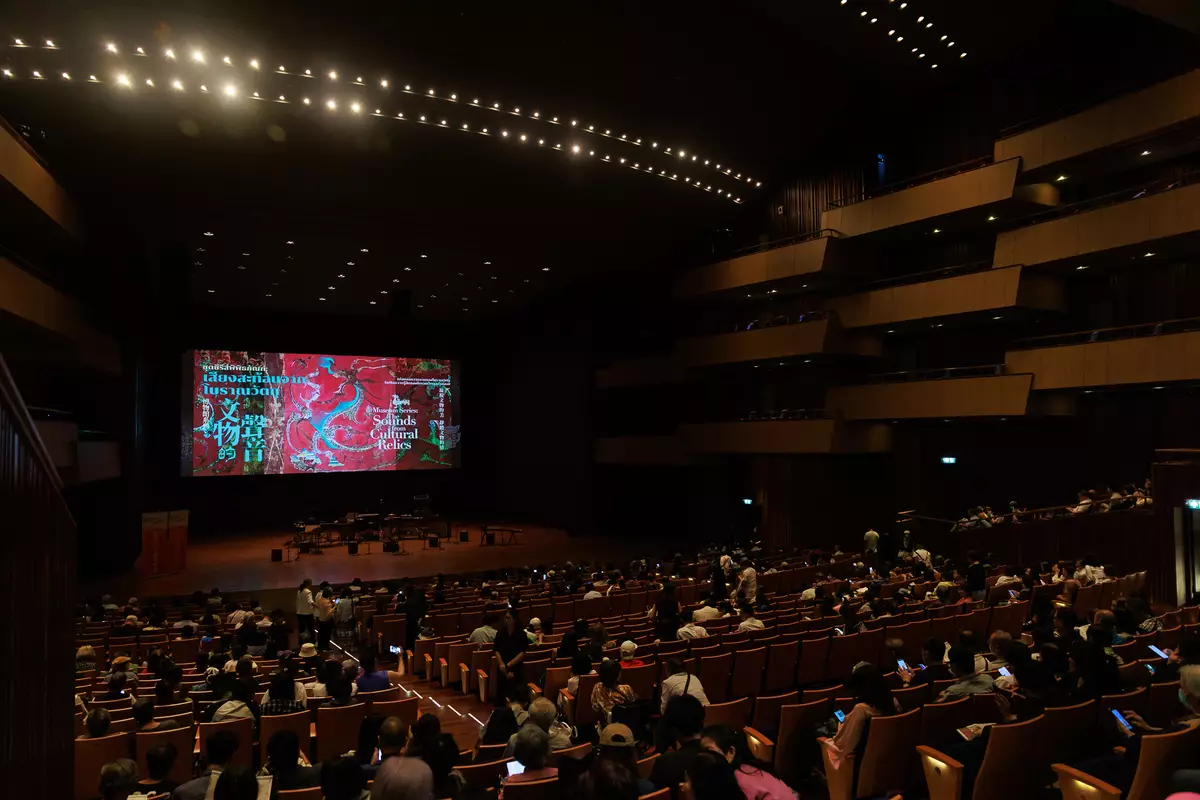
Stage photos from “Museum Series: The Sounds from Cultural Relics” concert, Photo source: the Hong Kong Gaudeamus Dunhuang Ensemble
On March 15, the Ensemble presented the concert “Museum Series: The Sounds from Cultural Relics” at Prince Mahidol Hall, which was filled. Distinguished guests included Mr. LAM Chun Wah, Parson, Director of the Hong Kong Economic and Trade Office in Bangkok; Dr. Piyawat Louilarpprasert, Dean of Mahidol University’s College of Music; Ms. Leonie Ki, Founder and Honorary Director of the Ensemble; Mr. Yang Xiaolong, Counsellor (Cultural Affairs), Embassy of the People’s Republic of China in the Kingdom of Thailand; and Dr. Zhao Shengliang, Honorary Advisor, Hong Kong Gaudeamus Dunhuang Ensemble; Former Party Secretary of the Dunhuang Academy. Together, they witnessed this cultural feast that fused relics and music.
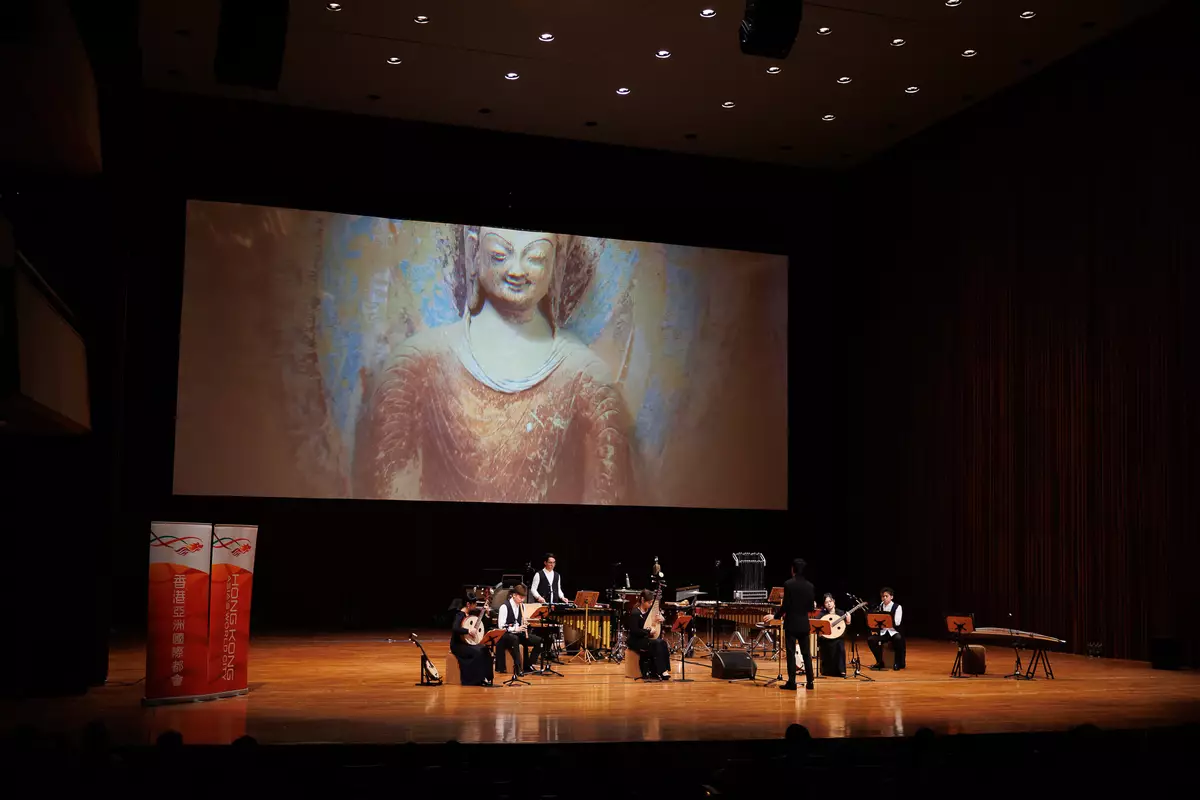
Stage photos from “Museum Series: The Sounds from Cultural Relics” concert, Photo source: the Hong Kong Gaudeamus Dunhuang Ensemble
The concert featured original compositions inspired by relics from Dunhuang, the Palace Museum, Sanxingdui, Henan Museum, and Hong Kong, guiding Thai audiences on a journey through time to hear the voices behind these artifacts. The Ensemble was joined by guest performer Ms. Han Yan, a Pipa performer from Shanghai, who performed the solo “the Nature” with the Ensemble. Through the unique timbre of the Pipa, the piece depicted the awe and imagination of ancient people toward the mysterious forces of nature, inspired by the mural “Four Supernatural Beings Surrounded by Clouds”.
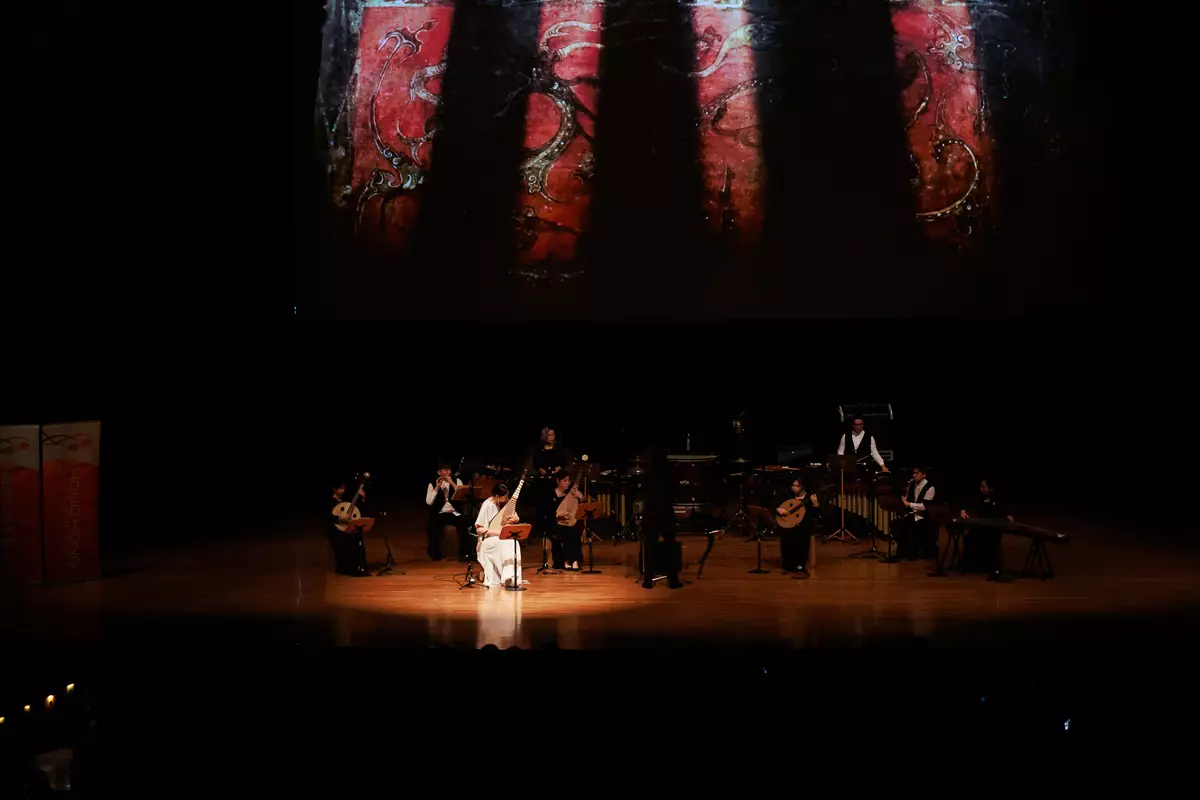
Stage photos from “Museum Series: The Sounds from Cultural Relics” concert, Photo source: the Hong Kong Gaudeamus Dunhuang Ensemble
The audience’s enthusiasm was overwhelming, with many reluctant to leave after the concert. Numerous attendees expressed amazement at the Ensemble’s creativity in transforming ancient relics into music. One music student shared: “This is my first time hearing the sounds of Dunhuang. The timbre of the instruments and the emotions of the music deeply moved me and sparked my strong interest in Chinese traditional culture.”
The concert featured seven original works, all composed by the Ensemble’s resident composers Mr. Kam Shing Hei and Mr. Chu Kai Yeung, drawing inspiration from Dunhuang murals, museum relics, and their stories. The concert also integrated visual imagery, weaving together auditory and visual experiences to evoke imagination and emotion toward Chinese cultural arts.
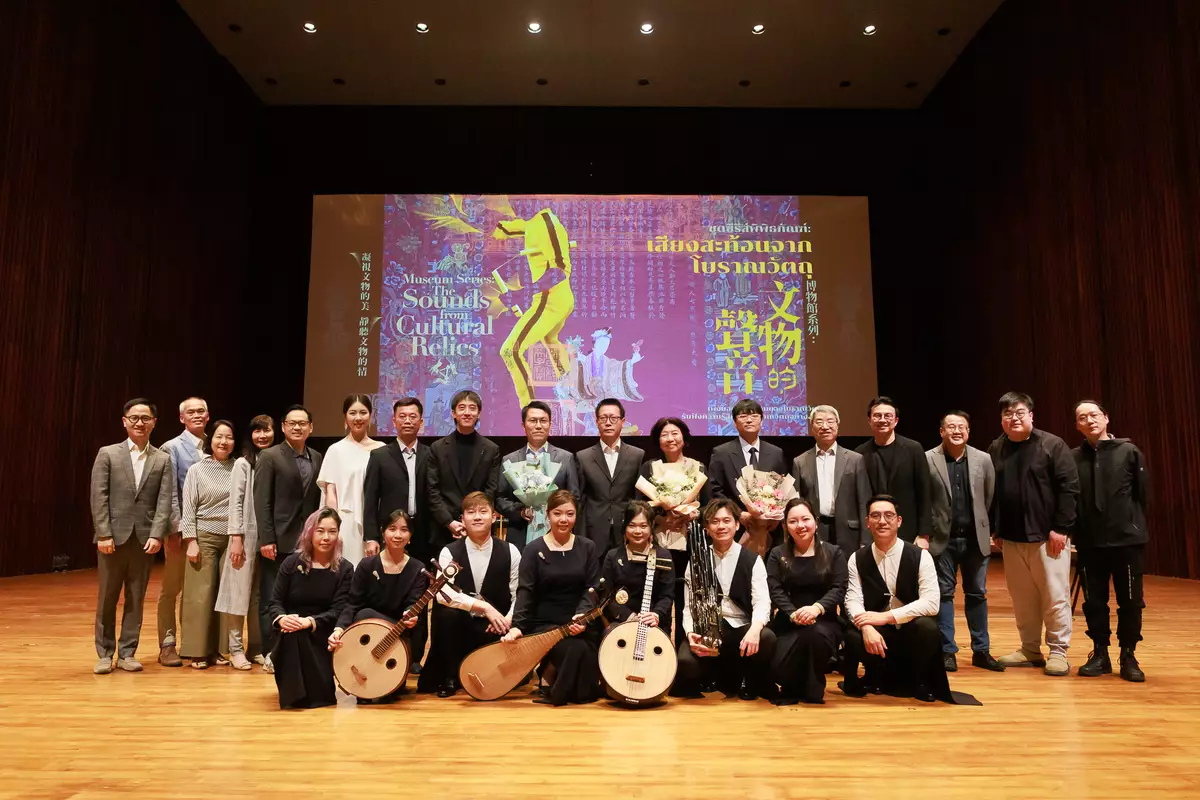
Key guests of the concert: Mr. Lam Chun Wah, Parson (9th from the right – Director, The Hong Kong Economic and Trade Office in Bangkok), Mr. Yang Xiaolong (8th from the right – Counsellor (Cultural Affairs), Embassy of the People’s Republic of China in the Kingdom of Thailand), Ms. Leonie Ki (7th from the right – Founder and Honorary Director, Hong Kong Gaudeamus Dunhuang Ensemble), Dr. Piyawat Louilarpprasert (6th from the right – Dean of the College of Music, Mahidol University), Dr. Zhao Shengliang (5th from the right – Honorary Advisor, Hong Kong Gaudeamus Dunhuang Ensemble; Former Party Secretary of the Dunhuang Academy), Photo source: the Hong Kong Gaudeamus Dunhuang Ensemble
Director of the Hong Kong Economic and Trade Office in Bangkok, Mr Parson Lam, praised the HKGDE as a remarkable cultural ambassador for Hong Kong. He said: “Through a distinctive blend of music, arts and heritage, the Ensemble brings the rich legacy of Dunhuang to life while underscoring Hong Kong’s vibrancy as a centre for arts and culture. We are delighted that this programme has provided a meaningful platform for cultural exchange and artistic dialogue between Hong Kong and Thailand.”
Mahidol University’s College of Music noted: “The audience experienced a breathtaking soundscape where ancient murals, sacred statues, and Silk Road legends were reimagined through contemporary music.”
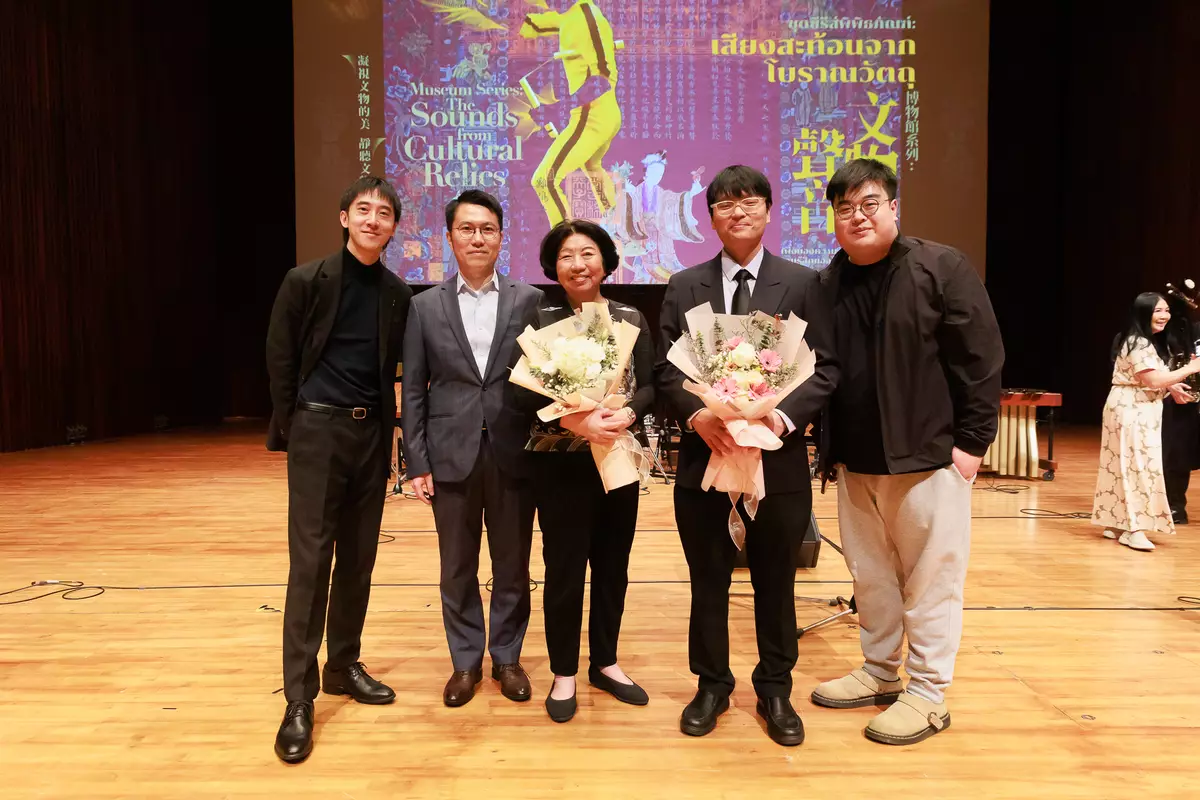
Photo of Representatives from the Three Organizers, From left: Mr. Kam Shing Hei (Artistic Director and Resident Composer, Hong Kong Gaudeamus Dunhuang Ensemble), Mr. Lam Chun Wah, Parson (Director, The Hong Kong Economic and Trade Office in Bangkok), Ms. Leonie Ki (Founder and Honorary Director, Hong Kong Gaudeamus Dunhuang Ensemble), Dr. Piyawat Louilarpprasert (Dean of Mahidol University College of Music), Mr. Alvin Chu (Deputy Artistic Director, General Manager, Technical Director, and Resident Composer, Hong Kong Gaudeamus Dunhuang Ensemble), Photo source: the Hong Kong Gaudeamus Dunhuang Ensemble
Ms. Ki Man Fung, Leonie, Founder of the Ensemble and Executive Director of the concert, concluded: “From Europe to Southeast Asia, the Ensemble has taken steady steps to break through linguistic and geographical boundaries. Through music and cultural exchange, we are gradually realizing our vision of becoming a ‘Self-initiated Cultural Ambassador.’ We will continue to use music as a bridge and soft power to promote Chinese culture, art, and music to the world.”