
Key Financial Highlights
- Net Interest Income: The Group reported a robust net interest income of RMB12,459 million in 2025, up 22.44% year-on-year, marking a significant improvement in core banking profitability.
- Net Profit: Net profit reached RMB6,105 million, a 10.58% increase from the previous year, driven primarily by stronger interest income and effective cost management.
- Quarterly Performance: Quarterly net profit attributable to shareholders showed steady growth, with Q3 being the strongest at RMB1,689.7 million.
- Dividend Policy: The Board proposed a cash dividend of RMB0.4602 per share (tax inclusive), subject to approval at the annual general meeting. The Bank will maintain dividend stability even if share capital changes due to convertible bond conversions. Both A-share and H-share holders will receive dividends, with H-share holders having the option to elect RMB or HKD currency.
- Profit Appropriation: RMB531 million (10% of net profit) will be allocated to the statutory surplus reserve and RMB2,140 million (1.5% of risk assets) to the general reserve, reinforcing capital strength.
Strategic Developments and Business Initiatives
- Growth Ambitions: 2026 marks the start of the 15th Five-Year Plan. The Bank aims to achieve the RMB1 trillion asset scale, focusing on “five highs” (high-target guidance, high-position transformation, high-efficiency operations, high-quality service, and high-quality development).
- Business Expansion: Corporate banking, financial market business, and investment banking are key growth engines, with increased emphasis on financial leasing, consumer finance, and trade finance. Wealth management and intermediary income businesses are being developed for diversification.
- Asset Structure Optimization: The Bank will prioritize capital-light, high-return credit businesses, and increase holdings of high-rated, high-liquidity assets, while managing liability costs and deposit term structure to enhance overall profitability.
- Risk Management: Risk controls are being strengthened with enhanced digital tools for early warning and post-lending management, and a focus on non-performing asset resolution through collaboration with government and judicial bodies.
- Market Recognition: The Bank received several prestigious awards, including “Best Practice for 2024 Annual Results Announcement,” “Outstanding Capital Market Communication Award,” and “Most Innovative Institution in the Market.”
Business Segment Performance
- Investment Banking: The Bank solidified its leadership in the Chongqing region by underwriting over 100 debt financing instruments worth more than RMB20 billion, leading to a record market share. Notably, it facilitated several landmark issuances, such as its first science and technology innovation financial bond and first green financial bond.
- Asset Management: Despite challenging market conditions, the asset management business remained stable, with strengthened compliance, system upgrades, and product innovation aimed at boosting liquidity and risk management. The Bank enhanced customer education and professional skills for front-line staff.
- Financial Investments: The Group’s financial investments grew by 15.92% to RMB403.3 billion, with a significant shift toward amortized cost investments, particularly in fixed income products.
- Loan Quality: The Bank maintained strong asset quality, with risk-based loan classification and regular monitoring. The allowance for impairment losses increased to RMB3,858 million (+20.99%), reflecting prudent risk provisioning.
Risk and Capital Management
- Interest Rate Risk: The Bank closely monitors and manages interest rate risk through gap analysis and internal fund transfer pricing. A 100 basis point parallel move in yield curves would impact net interest income by approximately RMB1.43 billion, underscoring the importance of active risk management.
- Liquidity Risk: The Group further enhanced its liquidity risk management framework, including policy system upgrades, digital monitoring, and dynamic management of liquidity exposures, ensuring robust compliance with regulatory requirements.
- Capital Adequacy: The Bank’s capital adequacy ratios remain strong, supported by profit retention and prudent reserve allocations. External audits by Ernst & Young produced unqualified opinions, reinforcing confidence in the Group’s financial reporting and capital management.
Corporate Governance and Shareholder Information
- Governance Structure: The Bank completed major revisions to the Articles of Association, enhancing the rights and obligations of shareholders, powers of the general meeting and Board, and introducing special Board committees. The Board and management strictly comply with Hong Kong and PRC regulations, with clear separation of roles and enhanced transparency.
- Share Capital: Ordinary share capital increased slightly due to convertible bond conversions. As at year-end, there were 3,474,588,278 ordinary shares outstanding, with only 16.16 million shares subject to selling restrictions. Pledged shares represented 1.87% and frozen shares 0.01% of total capital.
- Shareholder Engagement: The Bank intensified investor relations efforts, including roadshows, presentations, and open channels for shareholder enquiries. The shareholder communication policy was regularly evaluated for effectiveness.
- Dividend Policy: The Bank maintains a consistent and transparent dividend policy, with clear thresholds for profit allocation and capital adequacy requirements. No profit distribution occurs if capital adequacy falls below regulatory thresholds.
Other Key Disclosures & Price-Sensitive Issues
- No Major Asset Transactions: The Bank did not conduct any major asset purchases, sales, or mergers during the period, reducing uncertainty for investors.
- No Changes in Accounting Policies: No significant changes in accounting policies, estimates, or corrections of errors were made during the year, indicating stability in financial reporting.
- Regulatory Compliance: No occupation of funds by controlling shareholders or related parties for non-operating purposes was reported. All connected transactions were exempt from shareholder approval under Hong Kong rules and did not require additional disclosure.
- Structured Entities: The Bank has exposure to structured entities (such as trust plans and asset management plans), but these are managed within well-defined risk parameters and are regularly reviewed.
- Potential Share Price Movers:
- The strong profit growth, increased dividend, and ambitious asset growth target (RMB1 trillion) could positively influence investor sentiment.
- The Bank’s continued capital market recognition and product innovation, especially in investment banking and asset management, may attract institutional interest.
- Consistent risk management, robust capital adequacy, and transparent governance provide downside protection, supporting share valuations.
- Any material changes in asset quality, capital adequacy ratios, or regulatory environment could impact future performance and should be closely monitored by shareholders.
Conclusion
Bank of Chongqing’s 2025 Annual Report demonstrates consistent financial strength, prudent risk management, and forward-thinking strategic planning. With an upward trajectory in profitability, reinforced capital reserves, and a clear commitment to shareholder returns and governance, the Bank is well-positioned for further growth in the coming years.
Investors should remain attentive to the Bank’s progress on its asset growth targets, dividend policy execution, and evolving regulatory requirements, as these will have the greatest potential impact on future share performance.
Disclaimer: This article is for informational purposes only and does not constitute investment advice. Investors should carefully review the full annual report and consider their own risk profiles before making any investment decisions. The author and publisher accept no liability for actions taken based on this summary.
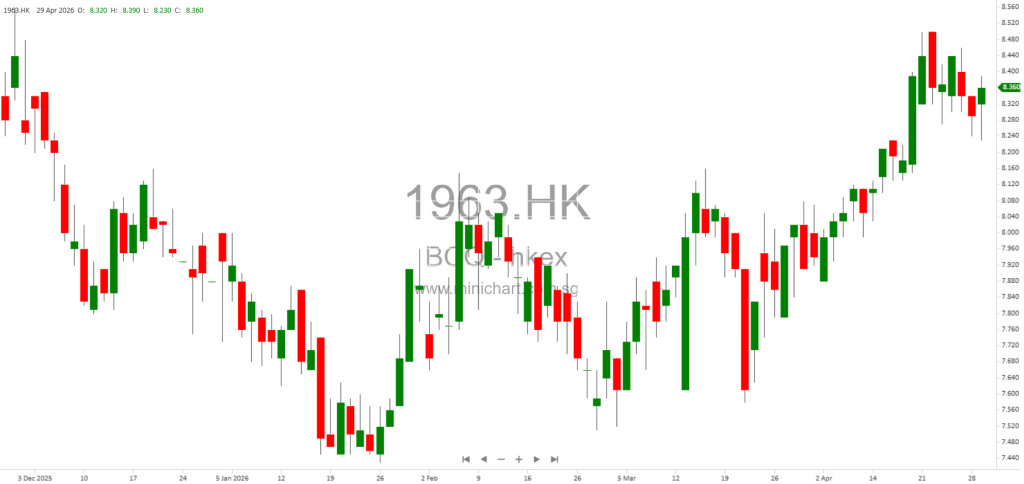
View BCQ Historical chart here