
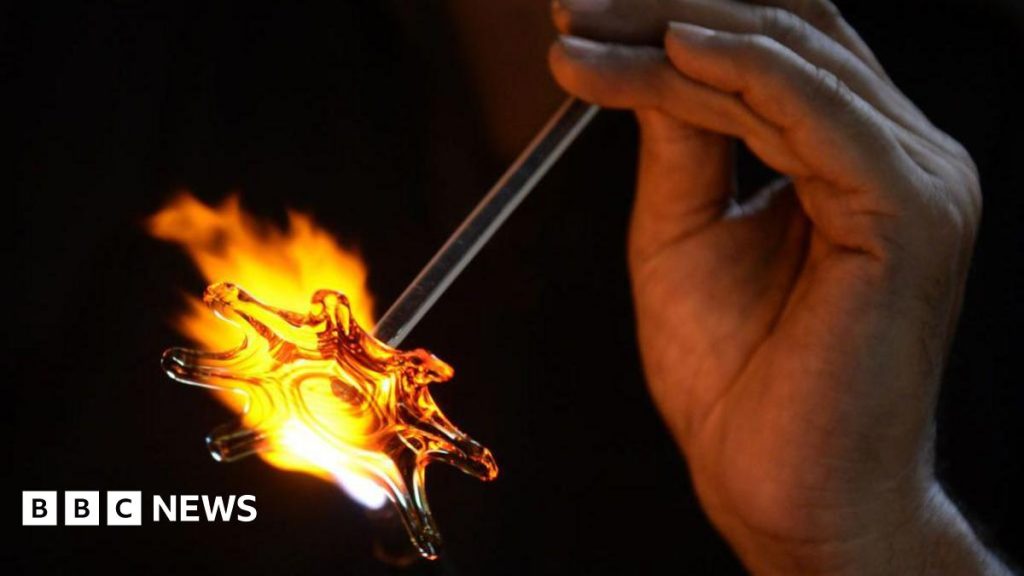
The situation reflects the fragility of the industry – and how quickly disruptions can ripple through the livelihoods it supports.
Glass production is a key part of India’s small and medium-sized sector, which accounts for about 30% of gross domestic product and employs hundreds of millions of people. Disruptions to industries like this can, therefore, have a direct impact on incomes, particularly for low-wage workers.
That pressure is already being felt in everyday life.
The conflict in the Middle East has hit workers who were already grappling with rising living costs. Wages for many families have failed to keep pace with inflation, while recent increases in cooking gas prices – linked to global supply disruptions – have added to the strain.
A recent UN Development Programme report, external warns that the conflict could push as many as 2.5 million people in India into poverty.
Frustration spilled over earlier this month, when thousands of factory workers in parts of northern India blocked roads demanding higher wages and better working conditions. What began as largely peaceful protests escalated in some areas, turning violent in parts of Uttar Pradesh. The state later announced a temporary wage increase, but workers said it fell short of their demands.
The government says it is stepping in to manage the fallout.
Federal ministries have been holding regular briefings and say they are taking steps to ensure stable supplies of petroleum products and cooking gas. The petroleum ministry says it has prioritised energy supplies to key sectors such as pharmaceuticals, steel, automobiles and agriculture.
But economist Kumar says longer-term measures will be needed to manage the crisis.
During the fighting in March and early April, energy infrastructure across parts of the Middle East was targeted – damage that could take months to repair and delay a return to stable supplies.
“For months after the Strait reopens, the situation will not return to normal,” he said.
For workers in Firozabad, that uncertainty is already part of life.
Umesh Babu, 35, spends long hours in sweltering conditions making bangles in an open-air workshop under a tin roof that offers little relief from the heat.
The furnace, burning at more than 1,000C, is something he has learned to live with.
What worries him is how he will provide for his family if the work dries up.
“Earlier we would get at least six days of work a week, now it’s down to four,” he said. To cut costs, Babu says he has withdrawn his children from school.
“If the factories stop hiring us, I don’t know what else to do. This is the only skill I have.”
Follow BBC News India on Instagram, external, YouTube,, external X, external and Facebook, external.