
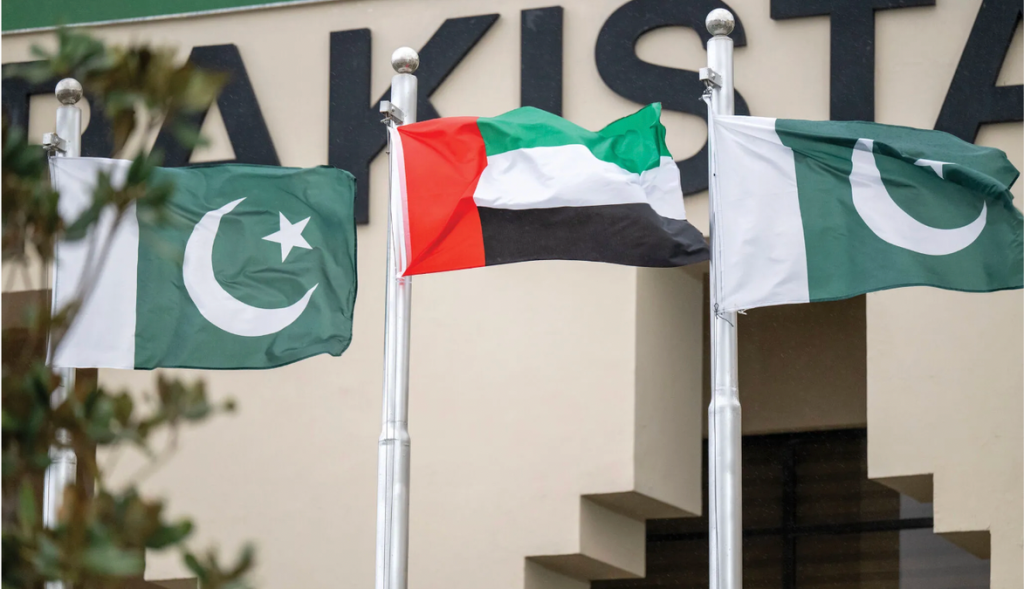
Pakistan–UAE ties are showing visible strain over Abu Dhabi’s strategic and economic engagement with New Delhi, Islamabad ‘s defence cooperation with Saudi Arabia and its overt support for Iran during the recent conflict. These important issues have further complicated the matters between the two countries
The relationship has deteriorated further on the economic front. The UAE’s decision not to extend the repayment deadline for a $3.5 billion loan—originally provided to help Pakistan navigate a severe financial crisis—has added to Islamabad’s woes and signalled a cooling of financial support. Together, these factors have contributed to a sharp downturn in bilateral ties, which were once marked by close strategic alignment and robust economic cooperation.
UAE President Sheikh Mohamed bin Zayed Al Nahyan has profoundly strengthened strategic ties with India, culminating in a Comprehensive Strategic Partnership and a bilateral trade volume reaching US$ 100 billion in FY 2024-25. Through frequent high-level visits, including in January 2026, the leaders have deepened cooperation in defence, energy, technology, and economic sectors
Sheikh Mohammed Bin Zayed paid an official visit to India in January and held extensive talks with Prime Minister Narendra Modi and two leaders acknowledged bilateral defence and security cooperation as a core pillar of the Comprehensive Strategic
The bilateral relations between Pakistan and the UAE further deteriorate when the Emirates expressed displeasure over Pakistan’s neutral stance in regional conflicts involving Iran and Islamabad’s prioritization of Saudi Arabia and Iran over the UAE Pakistan also supported the Kingdom on the Yemen issue, The UAE was compelled to withdraw its troops from the troubled Yemen after Saudi Arabia gave it 24-hour ultimatum.
UAE leadership reportedly communicated to Pakistan’s Army Chief, Asim Munir, that they felt Pakistan did not show the same level of solidarity with the UAE as it did with other regional partners during the recent conflicts. The strained ties highlight deeper discomfort in Islamabad regarding the growing strategic and economic partnership between the UAE and India, particularly the I2U2 grouping.
Despite these strains, both countries officially continue to emphasize their long-standing partnership, with ongoing discussions to convert some debt into investment, though the immediate financial demands point to a significant, at least temporary, cooling in bilateral ties. Pakistan’s Iran tilt in the West Asian war seems to have further fractured the ties. The UAE came under missile attacks from Tehran during retaliatory strikes against the U S and Israel. “Pakistan’s mediation effort appeared to give too little weight to Emirati security exposure, despite the supposedly close relationship and broader security understandings between the two sides,” he said.
There are over 1.8 million Pakistani workers who live and work in the UAE, and these migrant workers could face uncertainty if the disagreements between Islamabad and Abu Dhabi worsen and the diplomatic tensions escalate. Kristian Coates, a Middle East fellow at Rice University’s Baker Institute for Public Policy, warned that a new regional alignment of “Turkey and Pakistan drawing closer to the Saudi position, and Israel and the US remaining closely associated with the Emiratis” could yet return – and that UAE policymakers were “likely to continue pursuing their own vision of national and regional interests” once the war ended.