
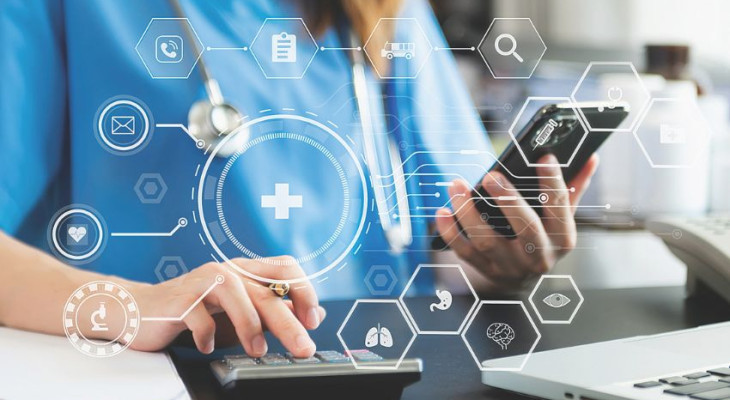
The way we access healthcare has changed quite a bit over the last few years. What once meant sitting in a crowded waiting room for hours can now, in some cases, be done from your phone. Telehealth, which includes online consultations and remote monitoring, has moved beyond being just a convenient option. It is becoming a regular part of how people manage their health. But the real question is, will it replace traditional clinics or simply work alongside them?
A Shift That Started With Necessity
The big push for telehealth in India came during COVID-19. When movement was restricted, in-person doctor visits dropped sharply, while online consultations jumped by nearly 300per cent. What began as a temporary workaround slowly became something people got used to.
This shift revealed something important. Healthcare does not always need a physical space. With more than 958 million internet users in India today, the basic foundation for telehealth is already in place. Platforms like eSanjeevani and several private apps have made it easier for people to consult doctors without stepping out.
Still, just because something is convenient does not mean it can fully replace what already exists.
Where Telehealth Works Best
Telehealth works really well in situations where access is limited. In a country where a large part of the population lives in rural areas but most doctors are based in cities, digital consultations can make a real difference.
Follow-ups, minor illnesses, mental health support, and managing long-term conditions are all areas where telehealth fits in naturally. Patients save time, avoid travel, and sometimes even reduce costs. For someone dealing with diabetes or seeking therapy, a quick video call can often be enough.
It also encourages people to seek help earlier. Many tend to delay doctor visits due to distance, busy schedules, or even hesitation. Telehealth lowers that barrier. In that sense, it expands the reach of healthcare rather than replacing anything.
Why Clinics Still Matter
At the same time, there are some limitations involved here. Everything cannot be diagnosed on a computer screen. There are some instances where a physical examination plays an essential part. For instance, taking the vital signs, looking for physical findings, and even seeing the general appearance of the patient can be impossible from afar.
Serious conditions, emergencies, surgeries, and complex diagnoses still require in-person care. Regardless of technological advancements, the importance of hands-on approach cannot be overlooked.
In addition, patients often feel most comfortable seeing their physician in-person when they are facing serious health issues. That sense of reassurance is difficult to recreate through a screen. That sense of reassurance is difficult to recreate through a screen.
A More Realistic Future: Hybrid Care
Instead of looking at telehealth and clinics as competing options, it makes more sense to see them as parts of the same system. Healthcare is gradually moving towards a hybrid model.
A patient might begin with an online consultation, visit a clinic for tests or a physical check-up, and then continue follow-ups online. This mix makes the entire process simpler and more efficient.
Hospitals and healthcare providers are already moving in this direction. Many are combining digital tools with traditional care to offer a more connected and flexible experience.
The Role of Public-Private Partnerships in Making Hybrid Care Work
The success of a hybrid model in the real world requires that it not be dependent solely on one aspect. There needs to be some amount of cooperation between the government and the private entities. The public healthcare systems provide the scale and reach, especially for smaller cities and the rural population. On the other hand, the private firms tend to have better technology and faster implementation. Together, both enable the integration of technology and on-ground operations in healthcare. These partnerships are essential for driving a more integrated patient experience within the healthcare continuum.
So, Replacement or Complement?
It is unlikely that telehealth will completely replace traditional clinics. The need for physical infrastructure, medical equipment, and direct human interaction is too important to ignore.
At the same time, telehealth is no longer just an add-on. It has become an important layer in the healthcare system, improving access and making care more flexible.
In the end, it is not about choosing one over the other. It is about using both in a way that actually works for patients. Telehealth can handle what it does best, while clinics continue to play their role where it matters most.
That balance is what will shape the future of healthcare. Not replacement, but a more practical way of working together.