
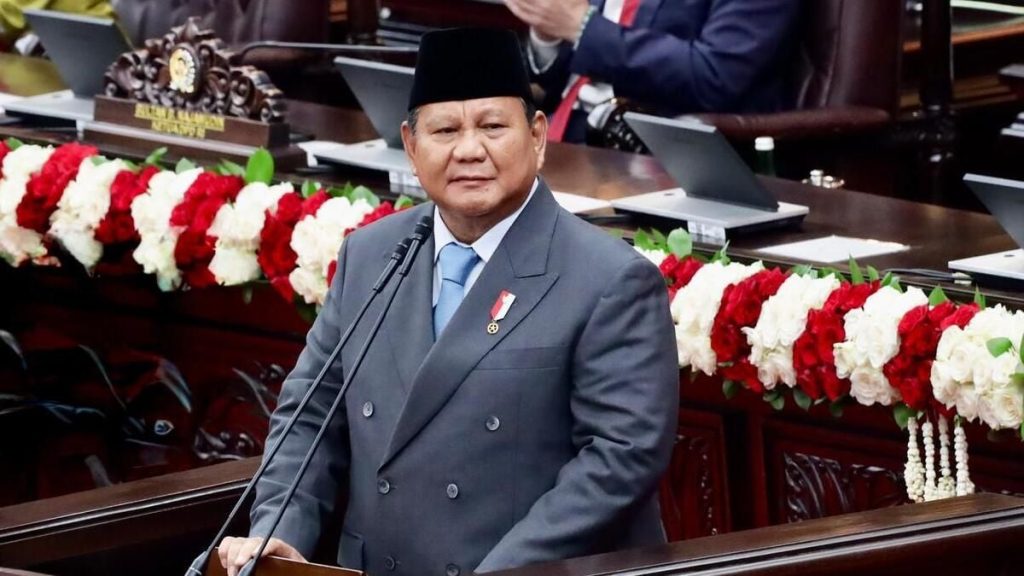
Indonesia experienced a marked decline in human rights conditions during the second year of President Prabowo Subianto’s administration, according to Amnesty International, which described 2025 as a “catastrophic year” for civil liberties and social justice in the country.
The assessment forms part of Amnesty’s latest global report, Human Rights in the World 2025/26, which identifies 2025 as the most dangerous year for human rights worldwide, citing rising “predatory attacks” across 144 countries.
The report warns of a broader global shift marked by increasing challenges to international law, multilateralism and established human rights protections.
In Indonesia, Amnesty said these global trends were reflected in intensifying domestic violations, including restrictions on dissent, the expansion of military influence in civilian governance, and systemic abuses affecting indigenous communities.
Growing concerns over governance and dissent
Usman Hamid, Executive Director of Amnesty International Indonesia, said violations had become more prevalent during the administration of President Prabowo and Vice President Gibran Rakabuming Raka.
He cited measures ranging from curbs on freedom of expression to land seizures and the criminalisation of indigenous peoples.
“Predatory state actions are not confined to the global stage,” he said. “In Indonesia, they target citizens advocating for constitutional rights, including the right to a decent standard of living, freedom of expression and customary land rights.”
Restrictions on freedom of expression
The report documents a series of incidents that illustrate what Amnesty describes as an increasingly restrictive environment for freedom of expression and assembly.
In February 2025, the band Sukatani withdrew a song critical of the police from online platforms following alleged intimidation.
A year later, in February 2026, a children’s music album titled Cita-citaku (Ga Jadi Polisi) was removed from circulation shortly after release, reportedly to avoid controversy.
Ahead of Indonesia’s 80th Independence Day celebrations in August 2025, authorities conducted raids in several cities targeting displays of symbols associated with the Japanese anime One Piece, which had been adopted by some members of the public as expressions of dissatisfaction with the government.
Flags were confiscated from homes and vehicles, murals were removed, and officials warned of potential legal consequences for participants.
Amnesty also reported increased surveillance of online activity.
At least 58 individuals were prosecuted in 2025 under provisions of Indonesia’s Electronic Information and Transactions (ITE) Law, which has long been criticised by rights groups.
Usman said such cases demonstrated a pattern of disproportionate responses to peaceful expression. He added that the president had publicly characterised protests as “treason” and “terrorism”, sometimes alleging foreign involvement, a stance Amnesty said contributed to a climate of intimidation.
Rise in attacks on human rights defenders
The report further highlights a sharp rise in attacks against human rights defenders. Amnesty recorded 104 such attacks in the first half of 2025, rising to 295 by the end of the year. Between January and March 2026, at least 25 additional cases were documented.
Among the incidents cited was a March 2026 acid attack on activist Andrie Yunus, which Amnesty said allegedly involved members of Indonesia’s Strategic Intelligence Agency.
The organisation stated that, despite repeated calls, authorities had not established an independent fact-finding team to investigate such cases.
“The year 2025 was a dangerous time for human rights defenders,” Usman said, describing it as a “year of living dangerously” for those engaged in critical advocacy.
Crackdown on protests and use of force
Large-scale protests throughout 2025 were met with what Amnesty described as excessive use of force by security forces.
Demonstrations were driven by public concerns over economic conditions, including rising living costs, as well as opposition to revisions to the Indonesian Armed Forces (TNI) Law that expanded the military’s role in governance.
During May Day protests between May and July, at least 24 individuals were arbitrarily arrested in cities including Jakarta, Bandung and Semarang.
By the end of the year, 14 remained on trial in Jakarta, while courts in Bandung and Semarang convicted 10 others.
A broader wave of demonstrations between 25 August and 1 September 2025, spanning 15 provinces, resulted in more than 4,000 people being detained and over 900 injured.
At least 10 people were killed during the crackdowns, including a protester in Jakarta who died after being run over by a police vehicle.
Amnesty said the case remained unresolved.
The organisation stated that these incidents pointed to a persistent pattern of impunity within state institutions.
Impact on indigenous communities
Indigenous communities were also identified as particularly vulnerable.
In South Papua, the Merauke Food Estate project displaced more than 40,000 indigenous people without what Amnesty described as adequate consultation or consent.
The project reportedly led to deforestation, loss of livelihoods and threats to food security.
In East Halmahera, North Maluku, 11 members of the Maba Sangaji indigenous community were allegedly criminalised, detained and subjected to ill-treatment after protesting against nickel mining activities.
The report also documents restrictions on religious freedom.
In June 2025, members of the Ahmadiyah community in Banjar, West Java, faced the closure of religious activities and threats from local authorities.
In Manado, an academic discussion on Ahmadiyah was cancelled following pressure from religious groups.
Incidents of violence against Christian communities were also recorded, including an attack on a youth retreat in Sukabumi and the forced dispersal of a religious education event in Padang, which left two children injured.
Amnesty further raised concerns over Indonesia’s climate policy, noting continued reliance on fossil fuels. The government’s 10-year electricity plan includes an additional 16.6 gigawatts of fossil fuel capacity, while renewable energy targets have been reduced from 20.9 gigawatts to 17 gigawatts. Plans for early retirement of coal-fired power plants have also been suspended for the 2026–2034 period.
In Papua, violence persisted throughout 2025. In May, four individuals linked to the West Papua Federal Republic were arrested and charged with treason after delivering letters advocating peaceful solutions.
Their subsequent transfer to Makassar prompted protests, during which security forces used live ammunition and tear gas, resulting in injuries and at least one death. The four were later sentenced to seven months’ imprisonment.
Marzuki Darusman, Chair of Amnesty International Indonesia’s Board, said human rights advocacy should not be viewed as foreign interference but as part of a broader national effort to uphold constitutional rights.
At the global level, Amnesty’s report points to escalating violations of international law and increasing pressure on international justice mechanisms.
It highlights conflicts and geopolitical tensions involving multiple states, alongside what it describes as growing resistance from civil society movements.
In Indonesia, such resistance was reflected in a series of protests throughout 2025, many led by younger generations.
However, Amnesty noted that these movements were frequently met with repression, reinforcing concerns about the country’s human rights trajectory.