
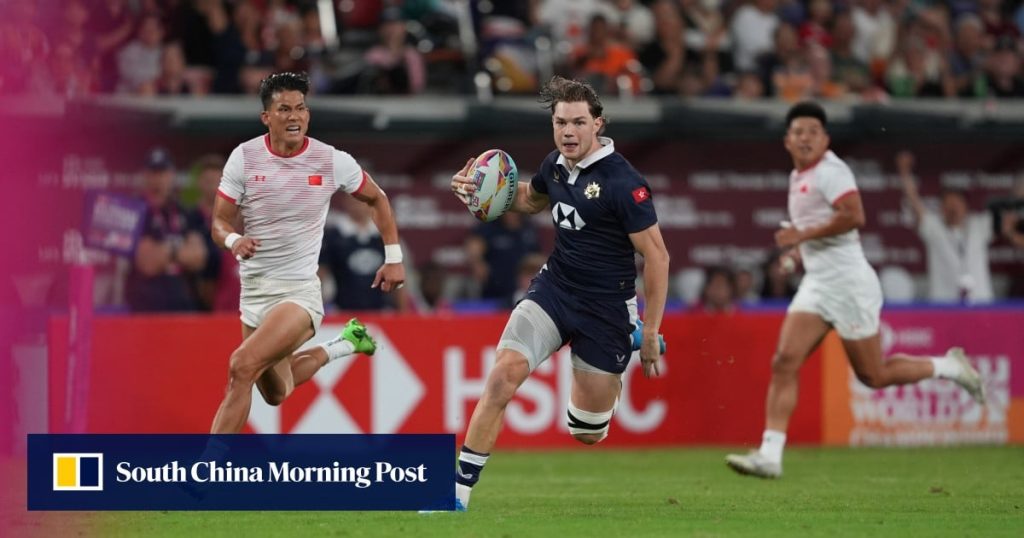
Rory Stewart-Cox said Hong Kong would aim to “lay down a marker” when they meet Asian Games hosts Japan at Kai Tak Stadium on Saturday.
Earning his third cap, Stewart-Cox scored the pick of Hong Kong’s six tries on Friday as the city team began their Melrose Claymores campaign with a 36-14 demolition of overmatched China.
Evading four challenges as he sprinted half the length of the pitch, Stewart-Cox touched down to banish the frustration of an injury-hit past six months.
“It’s been an up-and-down time but I’ve got a lot of confidence in myself and when I got the ball I knew what to do,” said Stewart-Cox, who was making just his second appearance since a debut in last year’s Hong Kong tournament.
Born in Edinburgh, Stewart-Cox is racing to obtain the Hong Kong passport that will allow him to compete in the Asian Games.
“That is what I have my sights on, it’s massive for Hong Kong and for our team,” he said. “I want to be a key figure in everything we do.”