
Close Menu
Simply Invest Asia
  • Home
  • About us
  • Explore industries/sectors
    • Automobile
    • Aviation
    • Banking
    • Biotechnology
    • Chemical & Fertilizer
    • Entertainment and Media
    • Food Processing
    • Healthcare
    • Iron and Steel
    • Leather
    • Mining
    • Oil and Gas
    • Pharmaceutical
  • Explore by countries
    • China
    • Dubai / UAE
    • Hong Kong
    • India
    • Indonesia
    • Japan
    • Malaysia
  • Explore cities
    • Bangkok
    • Beijing
    • Chongqing
    • Delhi
    • Dubai
    • Guangzhou
    • Jakarta
    • Kuala Lumpur
  • Why Asia
Facebook X (Twitter) Instagram Threads
Trending:
  • Law Society of Hong Kong concludes Beijing visit focused on national integration and 15th Five-Year Plan
  • Amendment to women’s quota law fails vote
  • SecurEyes Leads High-Level Dialogue on Cyber Resilience and Quantum Readiness in Kuala Lumpur
  • Family seeks 96-year-old man last seen heading to Bangkok
  • 2026 Beijing Auto Show to feature 1,451 vehicles and 181 premieres
  • ‘Clock ticking’ to extradite him to Ireland
  • Helium Shortages & Senior Healthcare: Top Stories This Week – Healthcare Digital
  • ‘We heard screams’: How a parking feud at South Delhi’s Alaknanda ended in double murder | Delhi News
  • China's Hidden Role in the Iran War – BBC
  • Australia, Japan launch $7B warship deal to boost security
  • Cathay/HSBC Hong Kong Sevens: Hong Kong’s women up soon, South Stand full
  • Seismic-like Event, Possible Earthquake, Reported few Minutes ago Indonesia
  • Dubai Police Surveillance of WhatsApp
  • India replaces China in US smartphone supply chain, captures 40% share: Report
  • Alleged Irish crime boss Daniel Kinahan arrested in Dubai
  • Changan’s Avatr, Huawei Smartcom Forge New Deal to Integrate Retail and Service
  • ‘Take a long-term view’: Hong Kong minister says Middle East investment unaffected
  • Dubai police arrest alleged Irish organized crime boss
Saturday, April 18
Facebook X (Twitter) Instagram
Simply Invest Asia
  • Home
  • About us
  • Explore industries/sectors
    • Automobile
    • Aviation
    • Banking
    • Biotechnology
    • Chemical & Fertilizer
    • Entertainment and Media
    • Food Processing
    • Healthcare
    • Iron and Steel
    • Leather
    • Mining
    • Oil and Gas
    • Pharmaceutical
  • Explore by countries
    • China
    • Dubai / UAE
    • Hong Kong
    • India
    • Indonesia
    • Japan
    • Malaysia
  • Explore cities
    • Bangkok
    • Beijing
    • Chongqing
    • Delhi
    • Dubai
    • Guangzhou
    • Jakarta
    • Kuala Lumpur
  • Why Asia
Simply Invest Asia
Home»Explore by countries»Indonesia»The Iran war widens Indonesia’s fiscal faultlines
Indonesia

The Iran war widens Indonesia’s fiscal faultlines

By IslaApril 16, 20265 Mins Read
Share
Facebook Twitter Pinterest Threads Bluesky Copy Link


The oil price shock triggered by the 2026 US–Israeli war on Iran is hitting the Indonesian economy hard. The US dollar’s rebound is prompting Indonesia’s central bank to spend reserves and use unduly tight financial conditions to support the rupiah, while the Strait of Hormuz’s closure is reverberating through Indonesia’s budget, inflation and external accounts. And Jakarta has limited policy space to respond, making a significant slowdown likely.

Even before this shock, ratings agencies Moody’s and Fitch had assigned Indonesia’s sovereign rating a negative outlook. Public dissatisfaction with economic conditions was already high, which was encouraging disruptive political manoeuvring. Following the Iran crisis, policymakers are treading water by holding back on hiking fuel prices, perhaps hoping that the episode will pass. But with budget and monetary pressures mounting, politically painful policies cannot be deferred for long.

The Middle East conflict affects Indonesia through multiple channels.

The budget impact is significant. Jakarta uses energy subsidies to cushion households and industry from price pressures, with around 0.8 per cent of GDP allocated to these subsidies in 2026. The true cost is higher once compensation to state energy companies is included.

The 2026 budget’s projected deficit of 2.7 per cent of GDP assumes oil prices of US$70 per barrel and an exchange rate of Rp 16,500 per US dollar — assumptions that now appear unrealistic. If oil prices at US$100 per barrel persist, the deficit could increase by about 0.8 percentage points of GDP on a full year basis, pushing it well beyond the 3 per cent of GDP legal ceiling.

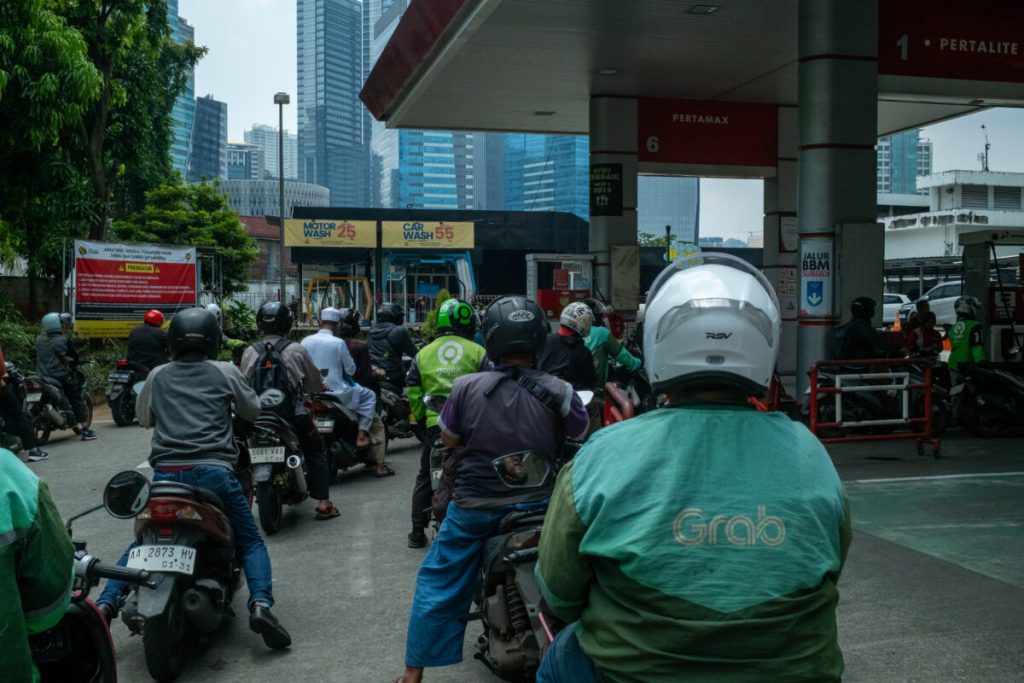
Despite this, the government is holding steady on all retail fuel prices — both those with budgeted subsidies and others. Indonesia’s national oil company Pertamina is absorbing the resulting unanticipated fuel subsidies, but the cost will ultimately hit the government purse.

The crisis in the Middle East also threatens food security as higher energy prices widen the gap between domestic and international prices for key inputs like fertiliser. And while the global price of liquefied petroleum gas — the main household cooking fuel — has risen sharply, the retail price in Indonesia remains unchanged.

Indonesia’s energy system adds to these vulnerabilities. With domestic oil production less than 40 per cent of consumption, Indonesia’s dependence on imports of crude and refined products leaves its economy exposed to supply shocks.

Gas markets present another tension. Higher global liquefied natural gas prices encourage exports even as demands for domestic energy security and industry needs rise. To manage this, the government has increasingly prioritised domestic supply through domestic market obligations and the diversion of export cargoes to local users, often at below-market prices. While this helps contain domestic energy costs, it can reduce export earnings and underscores the trade-off between fiscal returns and energy security.

Apart from the Iran war’s clear impacts on oil and liquefied natural gas, there are also less visible consequences. The Gulf is a major source of sulphur used in fertilisers and by industry. Indonesia’s high pressure acid leach nickel smelters, central to its downstream electric vehicle strategy, are sulphur-intensive and exposed to supply risks because a large portion of its needs come from the Gulf.

Despite these pressing vulnerabilities, the government maintains that holding fuel prices unchanged preserves household purchasing power and keeps growth targets within reach. This is politically understandable given that only around 42 per cent of Indonesia’s workforce is formally employed, with most workers in low-income informal activities. Lack of job growth was indeed an important driver of demonstrations in August 2025. But this adjustment cannot be avoided, as household real incomes will inevitably fall either through weak domestic demand or inflation.

Budget cuts are inevitable. By March 2026, Indonesia’s deficit had already reached close to 1 per cent of GDP, well above recent experience. Breaching the 3 per cent deficit ceiling would further hit investor confidence and raise borrowing costs. And unlike during the COVID-19 pandemic, when a temporary breach of the fiscal deficit rule was well managed, Indonesia’s policy credibility is now much weaker. Major spending programs are key candidates for adjustment, including the almost US$20 billion free school meals program, rapidly growing defence spending and ballooning fuel subsidies.

Bank Indonesia is torn between exchange rate stability, financial stability and growth, each requiring trade-offs. It is currently prioritising rupiah stability, but this requires higher interest rates which harms growth prospects. And foreign exchange market intervention to support the rupiah is reducing usable reserves — now about two-thirds of reported gross reserves.

Policy options may be few, but that does not mean that inaction is the best path. Jakarta would do better by getting on the front foot and proactively tackling the challenges it faces. Even if this episode were to pass, the same vulnerabilities will persist. A starting point is to respond to calls for policy coherence through a sequenced and measurable policy transition.

Fiscal adjustment, including fuel price adjustment, is essential. While structural reforms can expand policy space over time, they are contingent upon policy credibility, which requires a clear macroeconomic framework that defines a transparent fiscal stance. This framework should consolidate all aspects of government fiscal activities and recalibrate monetary policy towards a suitable inflation targeting regime. Steady implementation of such a framework from Jakarta will be essential to restore policy credibility.

David Nellor is a Southeast Asia-based consultant. He was based in Asia for the International Monetary Fund throughout the Asian financial crisis and has advised on regional arrangements as well as Indonesian economic policy.

EAF | Iran | The Iran war widens Indonesia’s fiscal faultlines


Source link

Related Posts

Seismic-like Event, Possible Earthquake, Reported few Minutes ago Indonesia

April 18, 2026

How US, Indonesia build strategic defense partnership anew – Academia

April 18, 2026

Badminton: Indonesia led by captain Fajar leave early to show intent for Cup success

April 18, 2026
Add A Comment
Leave A Reply Cancel Reply

Top Posts

Abandoned malls, whispers of nuclear war and young foreigners detained. This is what’s REALLY going on in Dubai… and the chilling warning one taxi driver gave to the Mail’s IAN BIRRELL

April 11, 2026

US trade chief says tech restrictions to block Chinese autos

April 10, 2026

Japan to release extra 20 days’ oil reserves from May

April 10, 2026
Don't Miss

Law Society of Hong Kong concludes Beijing visit focused on national integration and 15th Five-Year Plan

By IslaApril 18, 2026

The Law Society of Hong Kong has successfully completed a four-day official visit to Beijing,…

Amendment to women’s quota law fails vote

April 18, 2026

SecurEyes Leads High-Level Dialogue on Cyber Resilience and Quantum Readiness in Kuala Lumpur

April 18, 2026

Family seeks 96-year-old man last seen heading to Bangkok

April 18, 2026
SUBSCRIBE TO OUR NEWSLETTER

Get our latest downloads and information first. Complete the form below to subscribe to our weekly newsletter.


I consent to being contacted via telephone and/or email and I consent to my data being stored in accordance with European GDPR regulations and agree to the terms of use and privacy policy.

Stay In Touch
  • Facebook
  • YouTube
  • TikTok
  • WhatsApp
  • Twitter
  • Instagram
Top Trending

Dubai Police Surveillance of WhatsApp

By IslaApril 18, 2026

India replaces China in US smartphone supply chain, captures 40% share: Report

By IslaApril 18, 2026

Alleged Irish crime boss Daniel Kinahan arrested in Dubai

By IslaApril 18, 2026
Most Popular

Jakarta becomes Southeast Asia’s new urban safety benchmark

April 14, 2026

I Visited Bangkok’s ‘Museum of Death’ and It Was Even Stranger Than I Expected

April 16, 2026

Amendment to women’s quota law fails vote

April 18, 2026
Our Picks

Dutaland, Olympia Industries propose termination of consortium agreement involving Sri Hartamas land development

April 14, 2026

Beijing’s point man on Hong Kong affairs wraps up second bay area visit in 3 weeks

April 11, 2026

What you should know now

April 9, 2026
SUBSCRIBE TO OUR NEWSLETTER

Get our latest downloads and information first. Complete the form below to subscribe to our weekly newsletter.


I consent to being contacted via telephone and/or email and I consent to my data being stored in accordance with European GDPR regulations and agree to the terms of use and privacy policy.

© 2026 Simply Invest Asia.
  • Get In Touch
  • Cookie Policy
  • Privacy policy
  • Terms & Conditions

Type above and press Enter to search. Press Esc to cancel.

SUBSCRIBE TO OUR NEWSLETTER

Get our latest downloads and information first.

Complete the form below to subscribe to our weekly newsletter.


I consent to being contacted via telephone and/or email and I consent to my data being stored in accordance with European GDPR regulations and agree to the terms of use and privacy policy.