
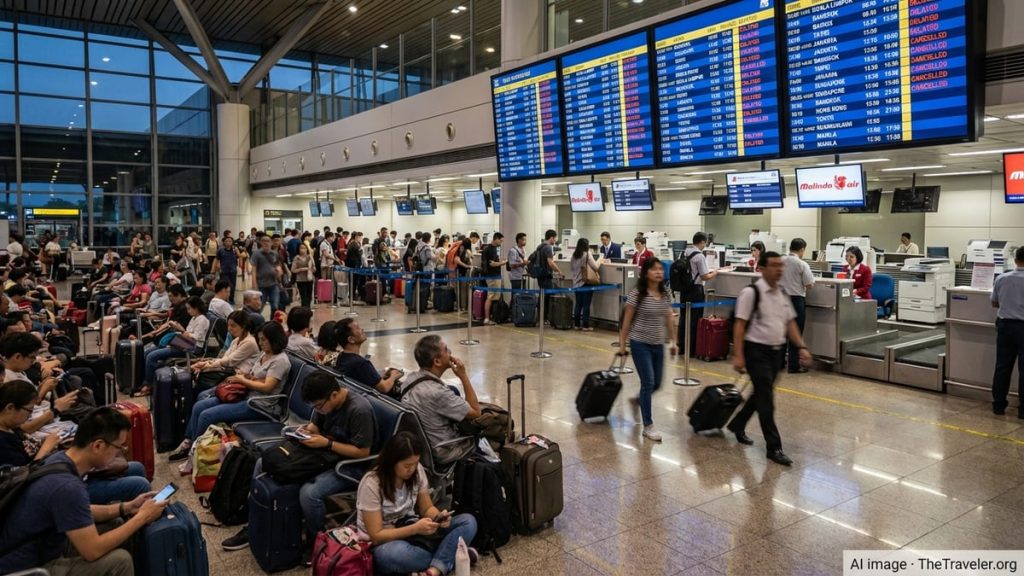
A sharp rebound in air travel across Southeast Asia is redrawing the region’s aviation map, with Bangkok’s Suvarnabhumi Airport emerging as a rapidly expanding hub that now sits just behind Kuala Lumpur International Airport in the contest for regional dominance, sending a competitive shockwave through tourism and airline networks.
Get the latest news straight to your inbox!
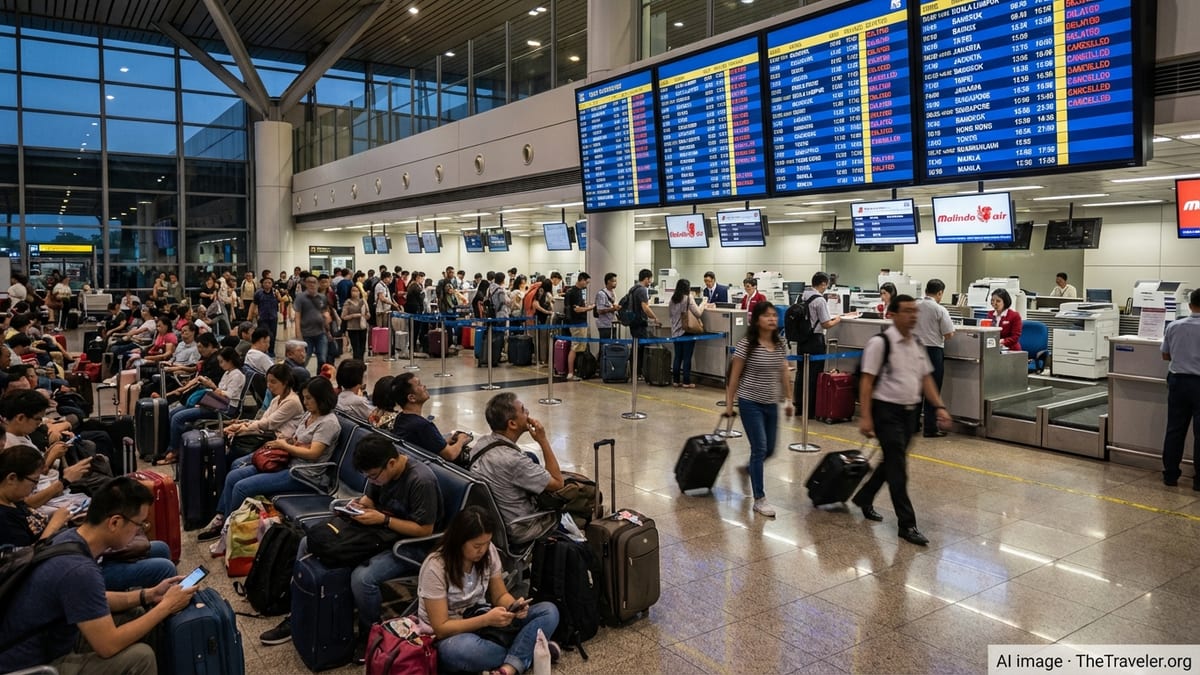
New Numbers Reveal a Shifting Airport Hierarchy
Publicly available traffic data for 2024 and early 2025 show Kuala Lumpur International Airport consolidating its position as one of Southeast Asia’s foremost hubs, while Bangkok’s Suvarnabhumi Airport has closed the gap and now ranks immediately behind Kuala Lumpur in several regional comparisons. Industry analyses based on Airports Council International and OAG datasets indicate that both airports have moved up the global tables on the back of double-digit passenger growth, even as competition from Singapore Changi and other hubs remains intense.
Recent figures suggest that Suvarnabhumi handled about 62 million passengers in 2024, up strongly from 2023 and placing it among the 25 busiest airports worldwide. Kuala Lumpur International Airport processed a slightly lower total passenger volume in 2024 but has surged in regional rankings because a large share of its traffic is international, making it one of the most connected hubs for global transfers in Asia Pacific.
Analyst reports note that, within Southeast Asia’s fast-recovering aviation market, Kuala Lumpur is now widely cited as the second busiest hub and a leading megahub, while Suvarnabhumi has overtaken or is on the verge of overtaking several regional rivals in raw passenger throughput. As the two airports converge in scale, airlines and tourism boards are recalibrating strategies that once centered overwhelmingly on Singapore and Bangkok.
The latest datasets also highlight a broader structural change. Before the pandemic, Singapore Changi was widely viewed as the preeminent gateway for Southeast Asia. Today, capacity growth and route expansion at Kuala Lumpur and Bangkok are creating a more multipolar landscape in which no single airport fully dominates regional flows.
Kuala Lumpur Builds a Megahub, Bangkok Matches in Sheer Volume
The emerging two-tier dynamic reflects divergent strengths. Kuala Lumpur International Airport has been promoted in industry rankings as one of Asia Pacific’s most connected megahubs, aided by an expansive network of low-cost and full-service carriers. OAG analyses emphasize the airport’s density of international connections within short connection windows, which is particularly attractive for transfer traffic between South Asia, the Middle East and the wider Asia Pacific region.
By contrast, Suvarnabhumi’s advantage lies in volume and Thailand’s long-established tourism appeal. Airports of Thailand data for 2023 and 2024 show that passenger numbers at Bangkok’s main gateway have rebounded faster than initially forecast, regularly straining a declared capacity that was designed for around 45 million passengers a year. The airport’s position as Thailand’s primary long-haul entry point means that any surge in the country’s visitor arrivals translates almost immediately into higher traffic through Suvarnabhumi.
Kuala Lumpur’s growth, however, is beginning to recast Malaysia’s tourism narrative. Tourism statistics for 2024 and projections for 2025 indicate that international arrivals to Malaysia are rising sharply, a trend supported by expanded visa facilitation for key markets and by aggressive route development campaigns. Observers note that Kuala Lumpur International Airport’s climb to second place in Southeast Asia’s rankings underscores the success of national goals to position the city as a global hub rather than a purely regional gateway.
While Singapore still retains an edge in premium yields and brand perception, airport ranking tables from ACI and other providers now place Bangkok and Kuala Lumpur alongside, rather than clearly behind, Changi in several volume-based metrics. This convergence is intensifying competition for airlines seeking optimal hub locations for new widebody aircraft and long-haul services.
Tourism Power Dynamics Tilt Across Southeast Asia
The realignment of airport rankings is feeding directly into tourism power dynamics across Southeast Asia. As Kuala Lumpur and Bangkok consolidate their hub status, they are increasingly acting as primary funnels for travelers heading to secondary destinations across the region, from island resorts in Thailand to heritage towns in Malaysia and beyond.
Analysts point out that Malaysia’s rapidly rising visitor numbers in 2025, which have been widely reported as outpacing Thailand for the first time in years, are closely linked to the hub performance of Kuala Lumpur International Airport. The airport’s growing route map gives tour operators and online travel platforms a wider range of one-stop options from Europe, the Middle East and South Asia, redirecting some flows that previously routed through Bangkok or Singapore.
Thailand, meanwhile, benefits from Suvarnabhumi’s scale in a different way. The airport’s heavy mix of low-cost and full-service carriers supports dense connectivity to beach destinations and provincial cities, allowing Bangkok to remain a natural first stop for multi-country itineraries that link Cambodia, Laos, Vietnam and Myanmar. Industry commentary suggests that as Suvarnabhumi climbs the regional rankings, Thailand is under pressure to accelerate airport expansion and service upgrades so that infrastructure does not become a brake on tourism growth.
Regional tourism boards are taking notice. Marketing campaigns increasingly emphasize ease of access via Kuala Lumpur or Bangkok, and several carriers have announced new tag-on services and fifth-freedom routes that rely on the scale of these hubs. The end result is a more complex tourism network in which power is distributed among multiple gateways rather than anchored in a single dominant airport.
Airline Strategies and Route Maps Rapidly Adjust
The shift in airport hierarchy is already visible in airline scheduling decisions. Capacity data for 2024 and early 2025 show carriers adding frequencies to both Kuala Lumpur and Bangkok, particularly from secondary cities in China, India and the Middle East. These routes are designed to capture growing outbound demand while also feeding long-haul services to Europe, North Asia and Oceania through the two hubs.
Low-cost carriers have played a central role in this transformation. Kuala Lumpur’s Terminal 2 has become one of the largest low-cost terminals in the region, helping anchor extensive point-to-point networks that complement the airport’s transfer role. In Bangkok, the presence of multiple Thai-based low-cost airlines using both Suvarnabhumi and Don Mueang allows carriers to fine-tune capacity according to market segment, keeping Suvarnabhumi focused increasingly on higher-yield and long-haul traffic even as volume continues to rise.
Full-service airlines are responding by deepening partnerships and code-share agreements that leverage both airports as strategic gateways. Network maps released over the past year show new one-stop itineraries that link secondary European cities to emerging destinations in Southeast Asia, often connecting through Kuala Lumpur in one direction and Bangkok in the other. This diversification gives travelers more choice and reduces dependence on a single transfer point, which can help stabilize operations when disruptions hit one hub.
Industry watchers note that the rivalry between Kuala Lumpur International Airport and Suvarnabhumi is likely to sharpen as fleet renewal programs bring in more fuel-efficient long-haul aircraft. These jets make thinner routes economically viable, and both hubs are competing to host new services that could tilt long-term traffic patterns in their favor.
Infrastructure, Service Quality and the Next Phase of Growth
The emergence of a Kuala Lumpur–Bangkok axis for Southeast Asian aviation is also forcing renewed focus on infrastructure capacity and passenger experience. Suvarnabhumi in particular has faced well-documented crowding and queue challenges as traffic has surged beyond its original design parameters. Thailand’s airport operator has outlined multi-phase expansion plans, including additional terminal space and satellite facilities, and is under pressure to deliver these upgrades quickly enough to keep pace with demand.
In Kuala Lumpur, expansion has taken a different form. Rather than grappling with severe overcapacity, Malaysia has invested in enhancing connectivity and processing efficiency, positioning Kuala Lumpur International Airport as a high-connectivity, mid-congestion hub. Reports highlight improvements in baggage handling, security and digital processing, which support its growing role in global transit flows.
Service quality metrics and passenger satisfaction rankings show a more nuanced picture than traffic totals alone. Singapore Changi continues to score highly in global surveys, while Bangkok and Kuala Lumpur are working to balance rapid growth with improvements in cleanliness, amenities and wayfinding. Airport-focused commentary in the region emphasizes that sustained gains in tourism and transfer traffic will depend on how effectively these hubs enhance the on-the-ground experience in the coming years.
For now, the data is clear that Southeast Asia’s aviation geography has entered a new phase. With Kuala Lumpur International Airport firmly established as a leading megahub and Bangkok’s Suvarnabhumi close behind in overall scale, airlines, travelers and tourism planners are adjusting to a more competitive and diversified regional landscape, one in which route decisions taken in these two airports will increasingly shape where visitors go across the wider region.