
udos to a group of Indonesian citizens for filing a formal complaint of crime against humanity against Min Aung Hlaing, the newly sworn-in Myanmar president following a sham general election in a country that is still riven by internal conflict.
Their case is built around the story of Yasmin Ullah, a survivor of the Myanmar military’s 2016-2017 genocidal campaign against the Rohingya people: Min Aung Hlaing was commander-in-chief of the military at that time. He also led the 2021 coup that toppled a democratically elected government, and now with so much blood in his hands, has been named president in a sham.
The petition, filed at the Jakarta Prosecutors’ Office, is led by Indonesia’s leading human rights campaigner Marzuki Darusman. It refers to Article 6 of the new Indonesian Criminal Code which accepts the principle of universal jurisdiction, meaning that the law can be applied outside Indonesia, and to non-Indonesian citizens, for certain types of crimes. Genocide, they claim, falls into this category, and Min Aung Hlaing is responsible.
We don’t expect the trial in an Indonesian court, if it ever comes to that, would change the political landscape in Myanmar. Min Aug Hlaing would likely be tried in absentia, and it would take a miracle for the court to be able to enforce any guilty verdict against him outside Indonesia.
But it’s an important symbolic act nevertheless.
Indonesia and other ASEAN member states have done little to stop the continual crimes perpetrated by the Myanmar military generals. Their hands have been bound by the bloc’s principle of noninterference in the affairs of other member countries. Since the 2021 coup, ASEAN has at most been able to suspend the attendance of Myanmar’s commander-in-chief from some summits, rather than expel the country from the bloc.

Every Thursday
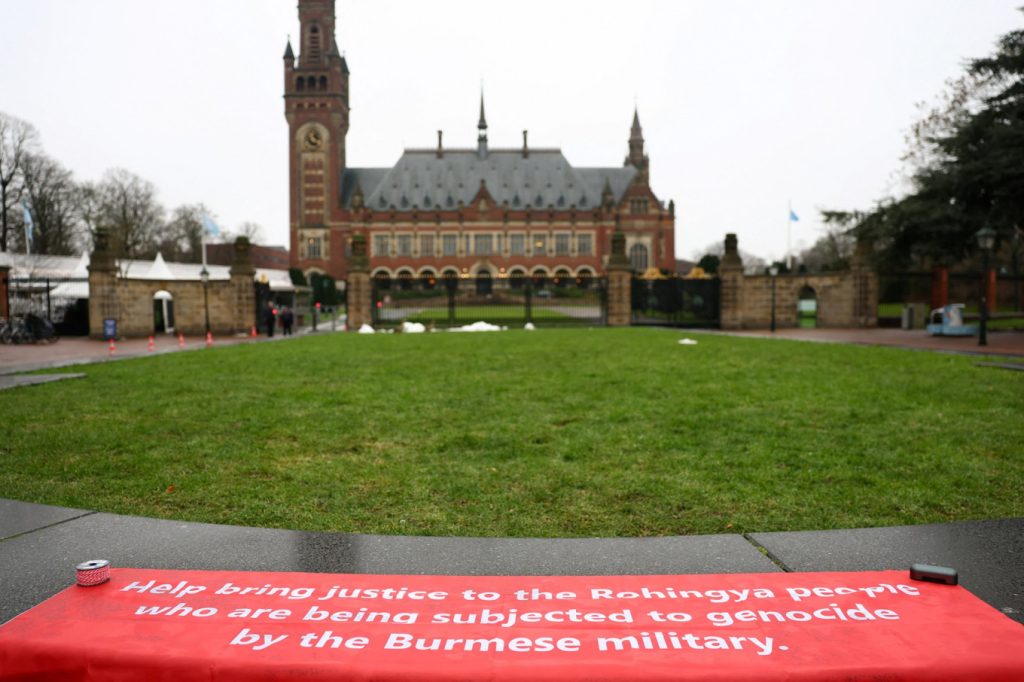
This current legal effort complements the ongoing hearings at the International Court of Justice in The Hague, Netherlands, regarding the 1948 Convention on the Prevention and Punishment of the Crime of Genocide.