

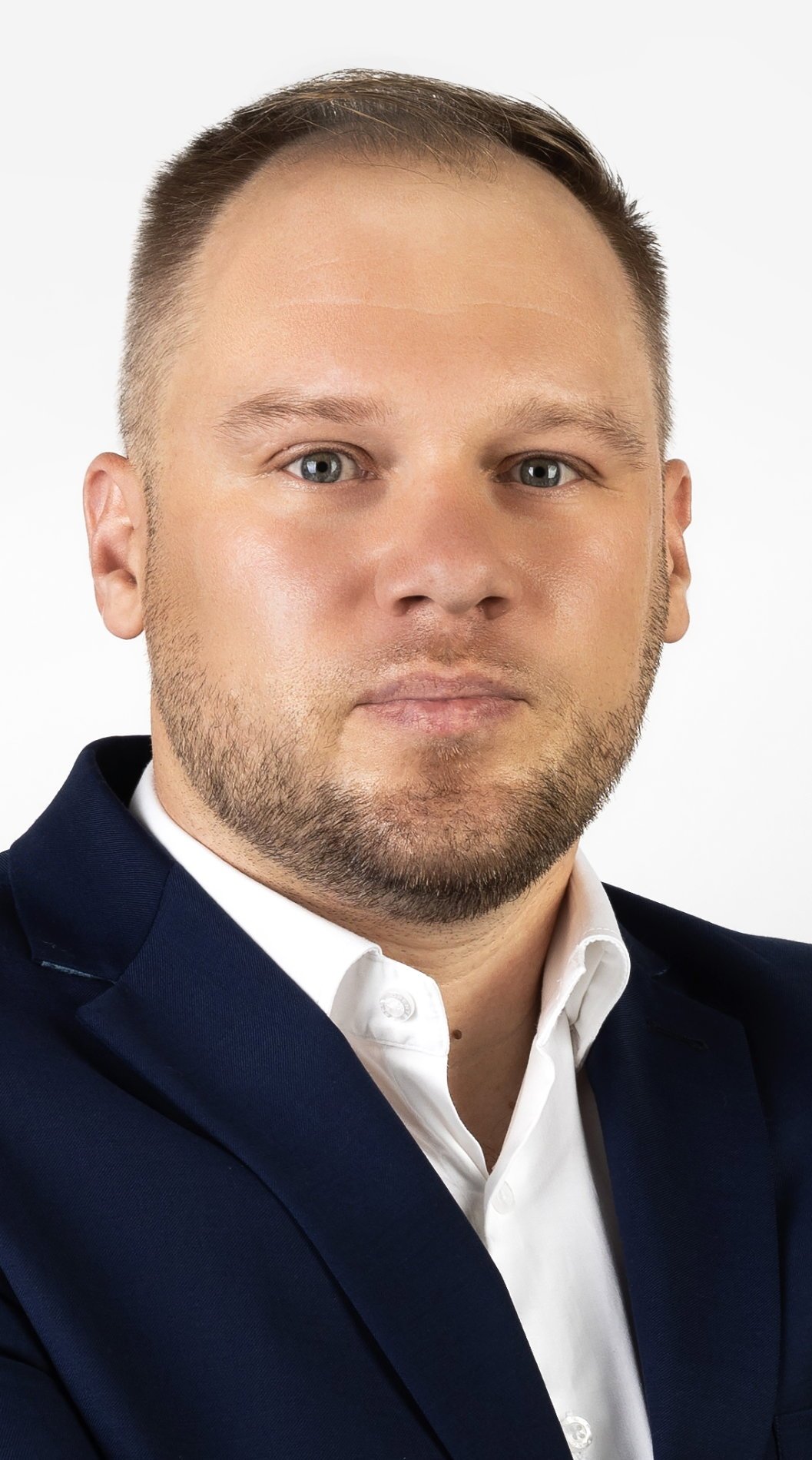
Dr Edvinas Krugly
Image source: Kaunas University of Technology
Because these vesicles are fragile and degrade quickly, researchers are developing biological scaffolds that can protect them and release them gradually when the joint is under pressure or in motion. This could prolong their effects, improve treatment outcomes, and create new possibilities for cartilage repair and osteoarthritis therapy.
“While building biomimetic scaffolds, the biggest challenge is that a biomedical material must excel in all areas simultaneously – it must be chemically stable, mechanically robust, biologically compatible and practically manufacturable. This is particularly complex in the case of cartilage, as both the natural architecture and resistance to mechanical stress must be replicated,” says Dr Edvinas Krugly, a senior researcher at KTU Faculty of Chemical Technology.
According to him, regenerative medicine depends on interdisciplinary collaboration. A chemist may develop a new material, but without cell biologists, physicians, and experts from bioengineering and pharmacy, it is impossible to fully understand its effects, clinical relevance, or practical potential.
“What drew me to this field was a desire to develop new methods of research and treatment. However, a new treatment method does not necessarily mean creating a new medicine. Sometimes, a breakthrough occurs when we develop a new material or platform that enables drugs, cells, or vesicles to be delivered more precisely, safely, and effectively,” says Dr Krugly.
Biomimetic materials help researchers better recreate the natural tissue environment, extend the activity of bioactive molecules, and advance regenerative medicine. In this context, the biomimetic scaffold is not just a support, but an essential part of the therapy itself.
Source: Kaunas University of Technology