
The leather industry spent most of the last year intensifying an already determined lobbying campaign in Brussels to win an exemption from the European Union’s Deforestation Regulation, or EUDR.
The effort is paying off: on May 4, the European Commission, the EU’s executive body, formally proposed excluding leather, hides, and skins from the regulation’s product scope, ahead of the law being enacted at the end of the year.
The Commission’s proposal is being introduced through a delegated act, a legal mechanism that allows the EU executive to amend non-essential parts of an existing law without reopening the whole regulation for a full legislative debate.
This process is set to change the EUDR’s Annex I, which lists the commodities covered by the deforestation regulation. Legal experts, including Brussels-based Mayer Brown senior associate Irina Antoshevska, have previously identified this delegated act review as a critical opening for industries seeking to add or remove Combined Nomenclature (CN) customs codes from the regulation’s scope.
Following the publication of the draft, citizens and other stakeholders can provide feedback until June 1, the Commission said in a statement. After that, the Commission could formally adopt the act. Then, the parliament and the Council of the European Union generally have two months to object. If they don’t, the changes will automatically be enacted.
The leather exemption is part of a broader “simplification review” announced by the European Commission to ease administrative burdens linked to the EUDR. Behind the scenes, however, leather industry groups have seized on the process to press their case for exclusion.
“
This massive multibillion dollar industry is built up around this product that they say is irrelevant to cattle ranching. This just completely defies some basic logic.
Rick Jacobson, senior manager, Environmental Investigation Agency
Their message has been consistent: leather should not be treated as a commodity that drives forest loss. Industry representatives argue that hides are merely a byproduct of beef production and should not face the same regulatory requirements.
The claims have been contested by a vast body of scientific research and investigative reporting throughout the years, linking leather supply chains to forest loss and land conflicts, particularly in Latin America.
A recent study in the science journal Nature Food found that pasture expansion for meat and leather was the largest driver of commodity-driven deforestation in the world between 2001 and 2022, accounting for 42 per cent of the deforestation.
On leather imports into the EU, another study estimated the industry’s hunger for hides is responsible for up to 31,000 hectares (nearly 77,000 acres) of lost forest annually.
“The position that the industry has taken is shameful,” said Luciana Téllez-Chávez, a senior researcher at the nonprofit Human Rights Watch. “They are essentially saying: ‘We know that there is environmental harm and human rights abuses at the beginning of the supply chain for products. But we don’t want to have the responsibility of addressing them ourselves.’”
However, the Commission accepted the industry’s argument.
In the draft, the Commission recommended removing hides, skins, and leather products from the regulation’s scope, citing the sector’s lower economic value compared to meat. It pointed to “limited leverage to demand the information” for tracing hides. It also said that if it enacted more comprehensive rules, the result would be a “fragmented and incoherent approach” to the leather industry. That would include pushing leather goods manufacturing outside of the EU.
The EUDR is set to take effect Dec. 30 for larger and medium-sized companies. For small businesses, the regulations start June 30, 2027.
A law under pressure
The EUDR was designed to stop EU consumption from driving forest destruction abroad, and is considered an ambitious shift in global environmental governance.
It requires companies shipping key commodities to the European market to prove they were not linked to deforestation or illegal land use. Cattle, and products derived from them, including hides, were included in the original version of the regulation but are now set to be removed under the Commission’s proposed Annex I amendment.
A source with direct knowledge of European Commission discussions, speaking on condition of anonymity, said the events unfolding in Brussels are “very concerning” and that “politically motivated decisions” are made “at the last minute and in a nontransparent way.”
The European Commission said in a statement: “The main driver of deforestation is the expansion of agricultural land linked to the production of seven commodities covered by the regulation – cattle, wood, cocoa, soy, palm oil, coffee, rubber, and some of their derived products.”
“Under the Regulation, any operator or trader who places these commodities on the EU market, or exports from it, must be able to prove that the products do not originate from recently deforested land or have contributed to forest degradation,” it added.
“We’re encouraged to see the EUDR finally moving from promise to practice. But now the EU must hold the line,” said in a statement Anke Schulmeister‑Oldenhove, a manager at the WWF European Policy Office. “What we need now is decisive implementation, clear enforcement, and the political will to stand by the commitments already made. Only then will the EUDR deliver the real protection our forests urgently need.”
While framed as a technical adjustment, the proposed change in scope to exclude leather is coming after sustained industry pressure that has shaped the debate around implementation.
Since 2021, leather groups, led by COTANCE and Unione Nazionale Industria Conciaria (UNIC), the Italian tanneries union, have met lawmakers at least 22 times, according to EU lobbying transparency records aggregated by nonprofit organisation LobbyFacts. More than a third of those meetings took place in the past year, as the regulation moved closer to implementation. The EUDR was specifically mentioned as a focus of these meetings on 11 occasions.
“The proposal to remove leather from the law is about politics, not evidence. The Commission has caved to the European leather sector’s lobbying to exempt itself from the regulation,” said in a statement Miki Ng, researcher and campaigner on EU policy at non-profit Earthsight.
“This creates a glaring loophole in the EUDR. Beef originating from cattle raised on deforested land will be kept away from the EU market but hides from that same animal will be free to circulate. The leather industry obtains its key raw material from one of the supply chains the EUDR is designed to clean up. This is not simplification – it is special treatment, she added.
Earthsight documented the leather industry lobbying in a report released in March. It lists when the leather industry submitted written questions and feedback to the EU, held events, and issued public statements to sway regulators.
“What is striking about this lobbying is its scale and reach,” said Ng. “The industry often portrays itself as a collection of small family-run businesses, but is in fact a well-resourced sector that has managed to secure the support of far-right politicians in the European Parliament … to champion its agenda.”
On April 8, for example, leather groups and international delegations attended an event hosted by the Italian MEP Dario Nardella at the European Parliament to discuss the exclusion of bovine hides from Annex I. Also in attendance were Commission cabinet staff, other MEPs, and high-level diplomatic representatives from Canada, the United States, Australia and Italy.
Nardella supported the trade associations’ talking points. “For Tuscany, this sector means jobs, families, and communities. I am here in Brussels to defend it. Leather and hides must be excluded from Annex I of the EUDR. Not because we are against forest conservation, but because a good law must target those truly responsible for deforestation, not those who transform waste into a circular and durable material,” he said.
Earthsight’s Ng said, “This level of coordinated reach across influential decision-makers does not happen by accident. It reflects a sustained and organised effort to protect commercial interests at the expense of the environmental and human rights protections the EUDR was designed to deliver.”
According to Earthsight, UNIC and COTANCE have logged meetings with MEPs to keep the issue on the political radar. In parliamentary debates, some lawmakers have echoed the sector’s language almost word for word, suggesting the lobbying effort has gained traction.
The industry applauded the move by the Commission.
“The Commission has rectified a fundamental flaw that has existed since the EUDR proposal was first put forward, confirming what logic has long suggested: converting a by-product of livestock into leather does not drive deforestation,” said Edoardo De Paola, COTANCE’s secretary general. “Since biblical times, leather has symbolized the transformation of a natural by-product into something useful and enduring. Today, this legacy continues.”
New scrutiny on luxury brands
The lobbying push comes as other investigations continue to draw direct links between leather supply chains and deforestation.
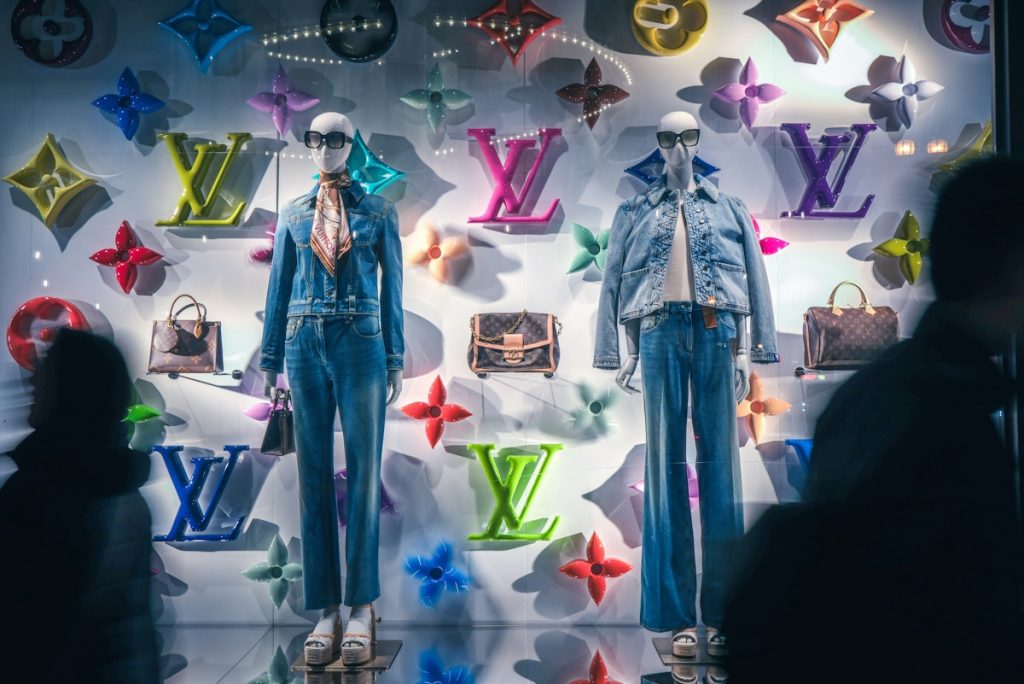
A recent investigation by Global Witness documented that Fabrizio Nuti, president of the tannery association UNIC, is also president and CEO of Nuti Ivo Group, a tannery acquired three years ago by LVMH Moët Hennessy Louis Vuitton. The Nuti Ivo Group was linked to deforestation in Paraguay’s Gran Chaco last year. Nuti has been one of the most vocal voices in the leather lobbying campaign in Brussels.
The Global Witness study was first reported by Politico. LVMH, which owns brands such as Louis Vuitton, Christian Dior and Tiffany & Co., told Mongabay it “firmly” rejects both the lobbying and deforestation allegations.
A spokesperson said in a statement: “The Group has never undertaken any action to lobby EU institutions to reduce the scope of the EUDR, nor has it participated in any meetings with the objective of opposing it. All interactions with public authorities, when they occur, are conducted in full transparency and are publicly disclosed in the EU transparency registers.”
It added that LVMH is “fully committed to combating deforestation,” with a policy that excludes “certain high-risk sourcing areas, including South America since 2021 for LVMH’s Maisons.”
According to LVMH, more than 98 per cent of the group’s supplying tanneries are certified by the Leather Working Group (LWG), a nonprofit that sets standards for the industry.
Environmental campaigners say the case illustrates why excluding leather from the EUDR weakens efforts to clean up global supply chains, and underscores concern that high-end fashion supply chains remain exposed to deforestation risks, even as companies make public sustainability commitments.
Last year, an Earthsight investigation found the supply chains of leather suppliers to luxury fashion brand Coach were linked to illegal cattle ranching in the Amazon Rainforest. According to the report, Coach sources leather from a tannery owned by Gruppo Peretti, an Italian company represented by UNIC, one of the active lobbying groups in Brussels.
Mongabay contacted a Coach spokesperson for comment, but didn’t get a response.
In 2022, the nonprofit Environmental Investigations Agency’s (EIA) “Deforestation in the Driver’s Seat” report traced leather used by the automotive industry to vast forest loss and to Indigenous lands ravaged by violence and graft in the Amazon.
Why leather matters
Supporters of keeping leather under the regulations say doing otherwise weakens the EUDR and reward industry pressure rather than environmental evidence.
If the exemption proceeds, beef from cattle raised on deforested land would remain regulated, while leather from that same animal could circulate freely in Europe without equivalent due diligence requirements.
The dispute is no longer over whether cattle drives forest loss, but whether leather, a European industry worth 125 billion euros (US$147 billion) annually by its own estimates, should be held accountable as part of that chain.
“This massive multibillion-dollar industry is built up around this product that they say is irrelevant to cattle ranching,” said Rick Jacobson, a commodities policy expert and senior manager at EIA. “This just completely defies some basic logic.”
Tanneries’ representatives argue, though, that sales of raw hides account for only between 1 per cent and 2 per cent of the economic value of a bovine carcass and, therefore, should be exempt.
However, in Brazil, slaughterhouse profitability is dependent on the margin between prices for live cattle and sale prices for beef, hides and other cattle products. This margin has, at times, been extremely tight. It fluctuates based on changes in the price of cattle and various pressures on the price of beef.
For slaughterhouses running on low profit margins, exports of hides to the EU and their added revenue could make the difference between a profitable and an unprofitable operation.
A 2023 study by Natural Intelligence, a consulting company that focuses on corporate environmental, social and governance (ESG) issues, modelled the potential impact of changes in EU leather demand on Brazilian slaughterhouses. It found that slaughterhouses operating with profit margins of 2 per cent or less would cease to be viable businesses if they could no longer supply the European market. Selling hides also ensures that slaughterhouses don’t need to pay the costs of disposing of the skins.
That means leather demand helps shape the economics of the cattle sector, Jacobson said. But analysing the issue through a simple economic point of view misses the bigger picture and misrepresents the industry’s social and environmental responsibilities, he added.
“If somebody steals a car and offers to sell you some parts, and you say, ‘Well, that part is a small part of the value of the car, so it’s not going to drive car theft. I might as well use the part and not let it go to waste.’ You have to say: ‘I can’t be part of that business model or part of this behaviour,’” he said. “That’s the clear situation that we’re dealing with.”
Annually, global raw hide production reaches approximately 13.8 million metric tons, with cattle hides accounting for roughly 68 per cent of the total, reflecting a dedicated supply chain independent of meat revenues. The raw hides and skins market is substantial, valued at around US$100 billion globally in 2025 and projected to nearly double by 2035, according to UK-based consultancy Future Market Insights.
The case for exclusion
Tanneries say the hide supply chain is difficult to trace, especially before slaughter, and that the burden falls unevenly on downstream operators who may have little control over ranches in an expansive network of agriculture operations.
Questions surrounding traceability implementation resonate in Brussels. The EUDR has already generated frustration among importers, traders and manufacturers who say they need more time, clearer guidance and more workable rules.
Antoshevska, the lawyer at Mayer Brown, pointed out that it’s not surprising that there’s political pressure. “If you look at the requirements of the EUDR following the latest amendments, you’ll see that it is the importers who bear the biggest burden of compliance.”
But traceability “is an issue to all sectors,” she added. “It’s technically difficult to achieve, but doable. It just requires a big investment on part of the operators in the whole supply chain.”
What is at stake
The debate in Brussels reflects a broader question: How far is the EU willing to go in regulating global supply chains linked to deforestation?
Leather may not be the most visible commodity in the EUDR, but it has become one of the most contested. It sits at the intersection of agriculture, fashion, trade and environmental policy, and highlights the influence of lobbying on regulators.
For environmental groups, removing leather weakens the law’s internal logic and creates gaps in enforcement. For industry, the argument is equally clear: if leather isn’t a primary driver, it shouldn’t be regulated as one.
“Rather than narrowing the EUDR’s scope, the Commission should be working to enlarge it to finished leather products,” said HRW’s Téllez-Chávez. “Member states that have invested in preparing for EUDR enforcement should concern themselves with being louder than the Italian saboteurs, and defending what they’ve accomplished.”
This story was published with permission from Mongabay.com.