
Changes in soil chemical properties after crop cultivation
The chemical properties of the soil after crop cultivation are summarized in Table 3. The pH of soil increased in all treatments receiving pepper residue biochar (PRB) compared with the initial soil pH; however, the extent of soil pH change due to biochar application may be influenced by the chemical reaction between soil and biochar and the initial pH condition of the soil [14–15].
In Soil A (pH 5.8), soil pH increased progressively with higher PRB application rates, with the highest value (pH 6.2) observed in the NPK + PRB 500 kg 10 a− 1 treatment. In contrast, in Soil B (pH 6.8), pH increased at relatively low application rates (100–200 kg 10 a− 1), but the extent of the increase diminished when the application rate exceeded 300–500 kg 10 a− 1. Biochar typically contains weak acidic functional groups, such as carboxyl groups, which can react with H⁺ ions in the soil solution and thereby alter soil pH [16–17]. However, the direct contribution of biochar decomposition to total alkalinity generation is generally limited, and the liming effect tends to decrease as the initial soil pH increases [18]. Accordingly, the progressive pH increase observed in Soil A, which initially exhibited acidic conditions, may be attributed to greater net al.kalinity generation under lower pH conditions. In contrast, the relatively limited pH increase in Soil B, which was already near neutral, may reflect chemical equilibrium constraints and a reduced capacity for additional alkalinity generation. Nevertheless, it should be noted that the two soils differed not only in initial pH but also in baseline chemical properties, including EC and exchangeable cation concentrations. The pH responses observed in this study should not be attributed solely to initial soil pH, but rather to the combined effects of baseline soil chemical properties and soil–biochar interactions.
The EC increased markedly in Soil A by 1.4–2.9 dS m− 1 relative to the pre-experimental level. This pronounced increase may be associated with the lower initial EC and slightly acidic condition of Soil A, which likely promoted the accumulation of soluble ions in the soil solution following fertilization and biochar amendment. These increases agree with previous reports that biochar addition elevates EC due to the release of soluble base cations into the soil solution [19–20]. In contrast, the increase in Soil B was comparatively smaller (0.8–1.1 dS m− 1) and less distinct relative to its higher initial EC. The relatively modest EC response in Soil B may be attributed to its higher baseline EC and near-neutral pH, which may have enhanced cation retention on exchange sites and contributed to a greater buffering capacity against further salt accumulation.
The pepper-residue biochar (PRB) applied in this study contained a high total carbon (T-C) concentration (59.8%), which significantly contributed to the increase in soil T-C after incorporation. The increase in total nitrogen (T-N) was attributable to both the applied N fertilizer and the residual N contained in the PRB, which likely supplied additional N to the soil. Similar increases in soil T-C and T-N following the application of crop residue–derived biochar have been reported in previous studies [21–22].
Available P2O5 also increased in response to biochar addition. In Soil A, available P₂O₅ increased across all PRB treatments compared with the control (323 mg kg− 1), reaching 419 mg kg− 1 in the NPK + PRB 500 kg 10 a− 1 treatment—a 29.7% increase. In Soil B, the maximum available P₂O₅ (347 mg kg− 1) was observed at the 300 kg 10 a− 1 application rate, representing a 51.5% increase compared with the control (229 mg kg− 1). However, when the application rate exceeded 300 kg 10 a− 1, the extent of the increase was reduced. The greater increase in Soil B than in Soil A can be attributed to the higher solubility of phosphate in soils with pH values between 6.0 and 7.0. In this pH range, P₂O₅ is less likely to form insoluble complexes with Fe3+ and Al3+, which dominate under acidic conditions. Consequently, phosphate remains more readily available in the soil solution under near-neutral conditions. In contrast, in more acidic soils such as Soil A, a greater proportion of added or released P₂O₅ may be immobilized through adsorption onto Fe and Al oxides, thereby limiting the net increase in available P2O5 [23–24].
Among the exchangeable cations, changes in Ca2+ were the most pronounced. In Soil A, exchangeable Ca2+ levels were significantly higher in all PRB-treated plots compared with the control, whereas differences among treatments were minimal in Soil B. This increase is attributed to the high Ca2+ content of the PRB, which likely enhanced base saturation and occupied exchange sites more effectively under acidic conditions. In addition, the release of Ca2+ into the soil can promote H+ neutralization in acidic conditions, thereby contributing to an increase in soil pH. In this study, the increase in exchangeable Ca2+ in Soil A corresponded with a concurrent rise in soil pH, supporting the interpretation that Ca2+ contributed to the observed amelioration of soil acidity following PRB application. These findings are consistent with those of Chun et al. (2022) and Kang et al. (2023), who also reported increases in exchangeable Ca²⁺ following biochar application in acidic soils [21, 25]. Overall, the differential chemical properites observed between the two soils likely reflect interactive effects among initial soil pH, nutrient status, and biochar inputs, rather than a single controlling factor.
Soil carbon sequestration changes to pepper residue biochar under different soil pH conditions
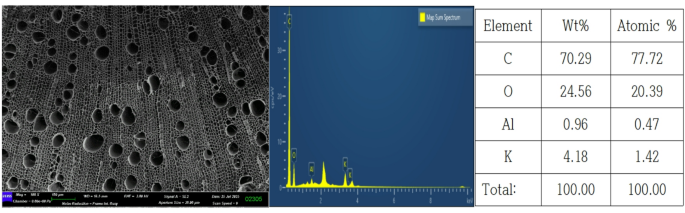
Changes in soil total carbon (TC; Table 3) and soil organic carbon (SOC) stock (Table 4) following biochar application are presented in Tables 3 and 4, respectively. In Soil A (pH 5.8), both TC and SOC stock increased with increasing pepper residue biochar (PRB) application rates. In particular, the NPK + PRB 500 kg 10 a− 1 treatment exhibited the highest values, with SOC and carbon stock increasing to 9.4 g kg− 1 and 36.8 t C ha− 1, respectively–corresponding to an approximate 23.5% increase relative to the control. These findings are consistent with the results of Lee et al. (2021), who reported that greater biochar application enhances soil carbon sequestration [26]. Also, PRB contained a high total carbon (TC) concentration (59.8%; Table 1), and SEM–EDS analysis further confirmed that carbon was the dominant elemental component (77.7 wt%; Fig. 1). These characteristics indicate that PRB itself represents a concentrated and relatively stable carbon input, which contributes to the observed increases in SOC and carbon stock following application. Moreover, the H/C ratio (0.7) and O/C ratio (0.4) of PRB indicate a substantial degree of aromatic condensation and structural stability. Biochars with H/C ratios ≦ 0.7 are generally considered to possess condensed aromatic structures that exhibit strong resistance to microbial degradation. Therefore, a considerable fraction of PRB-derived carbon is likely to persist in soil as recalcitrant organic carbon, contributing to long-term increases in SOC and carbon stock [27,28,29].
In Soil B (pH 6.8), TC and SOC stock increased with biochar addition up to 100–300 kg 10 a− 1, reaching maximum values of 8.7 g kg− 1 (SOC) and 33.8 t C ha− 1 (C stock) in the NPK + PRB 300 kg 10 a− 1 treatment. However, at application rates above 300 kg 10 a− 1, the extent of the increase was reduced. This effect is because the pH increase by adding alkaline biochar to a pH of 10 in an already neutral to alkaline soil is limited, and the carbon stabilization mechanism may become saturated at high biochar addition levels. Similar patterns have been observed in upland soils in South Korea and in cropland studies conducted in China and Japan, where SOC increased with biochar application but exhibited diminishing returns beyond a certain threshold [26]. Collectively, these results indicate that biochar induced carbon accumulation is governed not only by application rate but also by initial soil chemical conditions.
Crop yield to pepper residue biochar under different soil pH conditions
The effects of pepper residue biochar (PRB) application on Chinese cabbage yield under different soil pH conditions are presented in Fig. 2. In Soil A, cabbage yield increased significantly with increasing PRB application rates, reaching 5,923-6,403 kg 10 a− 1 at 100–300 kg 10 a− 1. However, when the application rate was raised to 500 kg 10 a− 1, yield declined to 4,414 kg 10 a− 1. In Soil B, cabbage yield increased modestly at application rates of 100–200 kg 10 a− 1 but began to decline from 300 kg 10 a− 1 onward. In both soils, a pattern was observed in which biochar application rates ≥ 300 kg 10 a− 1 resulted in diminished yield responses. These results collectively indicate that moderate application rates, particularly within the 200–300 kg 10 a− 1 range, were most favorable for maintaining or enhancing cabbage productivity under both soil conditions.
The decline in productivity can be explained by changes in soil chemical properties induced by PRB addition. The pepper residue biochar used in this study had a relatively high EC (5.9 dS m− 1; Table 2), and its incorporation increased soil EC to 3.3 dS m− 1 in the NPK + PRB 300 kg 10 a− 1 treatment of Soil A (Table 3), exceeding the optimal range for cabbage growth ( ≦ 2 dS m− 1). This elevation in EC can suppress plant growth by promoting excessive accumulation of soluble base cations and increasing the osmotic potential around the root zone, thereby inhibiting water and nutrient uptake [30]. In Soil B, the initial soil pH was within the optimal range for cabbage growth (pH 5.5–6.8). However, the application of alkaline PRB elevated soil pH to 6.9–7.4, potentially inducing micronutrient deficiencies and promoting Ca–P precipitation, which can reduce nutrient availability and hinder crop productivity [31].
When comparing the two soils at identical application rates, cabbage yield was higher in Soil A than in Soil B. However, although differences in initial soil chemical properties existed prior to the experiment, the yield trends observed in this study were primarily associated with shifts in soil pH induced by biochar application. This is likely because PRB addition increased Soil A pH from 5.9 to 6.2, bringing it closer to the optimal range for cabbage growth. In contrast, PRB addition in Soil B raised the soil pH beyond the optimal range, creating less favorable conditions for plant development. These results indicate that the yield-enhancing effects of biochar are strongly dependent on the initial soil pH. Thus, determining an appropriate biochar application rate that considers the existing soil chemical properties is essential for maximizing crop productivity.