
Close Menu
Simply Invest Asia
  • Home
  • About us
  • Explore industries/sectors
    • Automobile
    • Aviation
    • Banking
    • Biotechnology
    • Chemical & Fertilizer
    • Entertainment and Media
    • Food Processing
    • Healthcare
    • Iron and Steel
    • Leather
    • Mining
    • Oil and Gas
    • Pharmaceutical
  • Explore by countries
    • China
    • Dubai / UAE
    • Hong Kong
    • India
    • Indonesia
    • Japan
    • Malaysia
  • Explore cities
    • Bangkok
    • Beijing
    • Chongqing
    • Delhi
    • Dubai
    • Guangzhou
    • Jakarta
    • Kuala Lumpur
  • Why Asia
Facebook X (Twitter) Instagram Threads
Trending:
  • Waterborne Saw Blade Coating Market in Latin America and the Caribbean | Report – IndexBox
  • Liaoning Tieren vs Chongqing Tonglianglong: Chinese Super League stats & head-to-head
  • Opinion | The US has failed to understand China
  • UAE sets out five workplace safety measures to protect workers during summer – Gulf News
  • France and India Strengthen Luxury Ties Ahead of EU-India Trade Deal
  • Pro-Am heats up the courts | Hartford HealthCare
  • Tresind Mayfair review: Indian flavours meet Dubai extravagance in new London address
  • Australia has strengthened ties with Indonesia but our Asia capability is in decline
  • Women’s boots: 8 styles including suede, patent and embellished designs
  • PLA Navy fleet welcomes crowds of student visitors on open day in Hong Kong
  • Japan-India Consolidate Ties, EU Seeks Trade Action From China
  • Fungal chemicals could become powerful new cancer medicines
  • Joby Aviation, Toyota Motor Launch Initial Phase of Strategic Alliance
  • Al Freej Fridge returns to say thanks with drinks and ice creams for workers in Dubai
  • Malaysia Blocks Cheap Chinese EVs With New Import Rules – Fuel Cells Works
  • Indian and Pakistani leaders urge Narendra Modi, Sharif to revive diplomacy
  • China Opens Lithium Futures Market to Foreign Traders
  • Delhi and Tokyo Rewrite Strategic Compact with Focus on Defence, Technology and Economic Security
Friday, July 3
Facebook X (Twitter) Instagram
Simply Invest Asia
  • Home
  • About us
  • Explore industries/sectors
    • Automobile
    • Aviation
    • Banking
    • Biotechnology
    • Chemical & Fertilizer
    • Entertainment and Media
    • Food Processing
    • Healthcare
    • Iron and Steel
    • Leather
    • Mining
    • Oil and Gas
    • Pharmaceutical
  • Explore by countries
    • China
    • Dubai / UAE
    • Hong Kong
    • India
    • Indonesia
    • Japan
    • Malaysia
  • Explore cities
    • Bangkok
    • Beijing
    • Chongqing
    • Delhi
    • Dubai
    • Guangzhou
    • Jakarta
    • Kuala Lumpur
  • Why Asia
Simply Invest Asia
Home»Explore industries/sectors»Chemical & Fertilizer»Fungal chemicals could become powerful new cancer medicines
Chemical & Fertilizer

Fungal chemicals could become powerful new cancer medicines

By IslaJuly 3, 20265 Mins Read
Share
Facebook Twitter Pinterest Threads Bluesky Copy Link


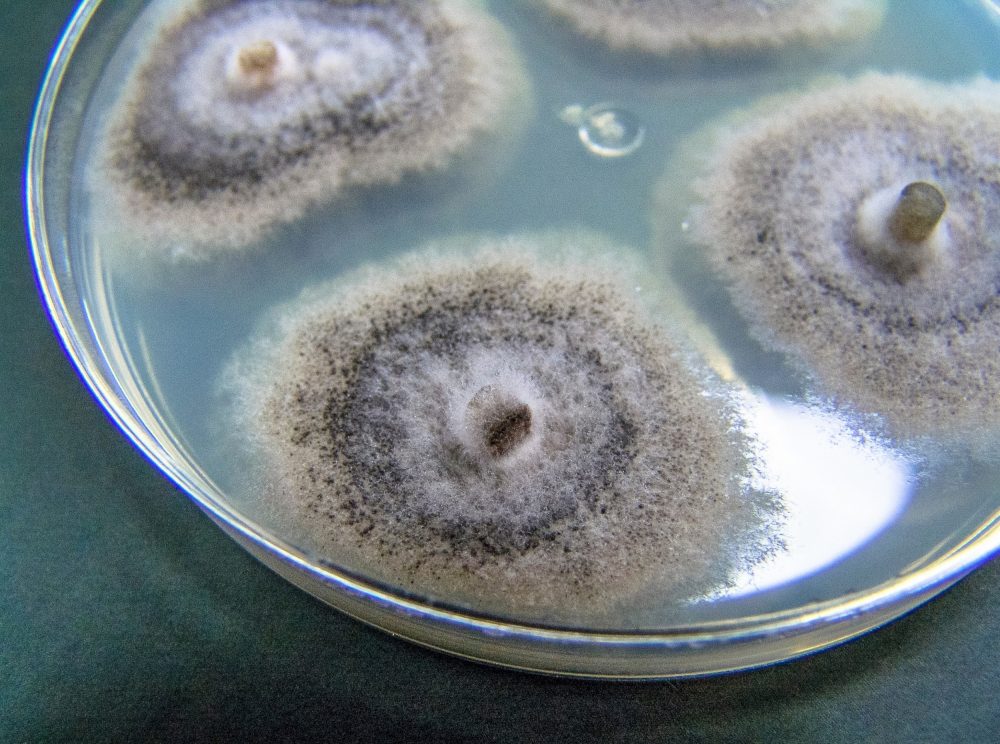
Scientists have poured decades and billions of dollars into reading the genomes of animals and crops. Fungi mostly got left behind.

The kingdom tends to earn attention only when it spoils bread or colonizes someone’s toes. That is a strange blind spot, given everything fungi have already handed us.

Fungi built modern medicine


EarthSnap

Penicillin came from a mold. Statins, the cholesterol drugs taken by millions, trace back to fungal chemistry too.

“This neglect is kind of remarkable considering how fungi have shaped modern medicine,” said Xue Gao, a chemical and biomolecular engineer at the University of Pennsylvania.

“From the serendipitous discovery of penicillin to cholesterol-lowering statins, we owe many recent breakthroughs in longevity to fungal chemistry. But despite this, the vast majority of the fungal kingdom remains a black box.”

Why lab molds go quiet

Part of the trouble sits inside the fungus itself. In the wild, molds switch on gene pathways that build chemical weapons to fight off bacteria.

Move that same fungus into a clean laboratory dish, and those pathways fall silent. Nothing is attacking it, so it stops making the very compounds researchers hope to find.

Reaching those hidden pathways means rewriting the genes that keep them locked down. That has been the frustrating part for years.

“To turn those silent pathways back on, we needed a powerful way to precisely manipulate fungal genome, such as editing their master regulatory genes, but traditional tools weren’t up to the task,” Gao said.

CRISPR-Cas9 has been the famous name in gene editing for over a decade. In thread-like molds, though, it behaves more like a sledgehammer than a scalpel.

It cuts clean through both strands of DNA, and the cell repairs the damage sloppily. The result is a scatter of unintended insertions and deletions that can wreck a careful experiment.

A newer approach called prime editing sidesteps those double breaks altogether. It rewrites the genetic code one letter at a time, with much finer control.

Until now, nobody had made prime editing work in filamentous fungi. Gao and her team at Penn built a version that does, and they named it fPE7max.

Two problems, two fixes

Getting there meant solving two stubborn problems. The first was fragile instructions.

Prime editing relies on a guide made of RNA that tells the tool where to go and what to write. When the edit gets large, that guide grows long, and long guides tend to shred before the work is done.

The team’s answer was a protein called fLa. It wraps around the delicate RNA and shields it, so the tool can handle big insertions and deletions that would break lesser systems.

An early version borrowed this protein from humans, and it flopped inside fungal cells. Switching to a fungus’s own version of the protein made all the difference.

The second problem was the fungus fighting the edit. Its natural repair machinery treats each new change as an error and reverses it.

So the researchers added a second protein that mutes that repair system for a short window.

With both fixes working together, fPE7max hit editing accuracy approaching 90 percent, and stayed reliable across many genes and several species.

Removing fungal gene brakes

Then came the elegant part of the work. The team aimed the tool at a master regulator gene called laeA.

This single gene controls sprawling networks of chemical production. Flip it, and dozens of downstream pathways respond.

Sitting just upstream of laeA are tiny genetic sequences that act like a brake on it.

Rather than tampering with laeA directly, the researchers used fPE7max to snip out that brake with pinpoint accuracy.

Freed from the brake, laeA ramped up. Dormant clusters of genes came alive, and unfamiliar compounds began appearing in fungi that had never made them in the lab.

The same trick worked in molds spread far apart on the fungal family tree. That range suggests the method could travel widely across the kingdom.

Hidden fungal molecules discovered

The payoff was substantial.

“We isolated 18 distinct complex molecules, eight of which possessed chemical structures entirely new to science,” said Chunxiao Sun, a postdoctoral researcher in the Gao Lab.

“Of these uncovered molecules, three exhibited promising anti-cancer properties. These molecules can serve as lead compounds for disease treatment, providing a vital new pipeline for drug discovery,” Sun said.

Several of the fresh finds belonged to a chemical family called pyranonigrins. A few carried building blocks never before seen stitched into that core structure.

Three that attack cancer cells

The team first tested the new compounds against common bacteria and yeast. None of them did much there.

Against human cancer cells, the picture changed sharply. One molecule showed selective toxicity toward breast, liver, and leukemia cancer cells, while leaving other cells largely alone.

Tiny structural details turned out to matter enormously. A single sulfur-containing side chain appeared to decide whether a molecule could kill cancer cells or do nothing.

Remove that one feature, and the activity vanished. That kind of clue helps chemists understand what makes a compound work, and how they might sharpen it.

Where this goes next

The finding points to a far larger reserve waiting in plain sight. More than 90 percent of fungal gene clusters remain uncharacterized, which means an enormous store of chemistry sits unexamined.

“It’s a compelling proof-of-concept demonstrating that the next generation of life-saving therapeutics might already exist in nature,” Gao said.

The team now wants to point fPE7max at many more fungal species.

The plan is to retire the old treasure-hunt method, combing through wild fungi in hope of a lucky find, and replace it with something systematic and repeatable.

For a long-overlooked branch of biology, that is a genuine turn. The black box is finally beginning to open.

The study is published in the journal Nature Biotechnology.

—–

Like what you read? Subscribe to our newsletter for engaging articles, exclusive content, and the latest updates.

Check us out on EarthSnap, a free app brought to you by Eric Ralls and Earth.com.

—–


Source link

Related Posts

How to get last-minute My Chemical Romance tickets

July 3, 2026

World Vitreous Enamel Coatings – Market Analysis, Forecast, Size, Trends and Insights – IndexBox

July 3, 2026

Laser light controls molecular structures

July 2, 2026
Add A Comment
Leave A Reply Cancel Reply

Top Posts

China Scraps 12,000 Degrees in Biggest Academic Overhaul in Years

June 14, 2026

Chinese Wall may stem India tech flows for electronics and automobile

June 1, 2026

Abandoned malls, whispers of nuclear war and young foreigners detained. This is what’s REALLY going on in Dubai… and the chilling warning one taxi driver gave to the Mail’s IAN BIRRELL

April 11, 2026
Don't Miss

Waterborne Saw Blade Coating Market in Latin America and the Caribbean | Report – IndexBox

By IslaJuly 3, 2026

Latin America and the Caribbean Waterborne Saw Blade Coating Market 2026 Analysis and Forecast to…

Liaoning Tieren vs Chongqing Tonglianglong: Chinese Super League stats & head-to-head

July 3, 2026

Opinion | The US has failed to understand China

July 3, 2026

UAE sets out five workplace safety measures to protect workers during summer – Gulf News

July 3, 2026
SUBSCRIBE TO OUR NEWSLETTER

Get our latest downloads and information first. Complete the form below to subscribe to our weekly newsletter.


I consent to being contacted via telephone and/or email and I consent to my data being stored in accordance with European GDPR regulations and agree to the terms of use and privacy policy.

Stay In Touch
  • Facebook
  • YouTube
  • TikTok
  • WhatsApp
  • Twitter
  • Instagram
Top Trending

Joby Aviation, Toyota Motor Launch Initial Phase of Strategic Alliance

By IslaJuly 3, 2026

Al Freej Fridge returns to say thanks with drinks and ice creams for workers in Dubai

By IslaJuly 3, 2026

Malaysia Blocks Cheap Chinese EVs With New Import Rules – Fuel Cells Works

By IslaJuly 3, 2026
Most Popular

CHINA-CHONGQING-QIANJIANG-COCOON-HARVEST SEASON (CN)

June 17, 2026

Hong Kong Monetary Authority Grants First Stablecoin Licenses to HSBC and Anchorpoint

April 14, 2026

3 workers charged with HK$90K jewellery theft from fire-hit Tai Po estate

June 29, 2026
Our Picks

Broad, strategic vision vital for city’s first five-year plan

June 15, 2026

Maldives tourism sector eyes India with ‘living on the ocean’ experience as West Asian crisis hits arrivals

May 3, 2026

Emirates Launches Summer 2026 Dubai Travel Offers with Free Hotel Stays and Exclusive Discounts

June 23, 2026
SUBSCRIBE TO OUR NEWSLETTER

Get our latest downloads and information first. Complete the form below to subscribe to our weekly newsletter.


I consent to being contacted via telephone and/or email and I consent to my data being stored in accordance with European GDPR regulations and agree to the terms of use and privacy policy.

© 2026 Simply Invest Asia.
  • Get In Touch
  • Cookie Policy
  • Privacy policy
  • Terms & Conditions

Type above and press Enter to search. Press Esc to cancel.

SUBSCRIBE TO OUR NEWSLETTER

Get our latest downloads and information first.

Complete the form below to subscribe to our weekly newsletter.


I consent to being contacted via telephone and/or email and I consent to my data being stored in accordance with European GDPR regulations and agree to the terms of use and privacy policy.