
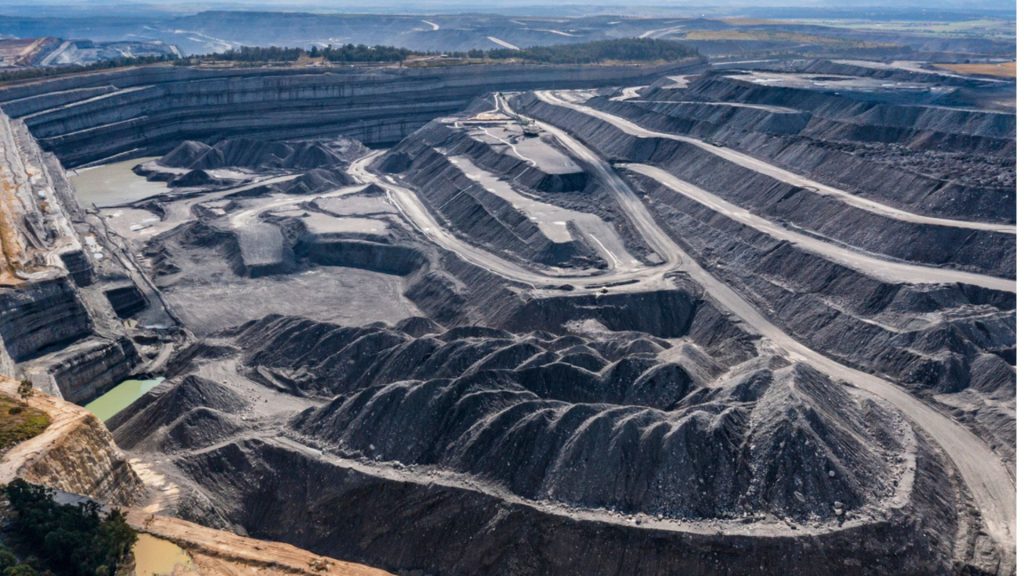
Driven by global supply disruptions from the war in Iran, China is rapidly accelerating the development of a massive, technologically advanced coal-chemical hub in Xinjiang’s Zhundong National Economic and Technological Development Zone.
Reportedly, the zone holds China’s largest contiguous coalfield, with 390 billion tons of reserves — surpassing the oil riches of the Persian Gulf by weight and capable of sustaining China’s energy needs for a century.
Situated on the southeastern edge of the Junggar Basin, the Zhundong zone is a 15,500-square-kilometer (5,984-square-mile) industrial undertaking.
The South China Morning Post (SCMP) reported that the site holds an estimated 390 billion tons of reserves, which accounts for 7 percent of the national total.
To put its sheer scale into perspective, this single coal reserve is far more than the oil riches of Persian Gulf nations, which amounted to roughly 117 billion tons by global crude conversion standards in 2025.
Autonomous tech
Typically, the standard global playbook for manufacturing vital industrial building blocks — such as plastics, fertilizers, and textiles — relied entirely on crude oil. The conflict in Iran shattered that reliance.
Recognizing its vulnerability to volatile foreign markets, China is overcoming the existing oil-to-chemicals pipeline entirely. Rather, it is using cutting-edge engineering to transform raw coal into high-end chemicals right on the desert floor.
A four-hour drive northeast of the regional capital, Urumqi, reveals a hyper-modern, automated ecosystem. Swirling dust still clouds the horizon, but human workers are nowhere to be seen.
Instead, nearly 300 electric, autonomous haulage trucks navigate the massive open-pit mines with clockwork precision. Whenever their charge drops below 30 percent, the vehicles self-navigate to automated battery stations.
Robotic arms swap out container-sized power packs in just six minutes. A single swap buys three hours of continuous, uncrewed labor.
‘Everest of Electricity’
The strategy is simple: don’t move the coal; move the products.
Because Xinjiang’s remote interior lacks the massive rail networks required to export raw minerals across the continent, local industries process the fuel on-site. The coal is fed into nearby giant complexes, where it undergoes advanced chemical synthesis or is converted directly into electricity.
To bridge the 3,300-kilometer gap to China’s developed eastern megacities, Beijing engineered the “Everest of electricity” — the world’s first ±1,100 kilovolt ultra-high-voltage direct current link. SCMP reported that the line transmits enough power to sustain 133 million households annually.
What remains in the desert fuels massive domestic industries. Local metallurgy complexes process over 6.5 percent of the nation’s aluminum. Simultaneously, high-purity polysilicon plants crank out the essential raw materials required to dominate global solar energy supply chains.
Environmental threat
The economic windfall has transformed the desert. Five years ago, Wucaiwan was a dusty collection of rudimentary shelters. Today, it is an urbanized tech hub covering 1,800 square kilometers, complete with residential districts, commercial centers, and a regional airport slated to open this month.
Yet, this rapid, climate-insulated expansion has triggered alarms among environmental experts.
The coal-to-chemical conversion process requires immense quantities of water. In the parched, hyper-arid Gobi Desert, water is more precious than fuel. Kevin Tu, managing director of Agora Energy China, warns that engineering triumphs cannot bypass ecological realities. The region’s fragile environmental carrying capacity remains a strict boundary.