
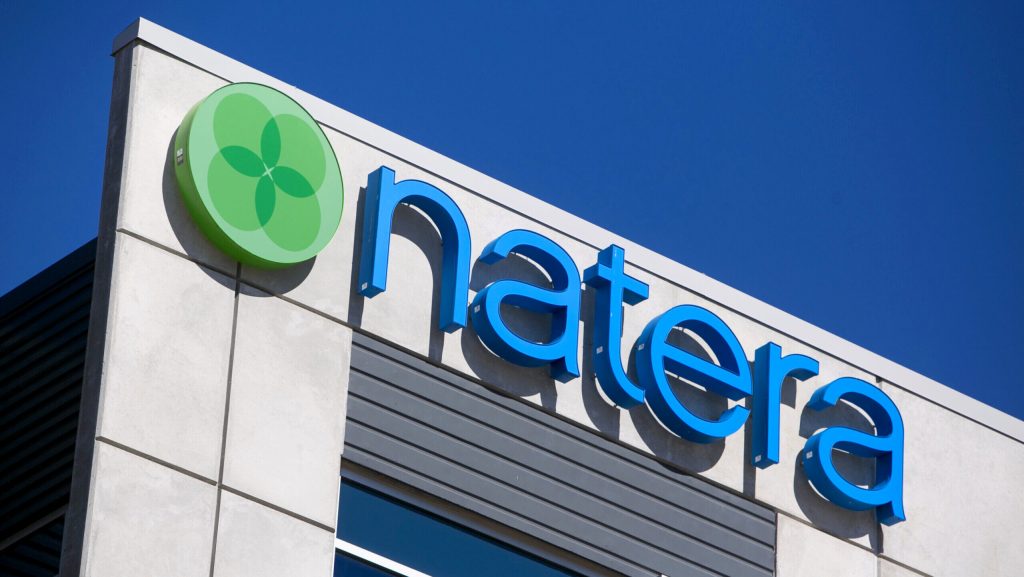
Austin-based Austin-based biotechnology company Natera was valued at roughly $28.4 billion as of Thursday, more even than the $21.5 billion market cap of gene-sequencing firm Illumina, whose technology underpins much of the measurable residual disease (MRD) sector Natera dominates.
There’s a reason for that. MRD technology, which has the potential to revolutionize treatments for recurring cancers, could be poised for explosive growth, even if it has captured only 6% of a $20 billion US market, according to a Leerink Partners analyst cited by The Wall Street Journal.
Up to the Test
Natera’s flagship product, Signatera, is a personalized MRD blood test that spots recurring cancer by identifying the unique DNA mutations of a patient’s tumor after it’s removed. The tumor DNA can then be detected in the blood, allowing MRD tests to deliver incredible accuracy and specificity months (or even up to two years) earlier than traditional CT, PET or MRI scans. That gives oncologists a big head start in treating patients who need it.
While MRD’s share of the testing market is small, Natera is rapidly advancing toward commercialization. In February, the company applied for FDA approval for Signatera in the relatively small bladder cancer testing market. That would take it beyond a laboratory-developed test analyzed only in specialized facilities and put it on the road to further revenue growth. That may have caught the eye of one of Wall Street’s most famed investors:
- Earlier this week, stock-picking luminary Cathie Wood’s Ark Invest, which has long viewed disruptive biotech as a key growth opportunity, bought roughly $4.1 million worth of Natera shares across two funds, taking its holdings to about $124 million. Ark also trimmed its position in synthetic DNA company Twist Bioscience, cashing in on stock gains of more than 70% in the past year.
- Wood could see a similar opportunity for Natera, which reported earlier this month that revenue jumped 39% in the first quarter to $696 million; executives project total revenue will reach $2.7 billion to $2.8 billion this year. Natera shares, which have lost some of their value in 2026, are still up 30% over the past 12 months.
More Rather Than Less: While Natera has a virtual monopoly on MRD testing at the moment, competition looms. Rival Guardant Health has its own laboratory-developed test, called Guardant Reveal, that performed well in a study earlier this year. And Swiss pharma giant Roche announced a deal to acquire SAGA Diagnostics last month.