
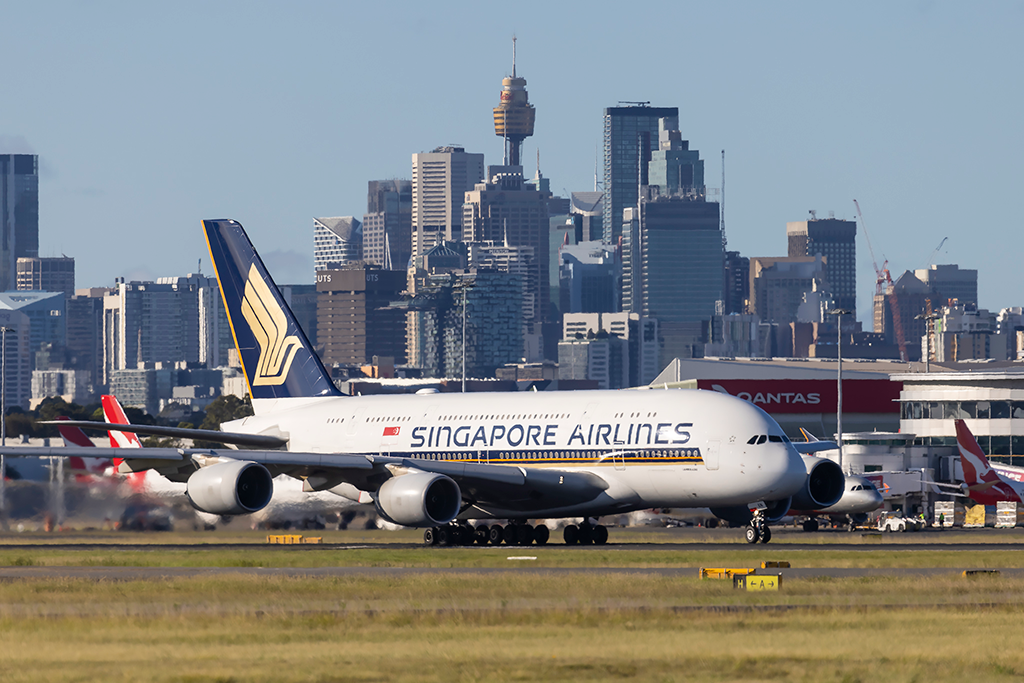
There have been mixed impacts on Asia Pacific aviation from the Middle East conflict, reports Tony Harrington
The Iran war has delivered a mix of shocks and opportunities to Asia Pacific aviation, forcing airlines and airports to rapidly review and robustly rework their plans for business continuity.
With the pain of the pandemic still uncomfortably recent for many APAC airlines, the conflict has driven not just running realignments of European and Middle East flight operations, but wholesale reassessments to help future-proof Asia’s air access to the world.
From the moment the conflict exploded across the Arabian Gulf, APAC air connectivity was critically compromised, with Gulf operations halted, Europe-Asia connections cut or stretched by long, expensive diversions around closed airspace, and other reliant markets initially rationed or starved of feeder traffic.
And like everywhere else, airlines from or serving Asia faced sky high fuel prices, uncertainty over supplies, and higher costs for essentials including insurance and crewing.
But opportunities also landed for long-haul APAC airlines and key airports to claw back passengers and freight lost over decades to three big Gulf airlines, Emirates, Qatar Airways and Etihad, via their mega hubs in Dubai, Doha and Abu Dhabi – all disrupted by the war.

Singapore’s Changi Airport reported that in March, immediately after the war began, Middle East flight cancellations soared. But airlines swiftly added around 90 nonstop flights linking Singapore with cities including Frankfurt, London, Munich, Muscat, Paris, Perth and Sydney.
And many passengers and freight consignments which would have flown via the Gulf from Australia and New Zealand went instead with Asian airlines through their hubs.
The one big APAC exception is India, where aviation is never far from upheaval, with the two biggest operators, IndiGo and Air India, both in crisis when the war began, their problems compounded by the additional closure of Pakistan’s airspace to Indian operators.
The Association of Asia Pacific Airlines (AAPA), which represents 18 key APAC carriers, reported 6.2% growth in international passenger traffic and 5.7% more demand for air freight in Q1.
“However, the impact of the Middle East conflict has begun to weigh on what had been an encouraging start to the year,” observes Wong Hong, AAPA’s director-general.
He goes on: “Already grappling with high operating costs due to persistent supply chain issues, airlines are now facing additional strain, with jet fuel prices up by 80% year on year to an average of US$156 per barrel in March, compared to US$87 per barrel a year earlier.”
While chunks of traffic switched from Gulf hubs to Asian gateways, Mabel Kwan, a Singapore-based director of the Alton Aviation Consultancy, says this was “neither perfect nor immediate, given the dominance of Middle East hubs in the East-West transfer corridor.”
However, she adds that “the emergence of new transit geographies” was immediate, with traffic diverting through Central Asia instead of the Middle East.
“This is not a temporary blip. While still nascent, this shift is strategically significant. New corridors are being mapped in real time, potentially laying the groundwork for alternative hub ecosystems beyond the Gulf over the longer term.”
Linus Bauer, global managing partner of aviation consultancy BAA & Partners, says the war’s short-term impact on aviation was largely operational, with higher costs, longer routes and selective airspace avoidance.
“The more interesting dynamic is medium to long term. The conflict reinforces a shift toward resilience over pure efficiency. Airlines are becoming less comfortable relying on a single geography – namely the Gulf – as the default bridge between Asia and Europe.
“This plays directly into the hands of Asian hubs. It doesn’t dismantle the Gulf hub model, but it does dilute its dominance and encourages diversification of routing options,” Bauer says.
Still, while impacts on Gulf airlines were serious and drawn out, Emirates president Sir Tim Clarke says his airline has a long history of rebounding from crises, and this will be no different.
By early May, UAE airspace had reopened and both Emirates and Etihad were rapidly rebooting, while neighbouring Qatar Airways also reactivated after a longer disruption.
As well, evolving Saudi Arabian start-up Riyadh Air plans to start flying this year, building to 100 points by 2030, including key Asian destinations.

An “underappreciated trend”, adds Mabel Kwan, is the strengthening of airline operations within the APAC region. “As fares rise due to increased costs and constrained capacity, and war uncertainty lingers, travellers could increasingly favour shorter, regional trips over long-haul journeys.
“The result could be a quiet but meaningful rebalancing: APAC aviation could become more regional and less intercontinental, with intra-Asia corridors strengthening while long-haul recovery softens if inflation and prices stay elevated.”
Perfectly illustrating the point, low-cost AirAsia has just announced orders for 150 Airbus A220 narrowbody jets and options to add 150 more, for delivery between 2028 and 2039.
“We never waste a crisis,” said Tony Fernandes, CEO of the airline group’s parent, Capital A. “AirAsia grew by making bold decisions at the right moment, not the easiest moment.
“The fundamentals of travel in Asia remain incredibly strong. This order is about positioning AirAsia to meet that demand with the most efficient fleet in the region. Short-term noise doesn’t change the long-term trajectory, and we are building for that future.”
Mayur Patel, head of industry affairs, APAC for global aviation data group OAG, says impacts of the war on Asia-Europe flights “will be both temporary and permanent, but with lasting structural consequences.”
He expects changes to deliver “a more complex and less globalised aviation system” as airlines respond differently this time compared to previous geopolitical upheavals.
“While some short-term effects such as rerouting, capacity adjustments, and fare increases may normalise over time, deeper shifts will remain,” says Patel.
“These include persistent airspace asymmetry, particularly over Russia, structurally higher fares and a redesign of airline networks. Asia–Europe travel is unlikely to return fully to pre-crisis norms.”
One significant exception is China, thee airlines of which have the major benefit of access to Russian airspace, providing a much faster, less expensive corridor to Europe than is available to competitors.
“Overall, the industry is moving toward a multi-polar aviation landscape, where China is strengthening its position as a key connector between Asia and Europe, Southeast Asian hubs provide stability and neutrality, and Middle Eastern hubs remain important but more exposed to geopolitical disruption,” says Patel.
“This represents a rebalancing of the global aviation order rather than a temporary shift,” he concludes.