
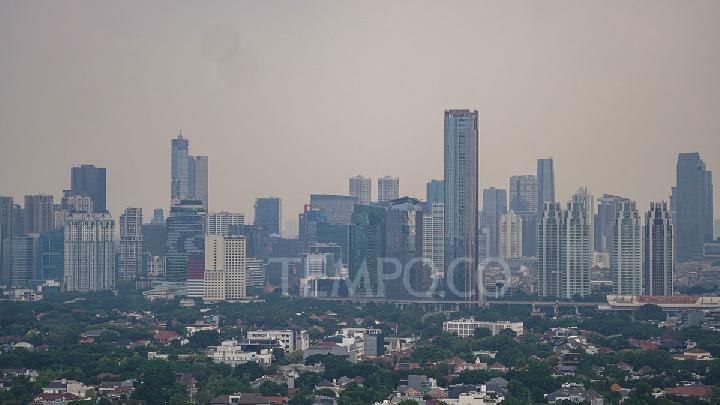
TEMPO.CO, Jakarta – Jakarta’s air quality was classified as unhealthy on Friday morning, with the Indonesian capital ranking as the city with the worst air quality in the world, according to air monitoring platform IQAir.
IQAir data recorded at 06:11 AM local time showed Jakarta’s Air Quality Index (AQI) at 176, placing it in the unhealthy category. The pollution level was driven by PM2.5 particles, with a concentration of 91 micrograms per cubic meter.
The level indicates air conditions that may pose health risks, particularly for sensitive groups, and could also affect vulnerable animals, plants, and the surrounding environment.
Residents were advised to limit outdoor activities. Those who need to go outside are encouraged to wear masks and keep windows closed to reduce exposure to polluted outdoor air.
According to IQAir’s classification, air quality is considered good when PM2.5 levels range from 0-50, meaning pollution poses little or no health risk.
Air Quality Categories
Air quality with PM2.5 levels between 51 and 100 is categorized as moderate, meaning it generally does not affect human or animal health but may impact sensitive plants and aesthetic conditions.
Levels between 200 and 299 are classified as very unhealthy, meaning air pollution may harm the health of certain groups exposed to it.
Meanwhile, AQI levels between 300 and 500 fall into the hazardous category, where air pollution may cause serious health impacts for the broader population.
On Friday morning, other cities with poor air quality included Beijing, China, which ranked second with an AQI of 158, followed by Kinshasa, Democratic Republic of Congo, at 155; Addis Ababa, Ethiopia, at 153; and Johannesburg, South Africa, at 143.
Jakarta’s Response to Air Pollution
The Jakarta provincial government said it is preparing measures to address air pollution during the dry season, which is expected to occur from early May to August.
The measures include improving air quality monitoring systems and conducting vehicle emissions tests.
The Jakarta administration is also reviewing its Air Pollution Control Strategy (SPPU), which evaluates factors including PM2.5 trends, emissions from different sectors, and the impact of pollution on public health.
The government said air pollution control requires coordinated efforts beyond a single region, involving collaboration among government agencies and surrounding areas around Jakarta.
Read: Indonesia’s Dry Season Expands, Heavy Rain Unlikely Through June 22
Click here to get the latest news updates from Tempo on Google News