
Published on
July 11, 2026

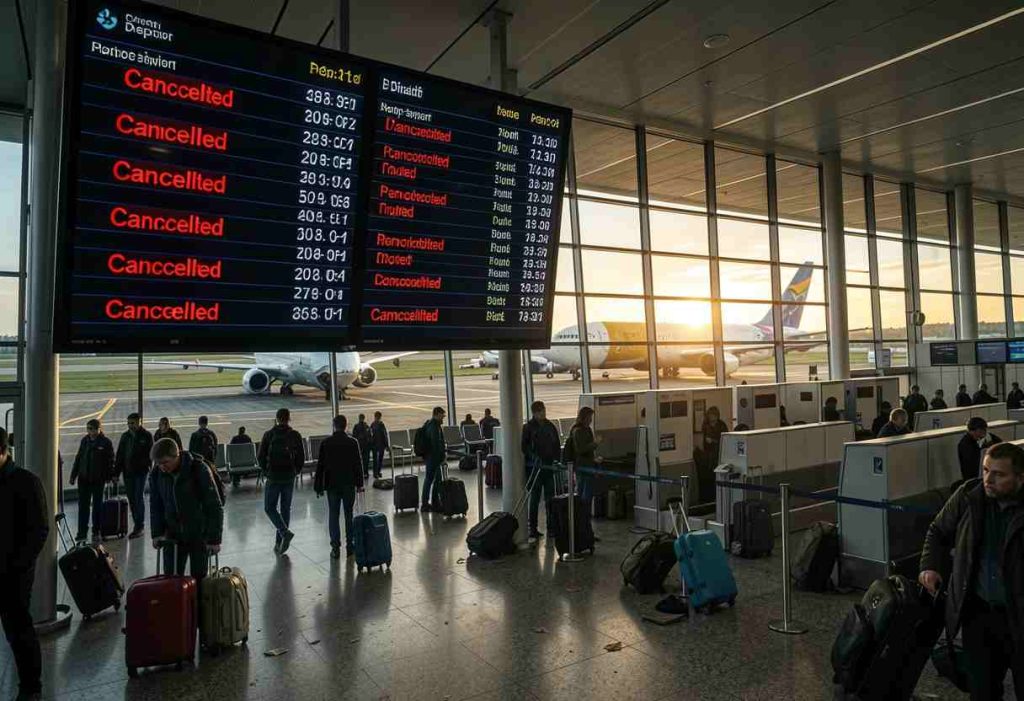
Image generated with Ai
A wave of severe atmospheric instability has triggered massive structural disruptions across major aviation networks, forcing 231 flight cancellations and 2327 delays across China. According to live tracking data, an intense storm system moving across East Asia on July 10, 2026, severely compromised airspace capacity and safely grounded entire regional fleets. The scale of the gridlock left thousands of international passengers stranded, impacting itineraries connecting through major metropolitan centers. The cascading cancellations have directly affected passenger movements across vital city networks and sovereign boundaries, including China, Japan, Taiwan, the United Kingdom, Thailand, South Korea, Pakistan, and the Netherlands. At the epicenter of this operational slowdown are major industrial and transit gateways such as Guangzhou Baiyun International Airport (CAN) and Kansai International Airport (KIX), which serve as foundational pillars for international commerce and global tourism.
FlightAware Operational Data: Cancellations and Delays by Airport
The following data outlines the absolute total of operational flight drops and severe delays across the eleven monitored facilities for July 10, 2026.
Cumulative Disruption Data Table
The table below illustrates the collective volume of flights affected by the extreme system bottlenecks on July 10, 2026, across all highlighted airports.
| Airport Code | City / Location | Total Flights Cancelled | Total Flights Delayed | Airlines Affected |
| CAN | Guangzhou | 34 | 370 | China Southern Airlines, Hainan Airlines, China Eastern, Air China, XiamenAir, Shenzhen Airlines, China Airlines, Juneyao Airlines, China United Airlines |
| KIX | Kansai | 25 | 47 | Japan Transocean Air Co., Jetstar Japan, EVA Air, cathay Pacific, Finnair, China Airlines, Philippine Air Lines, Air China |
| XMN | Xiamen | 20 | 210 | XiamenAir, China Eastern, Hainan Airlines, China United Airlines, Shenzhen Airlines, EVA Air, Tibet Airlines |
| HSN | Zhoushan, China | 17 | 6 | China Express Airlines, XiamenAir, China Eastern, China United Airlines, Qingdao Airlines, Donghai Airlines |
| HGH | Hangzhou, China | 40 | 227 | Air China, Hainan Airlines, Cathay Pacific, China Eastern, Juneyao Airlines, Sichuan Airlines, China United Airlines, EVA Air, Spring Airlines, China Express Airlines, Shenzhen Airlines |
| SZX | Shenzhen, China | 14 | 464 | Hainan Airlines, XiamenAir, Shenzhen Airlines, Donghai Airlines, China Eastern , Shandong Airlines, Okay Airways, Spring Airlines |
| TFU | Chengdu (Tianfu), China | 14 | 340 | Air China, Xiamen Air, China Southern Airlines, Shenzhen Airlines, Sichuan Airlines |
| CTU | Chengdu (Shuangliu), China | 16 | 208 | Air China, Sichuan Airlines, Tibet Airlines, China Eastern |
| WUH | Wuhan, China | 19 | 182 | China Eastern, XiamenAir, Air China, China Southern Airlines, Hainan Airlines, China Express Airlines, Shenzhen Airlines, Zhejiang Loong |
| KWE | Guiyang, China | 16 | 142 | 9 Air, China Southern Airlines, XiamenAir, Qingdao Airlines, Air China, Fuzhou Airlines, Spring Airlines, Hainan Airlines, China Express Airlines |
| TYN | Taiyuan, China | 16 | 131 | China Eastern Airlines, XiamenAir, Hainan Airlines, China Express Airlines, Air China |
Cities and Countries Affected by Cancellations
The cross-border aviation network means that a schedule drop in eastern or southern China instantly snaps transport links worldwide. The major centers facing complete flight cancellations included outbound and inbound corridors to Taipei (Taiwan), Tokyo and Osaka (Japan), Bangkok (Thailand), and Seoul (South Korea).
Advertisement
Advertisement
Long-haul sectors were similarly fractured. Flights connecting directly to European financial and leisure hubs, specifically London (United Kingdom) and Amsterdam (Netherlands), were dropped or indefinitely postponed, leaving long-haul business travelers and tourism groups stranded. On the regional front, critical routes into South Asia, including flights bound for Lahore and Islamabad (Pakistan), faced severe operational cancellations.
Reasons for Cancellations and Delays Across Airports in China
The overriding catalyst behind this multi-hub aviation standstill is the erratic tracking of Super Typhoon Bavi. Generating sustained atmospheric pressure drops across the East China Sea, the severe typhoon brought violent tracking winds of up to 60 meters per second, zero-visibility cloud ceilings, and extreme convective storm fronts right into key approach corridors.
Advertisement
Advertisement
Because coastal facilities like Xiamen (XMN) and Hangzhou (HGH) sat directly along the storm’s projected path, air traffic control centers were forced to impose severe flow restrictions to guarantee basic safety parameters. This immediately caused aircraft rotation blockages at major transit megahubs like Guangzhou Baiyun (CAN) and Chengdu Tianfu (TFU). Since individual commercial airframes are scheduled to fly consecutive legs daily, an early-morning weather hold in one city automatically cancels subsequent routes across the country.
What to Do When Your Flight Gets Cancelled(FAQ)
Q: Am I legally entitled to financial compensation if a typhoon cancels my flight?
A: Generally, no. Most civil aviation bodies classify severe typhoons and hurricanes as “extraordinary circumstances” or acts of God, which exempts airlines from paying out statutory compensation. However, you are always entitled to a choice between a full financial refund or free rebooking on the next available flight.
Q: What is the fastest way to secure a seat on a replacement flight?
A: Avoid joining the physical lines at airport service counters. Instead, open your carrier’s smartphone application or call their international customer care numbers. Digital systems process flight changes instantly and access live global inventory faster than terminal staff.
Q: Should the airline pay for my food and hotel stay during a long weather delay?
Advertisement
Advertisement
A: Under standard international flight rules, while carriers aren’t forced to pay cash damages for weather, they still maintain a duty of care. This means they should provide meal vouchers for extended delays and arrange basic hotel lodging if a flight drop forces an unexpected overnight stay.
Impact on China and Overview of Chinese Flight Cancellations
The massive logjam of dropped and delayed flights has created a heavy operational drag across China’s transport sector, creating structural hurdles for the country’s multi-billion-dollar domestic and international tourism economy. With key maritime provinces like Fujian, Zhejiang, and Guangdong locked under emergency Code Orange alerts due to Super Typhoon Bavi, the state’s capacity to move leisure travelers ground to a sudden halt.
For tourism, this peak summer disruption creates immediate financial losses. Thousands of multi-city holiday packages were instantly shattered as flight legs between coastal gateways and inland heritage sites were severed. Hotel groups, localized tour agencies, and hospitality networks are dealing with a sudden wave of reservation cancellations. Because hubs like Guangzhou Baiyun (CAN) serve as primary entry points for international arrivals, this massive meteorological event highlights how closely vulnerable modern tourism growth remains to extreme weather system shocks.
Primary Source: Real-time data aggregated via FlightAware.
Verification Protocol: Statistics are cross-checked by our human editorial desk. Timestamped logs and feed snapshots are securely archived internally to maintain historical accuracy.
Note: Real-time tracking figures represent active airspace data and may experience minor variances from local airport terminal gates. Please include this
Advertisement
Advertisement
