
Superjumbo aircraft withdrawn from Asian corridor as carrier reshapes premium fleet deployment
Major Operational Shift Announced
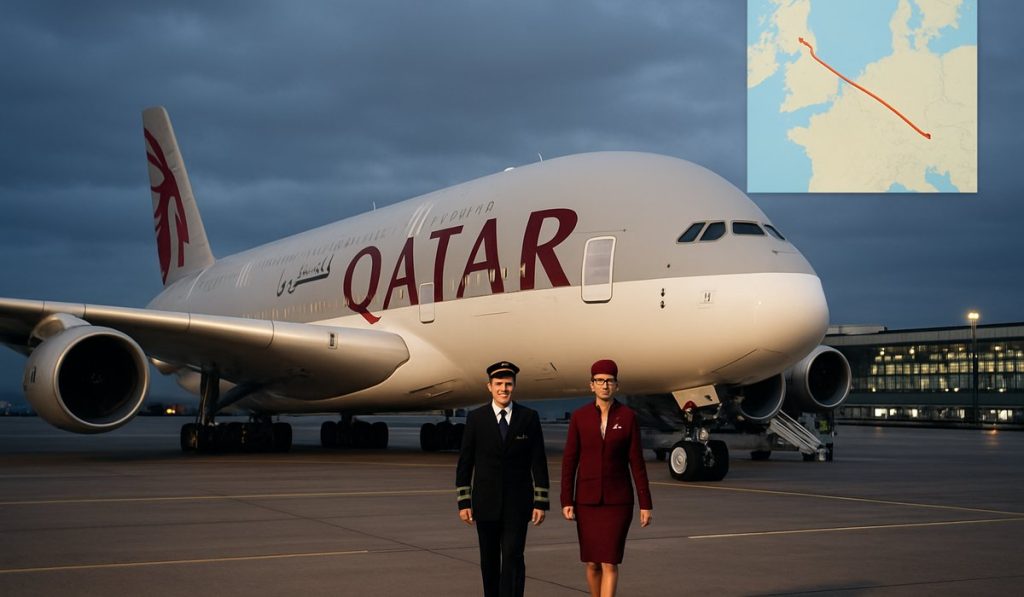
Qatar Airways has abruptly pulled its flagship Airbus A380 aircraft from scheduled service between Doha and Guangzhou, marking another significant recalibration of the airline’s ultra-long-haul network strategy. The Doha-based carrier notified aviation data provider Cirium of the schedule changes over the weekend, effectively removing the double-deck superjumbo from the Doha Hamad International Airport-Guangzhou Baiyun International Airport corridor indefinitely.
The move represents the latest in a series of strategic adjustments to Qatar Airways’ A380 deployment, as the airline continues to optimize its fleet utilization across competing global markets. The suspension underscores broader operational decisions facing carriers operating the world’s largest passenger aircraft amid fluctuating demand patterns and evolving route profitability metrics.
Context of Fleet Restructuring
Qatar Airways operates one of the world’s most extensive Airbus A380 fleets, with the four-engine jets primarily concentrated on premium long-haul destinations. The aircraft, capable of carrying 515 passengers in Qatar Airways’ three-class configuration, represents significant capital investment and operating costs—factors that influence route-specific deployment decisions.
The withdrawal from the Doha-Guangzhou route reflects shifting passenger demand dynamics in Asian markets and potential route performance assessments by airline management. The corridor connects the Middle Eastern aviation hub with China’s southern economic regions, a sector critical to global air traffic patterns.
Industry-Wide Implications
The A380’s operational footprint has contracted significantly across the global aviation landscape since the COVID-19 pandemic reshaped travel patterns. Few carriers maintain extensive superjumbo networks, making Qatar Airways’ continued reliance on the aircraft particularly noteworthy for industry observers. Aircraft redeployment decisions typically signal demand forecasting adjustments and strategic positioning in competitive markets.
Carriers operating premium long-haul services increasingly balance fuel consumption costs, crew requirements, and maintenance expenses against seat capacity benefits. The Doha-Guangzhou suspension may indicate Qatar Airways’ preference for alternative aircraft types on this particular route, potentially offering greater scheduling flexibility or improved unit economics.
What’s Next
Qatar Airways has not released public commentary regarding the A380 withdrawal timeline or alternative service arrangements for the Doha-Guangzhou market. The airline’s continued A380 operations on other networks remain unaffected pending further schedule updates.
Frequently Asked Questions
Why would Qatar Airways remove A380s from profitable routes?
Airlines conduct route-by-route profitability analysis factoring in fuel costs, passenger demand, crew expenses, and competitive positioning. A380 operations require specialized ground infrastructure and crew training, making smaller aircraft sometimes more economical on specific routes.
What aircraft might replace the A380 on the Doha-Guangzhou route?
Qatar Airways typically operates Boeing 777s and Airbus A350s on long-haul Asian services. These aircraft offer superior fuel efficiency and operational flexibility while maintaining premium passenger experiences.
How does this affect passengers currently booked on these flights?
Affected passengers typically receive rebooking options on alternative services or full refunds, though exact policies vary by ticket type and booking terms.
Are other airlines reducing A380 operations?
Yes—Emirates and Singapore Airlines operate most remaining A380 fleets, with limited new orders indicating the superjumbo era faces gradual contraction across global aviation.
What does this mean for long-haul aviation costs?
Route optimization efforts like these influence ticket pricing, baggage fees, and airline profitability metrics affecting broader aviation industry economics.