
Published on
June 19, 2026

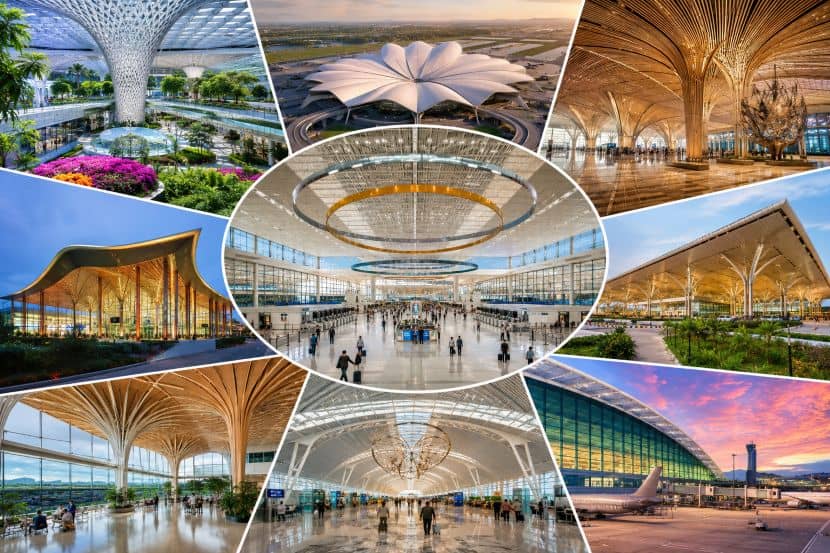
Image generated with Ai
Frankfurt Airport Terminal 3 has secured a place among the world’s most celebrated airport developments after being recognised on the 2026 Prix Versailles World’s Most Beautiful Airports List, placing Germany alongside aviation hubs in China, India, Cambodia and the United States. The announcement reinforces a growing global trend in which airports are evolving beyond transport infrastructure into architectural landmarks that influence tourism, passenger satisfaction and destination branding. For travellers, the distinction is more than an aesthetic accolade. It reflects the increasing importance of terminal design in improving the airport experience through intuitive navigation, natural lighting, sustainability and passenger comfort. As international tourism continues to rebound and airports compete for global connectivity, investments in world-class terminals are becoming a strategic advantage for both aviation and destination economies.
The recognition places Frankfurt Airport Terminal 3 alongside Guangzhou Baiyun International Airport Terminal 3, Lokapriya Gopinath Bordoloi International Airport Terminal 2 in Guwahati, Navi Mumbai International Airport Terminal 1, Techo International Airport near Phnom Penh, Pittsburgh International Airport, and San Diego International Airport Terminal 1. Together, these projects illustrate how airports increasingly blend local culture, environmental sustainability and cutting-edge engineering to create memorable travel gateways. For airlines, tourism boards and hospitality businesses, such developments enhance destination appeal while supporting higher passenger volumes and strengthening regional competitiveness within the global travel market.
World’s Most Beautiful Airports 2026 at a Glance
| Airport / Terminal | Country | Architectural Inspiration | Key Tourism Significance |
|---|---|---|---|
| Frankfurt Airport Terminal 3 | Germany | Urban streets and public squares | Strengthens Frankfurt as Europe’s leading aviation gateway |
| Guangzhou Baiyun Terminal 3 | China | Flowers, clouds and Lingnan heritage | Celebrates southern China’s cultural identity |
| Lokapriya Gopinath Bordoloi Terminal 2 | India | Bamboo orchid and Assam landscapes | Showcases Northeast India’s biodiversity |
| Navi Mumbai Terminal 1 | India | Lotus flower | Supports India’s expanding aviation market |
| Techo International Airport | Cambodia | Khmer architecture and woven bamboo | Reinforces Cambodia’s tourism ambitions |
| Pittsburgh International Airport | United States | Allegheny Mountains and forests | Connects regional heritage with modern aviation |
| San Diego Terminal 1 | United States | Waterfront glass façade | Enhances California’s coastal visitor experience |
Frankfurt Airport Terminal 3 Represents a New Era for European Aviation Infrastructure
Europe’s sole representative on this year’s international architecture shortlist is Frankfurt Airport Terminal 3, one of the continent’s most significant aviation infrastructure investments. Developed at an estimated cost of approximately €4 billion, the new terminal represents years of planning aimed at strengthening Frankfurt’s position as one of Europe’s principal international hubs.
Covering approximately 1.3 square kilometres, the development ranks among the largest airport expansion projects undertaken in Europe during the past decade. Rather than following a conventional terminal layout, the design adopts an urban philosophy, where boarding areas, lounges and passenger circulation spaces resemble interconnected streets and public squares. This approach encourages intuitive movement while creating a more relaxed environment for millions of international travellers.
Advertisement
Advertisement
Large plate-glass façades maximise daylight throughout the terminal, reducing dependence on artificial lighting during daytime operations while enhancing passenger wellbeing. Premium natural materials, including limestone and travertine, have been incorporated extensively, creating interiors that balance functionality with long-term durability.
Another distinctive architectural element is the installation of three suspended aluminium ring sculptures that continuously rotate above public areas, creating a dynamic visual centrepiece while reinforcing the terminal’s identity.
Advertisement
Advertisement
Importantly, the building has also been designed with future flexibility in mind. Aviation technology, passenger processing systems and operational requirements continue to evolve rapidly, and Terminal 3’s adaptable configuration allows future modifications without requiring extensive structural reconstruction.
Major Airport Expansion Projects Reflect Growing Global Travel Demand
The recognition comes during a period of sustained long-term growth in international aviation. According to the International Air Transport Association (IATA), global passenger demand has continued recovering strongly following the pandemic, with international traffic now approaching or exceeding pre-pandemic levels across numerous markets.
Airports worldwide are responding through large-scale capital investment programmes designed to improve operational resilience while creating more attractive passenger environments.
| Aviation Development Indicator | Current Trend |
|---|---|
| International passenger traffic | Continuing long-term growth |
| Airport infrastructure investment | Increasing globally |
| Focus of terminal design | Passenger experience and sustainability |
| Architectural priorities | Natural light, local culture, flexibility |
| Tourism strategy | Airports becoming destination ambassadors |
Modern airport terminals increasingly function as a destination’s first impression. Architecture now contributes directly to visitor perception, influencing satisfaction before travellers even leave the airport.
Architecture Now Plays a Strategic Role in Tourism Competitiveness
For decades, airports were designed primarily around operational efficiency. Today, however, leading international gateways are expected to serve a much broader purpose.
Increasingly, airports act as showcases for regional identity, reflecting local culture, history, natural landscapes and artistic traditions through architecture, public art and interior design. This transformation supports tourism marketing while creating memorable arrival experiences for leisure and business visitors alike.
Advertisement
Advertisement
Frankfurt’s latest terminal reflects this evolution by blending contemporary European architecture with adaptable passenger spaces that can accommodate future technological developments. Rather than relying solely on visual impact, the project integrates operational efficiency with traveller comfort, ensuring shorter walking distances, spacious waiting areas and improved circulation.
This broader shift is visible across the seven airports recognised this year. Each project draws inspiration from its surrounding geography or cultural heritage, demonstrating how airport architecture increasingly contributes to national branding in an intensely competitive global tourism market.
How Beautiful Airport Design Benefits Travellers
Although architectural awards often focus on aesthetics, travellers experience several practical advantages when airports are designed around people rather than infrastructure alone.
| Passenger Benefit | Why It Matters |
|---|---|
| More natural daylight | Reduces travel fatigue |
| Intuitive layouts | Easier navigation between gates |
| Spacious public areas | Less congestion during peak hours |
| Local cultural design | Stronger destination identity |
| Flexible infrastructure | Better long-term passenger experience |
| Sustainable construction | Lower environmental impact |
These features increasingly influence traveller satisfaction scores, airport rankings and airline preferences when selecting future hub operations.
How Six Other Global Airports Earned Their Place Among the World’s Most Beautiful Aviation Gateways
While Frankfurt Airport Terminal 3 stands out as Europe’s only representative on the 2026 Prix Versailles World’s Most Beautiful Airports List, the remaining six airports demonstrate how architecture, sustainability and regional identity are reshaping the passenger experience across Asia and North America. Rather than relying solely on striking appearances, each project combines operational efficiency with cultural storytelling, environmental design and long-term flexibility, reflecting how airports are becoming destinations in their own right.
Guangzhou Baiyun International Airport Terminal 3, China: A Floral Gateway Inspired by the ‘City of Flowers’
Guangzhou Baiyun International Airport’s newest terminal celebrates the city’s long-standing nickname, the “City of Flowers.” Architects incorporated floral motifs, flowing rooflines, landscaped terraces, gardens and water-inspired spaces that reflect the traditions of southern China’s Lingnan culture. The terminal also includes China’s highest public airport observation deck, creating an additional attraction for aviation enthusiasts and visitors. Beyond aesthetics, the design improves passenger circulation while allowing abundant natural daylight to reduce energy consumption.
Advertisement
Advertisement
Guangzhou Baiyun is among China’s busiest international gateways. According to airport statistics, it handled more than 76 million passengers in 2025, connecting hundreds of domestic and international destinations while serving as a major hub for southern China.
Lokapriya Gopinath Bordoloi International Airport Terminal 2, India: Showcasing Northeast India’s Cultural Heritage
Guwahati’s new Terminal 2 impressed the jury by transforming Assam’s natural and cultural identity into architectural form. Inspired by the bamboo orchid, the terminal incorporates sweeping bamboo-inspired ceilings, indigenous artwork, traditional craftsmanship and design elements representing the Brahmaputra River and the diverse tribal communities of Northeast India.
Passive daylighting, biophilic interiors and the extensive use of sustainable materials strengthen the airport’s environmental credentials while creating a calmer atmosphere for passengers. The recognition also places Northeast India more prominently on the global tourism map by showcasing regional heritage through contemporary architecture.
The airport serves more than six million passengers annually, making it the primary aviation gateway to India’s northeastern states.
Navi Mumbai International Airport Terminal 1, India: A Landmark Designed Around the Lotus
One of India’s most anticipated aviation projects, Navi Mumbai International Airport, received international recognition even in its early operational phase. Designed by Zaha Hadid Architects, Terminal 1 features a dramatic lotus-inspired roof that symbolises growth, purity and renewal while reflecting India’s cultural heritage.
The terminal integrates large digital art installations, expansive passenger halls, advanced baggage systems and energy-efficient infrastructure. Extensive engineering works—including river diversion, terrain modification and land reclamation—enabled construction of the new airport, highlighting the scale of the development.
Advertisement
Advertisement
Once fully developed, Navi Mumbai International Airport is expected to accommodate up to 90 million passengers annually in multiple phases, significantly easing congestion at Mumbai’s existing airport.
Techo International Airport, Cambodia: Khmer Heritage Meets Sustainable Design
Located south of Phnom Penh, Techo International Airport reflects Cambodia’s architectural traditions through expansive rooflines inspired by Khmer temples and woven bamboo craftsmanship. Tree-like structural columns, extensive skylights and naturally ventilated spaces reduce reliance on artificial cooling while creating a spacious passenger environment.
Native Rumduol trees, Cambodia’s national flower, have been incorporated into the terminal landscape, reinforcing the airport’s connection to local identity. The modular roof structure also allows future expansion as Cambodia’s tourism industry continues to grow.
The airport is expected to become Cambodia’s principal international gateway, with an initial capacity of approximately 13 million passengers per year, expanding significantly in later development phases.
Pittsburgh International Airport, United States: Nature Shapes a New Passenger Experience
Pittsburgh International Airport’s newly redeveloped terminal draws inspiration from the forests and mountain landscapes of western Pennsylvania. The sweeping roofline is supported by 38 tree-shaped steel columns, while extensive glazing fills the interior with daylight and provides views of the surrounding landscape.
The terminal also incorporates local public art, energy-efficient systems, outdoor terraces and shorter walking distances, demonstrating how passenger wellbeing has become central to modern airport design. The redevelopment represents one of the largest infrastructure investments in the airport’s history.
Advertisement
Advertisement
The airport serves approximately nine to ten million passengers annually, supporting both domestic and international connectivity across the eastern United States.
San Diego International Airport Terminal 1, United States: Coastal Design with Environmental Innovation
San Diego International Airport’s completely redeveloped Terminal 1 earned recognition for combining elegant coastal architecture with sustainability and operational efficiency. The project features a 244-metre curved glass façade, extensive natural lighting, outdoor viewing terraces and redesigned passenger circulation that significantly improves the travel experience.
Engineers also reduced the project’s carbon footprint by approximately 30 per cent, while structural innovations eliminated numerous interior columns, creating an open and flexible departures hall. Local artwork, regional restaurants and panoramic views of San Diego Bay further reinforce the airport’s strong sense of place.
Following its US$3.8 billion redevelopment, the airport continues to handle more than 25 million passengers annually, making it the busiest single-runway commercial airport in the United States.
Global Snapshot of the Seven Award-Winning Airports
| Airport | Country | Signature Design | Annual Passenger Capacity / Traffic* | Key Tourism Value |
|---|---|---|---|---|
| Frankfurt Airport Terminal 3 | Germany | Urban streets and plazas | Future expansion for millions of additional passengers | Europe’s newest premium gateway |
| Guangzhou Baiyun Terminal 3 | China | Floral gardens and Lingnan culture | 76+ million passengers | Southern China’s international hub |
| Guwahati Terminal 2 | India | Bamboo orchid and Assamese heritage | 6+ million passengers | Gateway to Northeast India |
| Navi Mumbai Terminal 1 | India | Lotus-inspired architecture | Planned capacity up to 90 million | Supports Mumbai’s tourism growth |
| Techo International Airport | Cambodia | Khmer-inspired canopy | Initial capacity 13 million | New gateway to Cambodia |
| Pittsburgh International Airport | United States | Forest-inspired architecture | Around 9–10 million passengers | Regional cultural showcase |
| San Diego Terminal 1 | United States | Waterfront glass façade | 25+ million passengers | California coastal tourism gateway |
What This Means for Global Travellers and the Future of Airport Tourism
The Prix Versailles 2026 recognition demonstrates that airports are no longer viewed merely as transport facilities. Instead, they are increasingly becoming architectural landmarks, tourism ambassadors and economic catalysts for their regions. The seven selected airports showcase a common vision: combining local culture, environmental sustainability, operational efficiency and passenger wellbeing within world-class aviation infrastructure. Three of these seven projects will later compete for the prestigious World Titles in architecture, interior and exterior design, with the winners to be announced later this year.
For travellers, these developments mean more intuitive terminals, greater natural lighting, improved passenger comfort, better retail experiences and stronger cultural immersion from the moment they arrive. As airports increasingly compete on experience rather than simply capacity, investments in landmark terminals are expected to play a larger role in destination marketing, airline route development and international tourism growth.
Advertisement
Advertisement
Airport Architecture Is Becoming a Competitive Advantage for Tourism
The aviation industry has entered an era where airport terminals serve as the first and last impression of a destination. Governments, airport operators and tourism authorities are investing billions in modern infrastructure that strengthens national branding while improving operational efficiency.
Recent industry trends include:
| Global Aviation Trend | Tourism Impact |
|---|---|
| Iconic terminal architecture | Strengthens destination branding |
| Sustainable airport construction | Supports environmentally responsible tourism |
| Passenger-centric terminal planning | Improves traveller satisfaction |
| Integration of local culture and art | Creates memorable visitor experiences |
| Smart airport technologies | Faster and smoother passenger journeys |
| Flexible infrastructure | Supports future airline and passenger growth |
As international travel continues to expand, airports are increasingly expected to become attractions in their own right rather than simple transit points.
The Bigger Picture for Frankfurt Airport Terminal 3
For Germany, the recognition reinforces Frankfurt Airport Terminal 3 as one of Europe’s most ambitious aviation investments. Beyond increasing operational capacity, the terminal strengthens Frankfurt’s position as one of the continent’s principal intercontinental gateways while supporting inbound tourism, international business travel and long-haul airline growth.
The award also highlights a broader shift across the global aviation industry: successful airports are now measured not only by passenger numbers or aircraft movements but also by how effectively they combine architecture, sustainability, culture and passenger experience into a cohesive travel environment. As destinations compete for visitors in an increasingly experience-driven tourism market, airport design has become a strategic asset that extends well beyond the runway.
Advertisement
Advertisement
