
Close Menu
Simply Invest Asia
  • Home
  • About us
  • Explore industries/sectors
    • Automobile
    • Aviation
    • Banking
    • Biotechnology
    • Chemical & Fertilizer
    • Entertainment and Media
    • Food Processing
    • Healthcare
    • Iron and Steel
    • Leather
    • Mining
    • Oil and Gas
    • Pharmaceutical
  • Explore by countries
    • China
    • Dubai / UAE
    • Hong Kong
    • India
    • Indonesia
    • Japan
    • Malaysia
  • Explore cities
    • Bangkok
    • Beijing
    • Chongqing
    • Delhi
    • Dubai
    • Guangzhou
    • Jakarta
    • Kuala Lumpur
  • Why Asia
Facebook X (Twitter) Instagram Threads
Trending:
  • Nio opens new UK R&D site
  • Aviation’s Hybrid Moment Has Finally Arrived
  • PATHWAYS ON SHOW THIS WEEKEND FOR HONG KONG CHINA
  • Japan Stocks Slip Again As AI And Rate Worries Return
  • Beyond the conflict: Where does Dubai’s luxury residential market go next?
  • Polypropylene Processing Baskets Market Growth to Accelerate by 2035 Amid Rising Cleanroom Automation Demand – News and Statistics
  • CNBC Daily Open: Tech rout, MSCI moves on Indonesia and South Korea in focus
  • Beijing confirms arrest of US citizen Min Zin on espionage charges
  • Dubai launches Flexi Rent initiative to enhance rental market stability with monthly payment plans
  • How Many Cultural Tourism Enterprises Have Fallen into the “Low
  • Walmart-backed Flipkart expands quick-commerce push as Amazon ramps up in India
  • Indonesia Exports Value-Added Steel Products Worth US$216,000 to Canada
  • Chinese River Cruise Line Takes Delivery of First European Market Ship
  • National security certification power won’t affect appeals: Hong Kong justice chief
  • The infra challenge in Delhi’s EV ambition
  • Joanne Peh & Qi Yuwu on livestream incident
  • Dubái lanza laboratorio para detectar nanopartículas en alimentos El Municipio de Dubái anunció la puesta en marcha de un nuevo laboratorio para la detección de nanopartículas en productos alimenticios, que emplea uno de los métodos más sensibles par – instagram.com
  • Maverick Tannery & Leather joins international network of artisans
Wednesday, June 24
Facebook X (Twitter) Instagram
Simply Invest Asia
  • Home
  • About us
  • Explore industries/sectors
    • Automobile
    • Aviation
    • Banking
    • Biotechnology
    • Chemical & Fertilizer
    • Entertainment and Media
    • Food Processing
    • Healthcare
    • Iron and Steel
    • Leather
    • Mining
    • Oil and Gas
    • Pharmaceutical
  • Explore by countries
    • China
    • Dubai / UAE
    • Hong Kong
    • India
    • Indonesia
    • Japan
    • Malaysia
  • Explore cities
    • Bangkok
    • Beijing
    • Chongqing
    • Delhi
    • Dubai
    • Guangzhou
    • Jakarta
    • Kuala Lumpur
  • Why Asia
Simply Invest Asia
Home»Explore cities»Delhi»The infra challenge in Delhi’s EV ambition
Delhi

The infra challenge in Delhi’s EV ambition

By IslaJune 24, 20265 Mins Read
Share
Facebook Twitter Pinterest Threads Bluesky Copy Link


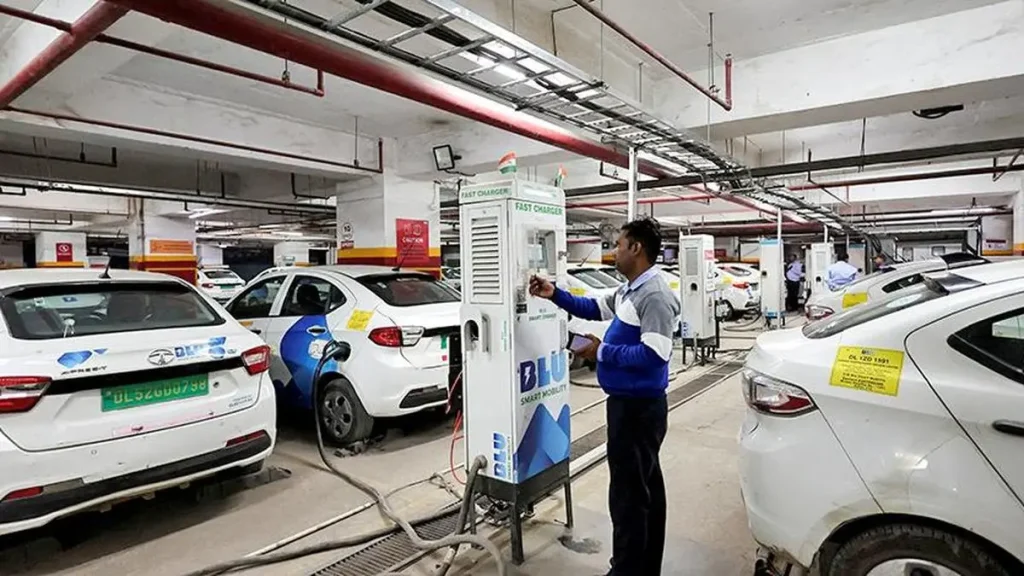
Delhi currently has over 10,000 charging points, and EV charging load has surged nearly nine times, from 24 MW in 2018-19 to over 227 MW today

Delhi currently has over 10,000 charging points, and EV charging load has surged nearly nine times, from 24 MW in 2018-19 to over 227 MW today
| Photo Credit:
ANUSHREE FADNAVIS

The Delhi Government recently released its Draft Delhi Electric Vehicle (EV) Policy 2026. This draft comes on the back of the Delhi EV Policy 2020, which has been extended since August 2023, when it expired. The current draft is the third version of the policy since 2025, the earlier two versions did not reach the public domain. At first blush, the draft presents an ambitious statement of intent, by proposing aggressive phase-out mandates to ban new internal combustion engine (ICE) two-wheelers from April 2028, mandating only electric three-wheeler registrations from January 2027, and electrifying government fleets entirely. To nudge individual owners towards EV transition, the policy proposes a cascading set of purchase incentives for two-wheelers, three-wheelers and goods vehicles, alongside scrappage bonuses that extend to private car buyers as well. This intent is backed by a budgetary outlay of nearly ₹3,954 crore.

Behind the headline mandate lies a challenge that the policy largely sidesteps. Delhi does not yet have the infrastructure to charge the vehicles it is asking its residents to buy. Delhi currently has over 10,000 charging points, and EV charging load has surged nearly nine times, from 24 MW in 2018-19 to over 227 MW today. Some projections suggest that if Delhi were to convert its entire vehicle fleet to EVs, the city’s annual incremental electricity demand would approach 26,000-28,000 GWh. This will effectively amount to adding another Delhi to the grid in terms of electricity consumption. Modelling estimates suggest that on peak demand days, even under optimistic managed-charging scenarios, this transition would add between 1,500 and 5,000 MW of additional demand on a grid whose all-time peak has been 8,656 MW. Managing this surge in demand will need infrastructure augmentation.

Nodal agency

In this context, the designation of Delhi Transco Ltd (DTL) as the nodal agency for planning and coordinating public EV charging and battery swapping infrastructure is perhaps the right move. It is beyond doubt that the current transmission and distribution infrastructure design cannot absorb the load that simultaneous charging of EVs will put on the system. To make EV transition a reality, thousands of transformers will need to be upgraded or replaced, new feeder lines will have to be set up, and existing lines will have to be reinforced. Whether that can be realistically achieved in the four-year window of this policy cycle remains anybody’s guess. If it must be done, the policy is silent on how it proposes to achieve that, whether in terms of planning or funding.

A fair few interventions will be required at the policy level to achieve this. EV charging will have to be managed in a way that the charging load remains staggered through the day and does not disproportionately add to the peak demand. This will have to be done through dynamic time-of-use electricity pricing that incentivises charging during off-peak hours.

There is also the question of land, perhaps the most underestimated constraint in Delhi’s EV infrastructure story. Public charging stations need physical space, and in one of the most densely built cities in the world, space does not come easily. To begin with, the draft policy does direct urban local bodies and other land-owning agencies to periodically identify suitable land parcels for deployment of public EV charging and battery swapping infrastructure. However, allocation of public space comes with its own challenges, of encroachment, building bye-laws, and constraints of local political economy. On top of that there is the issue of pricing. If public auction of land becomes the default mode, the public will pay the price through high charging fee. The exercise must be truly done in a public-private partnership mode, where the land is either made available at nominal cost or the civic agencies are paid through revenue share rather than upfront payment.

Building bye-laws too will have to catch up. A significant share of Delhi’s future EV charging will happen not at public stations but at homes, housing societies, and commercial premises. The bye-laws will have to mandate EV-ready electrical infrastructure not only in new construction, but also in the retrofitting of existing buildings. Commercial buildings, malls, multiplexes, and office complexes will also have to be brought under a similar mandatory EV-ready parking norm. For existing buildings, a simplified procedure for obtaining separate EV metered connections may have to be introduced through the two discoms.

For the policy to be effective, it needs to address the structural challenges in the power sector and urban infrastructure. Purchase incentives, registration bans, and scrappage bonuses, are the sweeteners, but the real nourishment will come when grid is ready, land is available where it is needed, and buildings are wired for the future. Until these foundations are in place, the policy mandate will only remain aspirational.

Tripathi is the Managing Partner of Sarthak Advocates and Solicitors, and Senger is a Counsel at same firm

Published on June 24, 2026


Source link

Related Posts

Delhi extends slum rehab cutoff year from 2015 to 2025 | Delhi News

June 23, 2026

CM assures rehabilitation benefits to families settled in Delhi slums until January 1, 2025

June 23, 2026

79 to 100: How Delhi student’s board exam results jumped after CBSE re-check | Delhi News

June 23, 2026
Add A Comment
Leave A Reply Cancel Reply

Top Posts

China Scraps 12,000 Degrees in Biggest Academic Overhaul in Years

June 14, 2026

Chinese Wall may stem India tech flows for electronics and automobile

June 1, 2026

Abandoned malls, whispers of nuclear war and young foreigners detained. This is what’s REALLY going on in Dubai… and the chilling warning one taxi driver gave to the Mail’s IAN BIRRELL

April 11, 2026
Don't Miss

Nio opens new UK R&D site

By IslaJune 24, 2026

The new R&D facility will serve to consolidate Nio’s UK-based personnel in a single location.…

Aviation’s Hybrid Moment Has Finally Arrived

June 24, 2026

PATHWAYS ON SHOW THIS WEEKEND FOR HONG KONG CHINA

June 24, 2026

Japan Stocks Slip Again As AI And Rate Worries Return

June 24, 2026
SUBSCRIBE TO OUR NEWSLETTER

Get our latest downloads and information first. Complete the form below to subscribe to our weekly newsletter.


I consent to being contacted via telephone and/or email and I consent to my data being stored in accordance with European GDPR regulations and agree to the terms of use and privacy policy.

Stay In Touch
  • Facebook
  • YouTube
  • TikTok
  • WhatsApp
  • Twitter
  • Instagram
Top Trending

Chinese River Cruise Line Takes Delivery of First European Market Ship

By IslaJune 24, 2026

National security certification power won’t affect appeals: Hong Kong justice chief

By IslaJune 24, 2026

The infra challenge in Delhi’s EV ambition

By IslaJune 24, 2026
Most Popular

Xia Baolong begins HK inspection

June 16, 2026

Ukraine war briefing: Shoot down drones yourself, Russia tells its banks | Ukraine

May 27, 2026

Rapid H2O2-free, radical-and oxygen-driven proximity labeling in living cells and in vivo

May 29, 2026
Our Picks

Bangkok, Thailand Drenched and Paralyzed by Monsoon Fury: Streets Turn Into Rivers, Key Travel Destinations Flooded, Travelers Face Disruption

May 31, 2026

The Jakarta paradox: Crowded, chaotic and deeply loved

April 11, 2026

How to Improve Interoperability Between Healthcare Systems Using FHIR

April 9, 2026
SUBSCRIBE TO OUR NEWSLETTER

Get our latest downloads and information first. Complete the form below to subscribe to our weekly newsletter.


I consent to being contacted via telephone and/or email and I consent to my data being stored in accordance with European GDPR regulations and agree to the terms of use and privacy policy.

© 2026 Simply Invest Asia.
  • Get In Touch
  • Cookie Policy
  • Privacy policy
  • Terms & Conditions

Type above and press Enter to search. Press Esc to cancel.

SUBSCRIBE TO OUR NEWSLETTER

Get our latest downloads and information first.

Complete the form below to subscribe to our weekly newsletter.


I consent to being contacted via telephone and/or email and I consent to my data being stored in accordance with European GDPR regulations and agree to the terms of use and privacy policy.