
- Tackling household debt and people’s debt burden: Address household debt systematically, focusing on low- and middle-income groups through debt restructuring, debt moratoriums and lower loan interest rates. This would ease monthly expenses and increase liquidity for daily living, which will be an important factor in reducing informal debt and stimulating consumption over the long term.
- Protecting the domestic market and strengthening the competitiveness of Thai entrepreneurs: Upgrade measures to prevent and control imports of foreign goods involving dumping or unfair competition, which directly affect Thai manufacturing and SMEs. The proposal also supports the “Thai helping Thai” policy by promoting the use of domestic goods and services to maintain competitive balance and strengthen local entrepreneurs.
- Promoting exports and international trade: Push the export sector to become a key engine for driving the economy by expanding into new markets and improving import tax measures for raw materials to reduce production costs. Free trade agreements (FTAs) should also be reviewed to ensure they are balanced and fair, especially measures to manage seasonal imports so they do not affect domestic produce prices.
- Reviving the agricultural sector and raising farmers’ incomes: Create stability in agricultural product prices and reduce market volatility, with a focus on production planning based on market demand, or Market-Led Production, and the development of crop varieties to add value. Measures to reduce production input costs, such as fertilisers and agricultural chemicals, should also be supported to improve farmers’ quality of life and enhance the competitiveness of Thai agricultural products.
- Promoting tourism and the service sector: Upgrade the tourism industry by stimulating both domestic and international markets, alongside the development of transport infrastructure to reduce congestion at major airports. Environmental and air quality issues (PM2.5) must also be addressed seriously to build confidence in safety and promote a sustainable tourism image.
- Reforming the bureaucracy and strengthening good governance: Increase the efficiency of the bureaucracy by adhering to good governance, transparency and decisive anti-corruption action. The proposal calls for speeding up the reduction of approval and permit procedures, or Ease of Doing Business, through digital systems and integrating overlapping regulations between agencies to reduce hidden costs in doing business and build investor confidence.
- Helping border areas and developing regional economies: Accelerate relief and economic recovery measures in border areas affected by uncertainty, especially the Thai-Cambodian border. Investment in the regions should also be promoted in line with the potential and strengths of each area to distribute prosperity and economic opportunities widely to local communities.

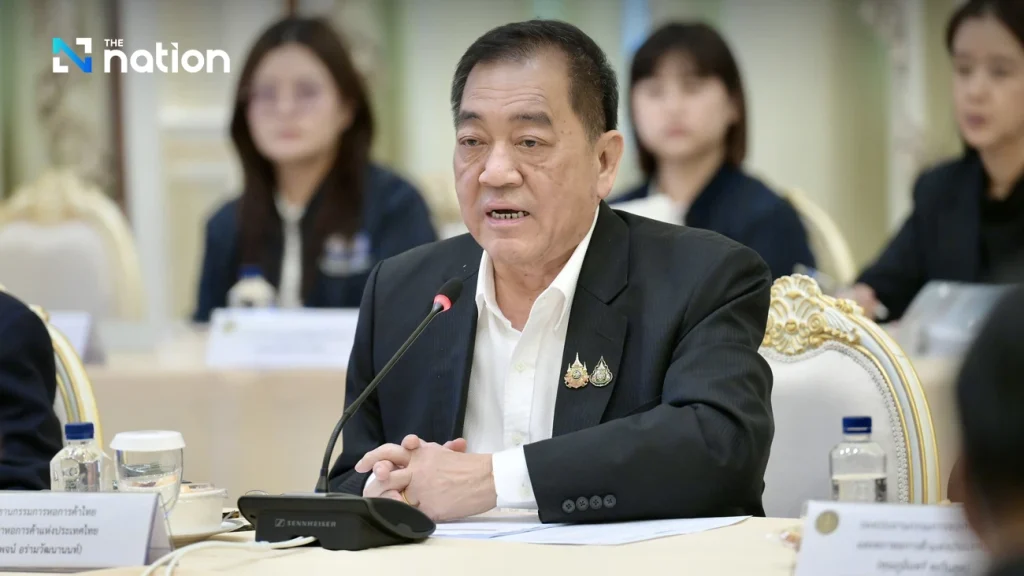
“The Thai Chamber of Commerce believes that if the government implements all 10 proposals concretely, this will help ease the impact and lay the foundations for sustainable growth for the Thai economy in the long term, with the private sector ready to cooperate fully in every dimension,” Poj said.
Poj also said the private sector had discussed with the prime minister the need to accelerate the establishment of the Joint Public and Private Sector Committee for Economic Problem Solving (JPPCC) as a small and flexible working group to support agile operations.
The subcommittees would be divided into eight key areas: energy, commerce, tourism, agriculture, logistics, education, labour and AI, so that problems can be addressed directly and quickly.
In addition, proposals were made for the government to address agricultural-sector issues and the labour crisis.
For agriculture, this is an issue requiring immediate action because more than 30 million people are involved.
The private sector proposed using a market-led production strategy to build food security and increase farmers’ incomes.
At the same time, it asked the government to speed up action by state agencies to renew labour MOUs for four nationalities, especially legal Cambodian and Myanmar workers, to prevent the current critical labour shortage.
On trade barriers and obstacles, Poj said the private sector was working with the government to clarify the United States’ Section 301 issue, insisting that Thailand has no problems with forced labour or human trafficking.
The government has representatives who will clarify the issue directly.
The private sector also proposed that the government move quickly to revise ministerial- or departmental-level regulations in seven key industry groups, which could be done more quickly than amending an Act, to reduce obstacles to doing business, or Ease of Doing Business.
