
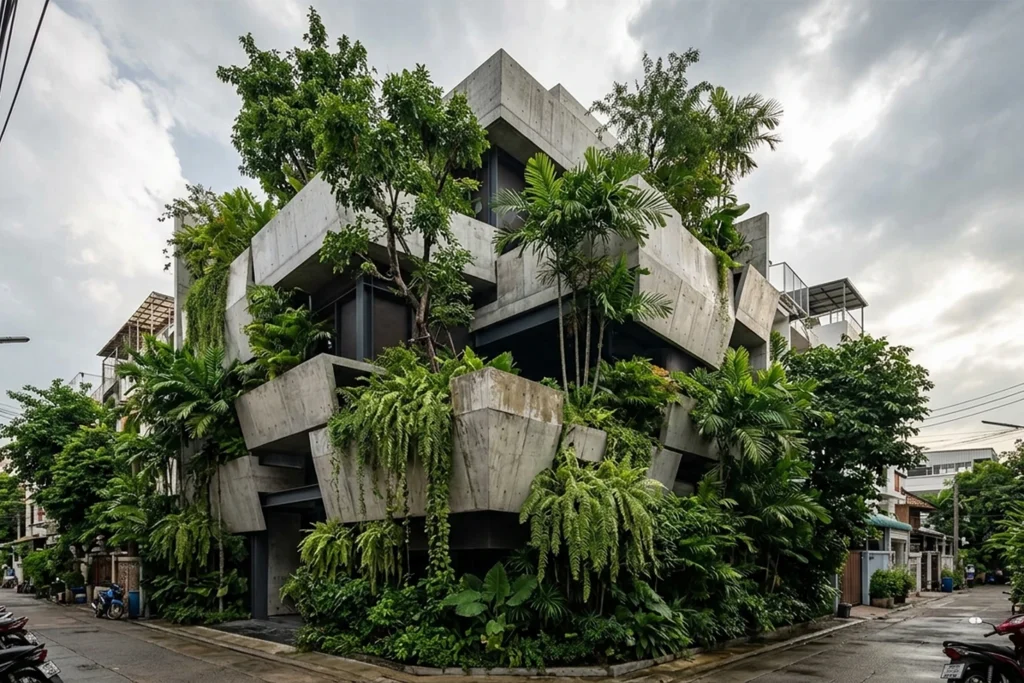
House of Emptiness is designed as a monolithic concrete structure shaped through subtraction. Located in the dense tropical environment of Bangkok, the 540 m² residence emerges from the idea of carving habitable voids out of a continuous mineral mass. The project begins with a solid reinforced concrete block, treated as a thick and homogeneous material body. Architecture operates through successive excavations that transform this dense volume into a system of organized cavities, patios, and inhabited spaces.
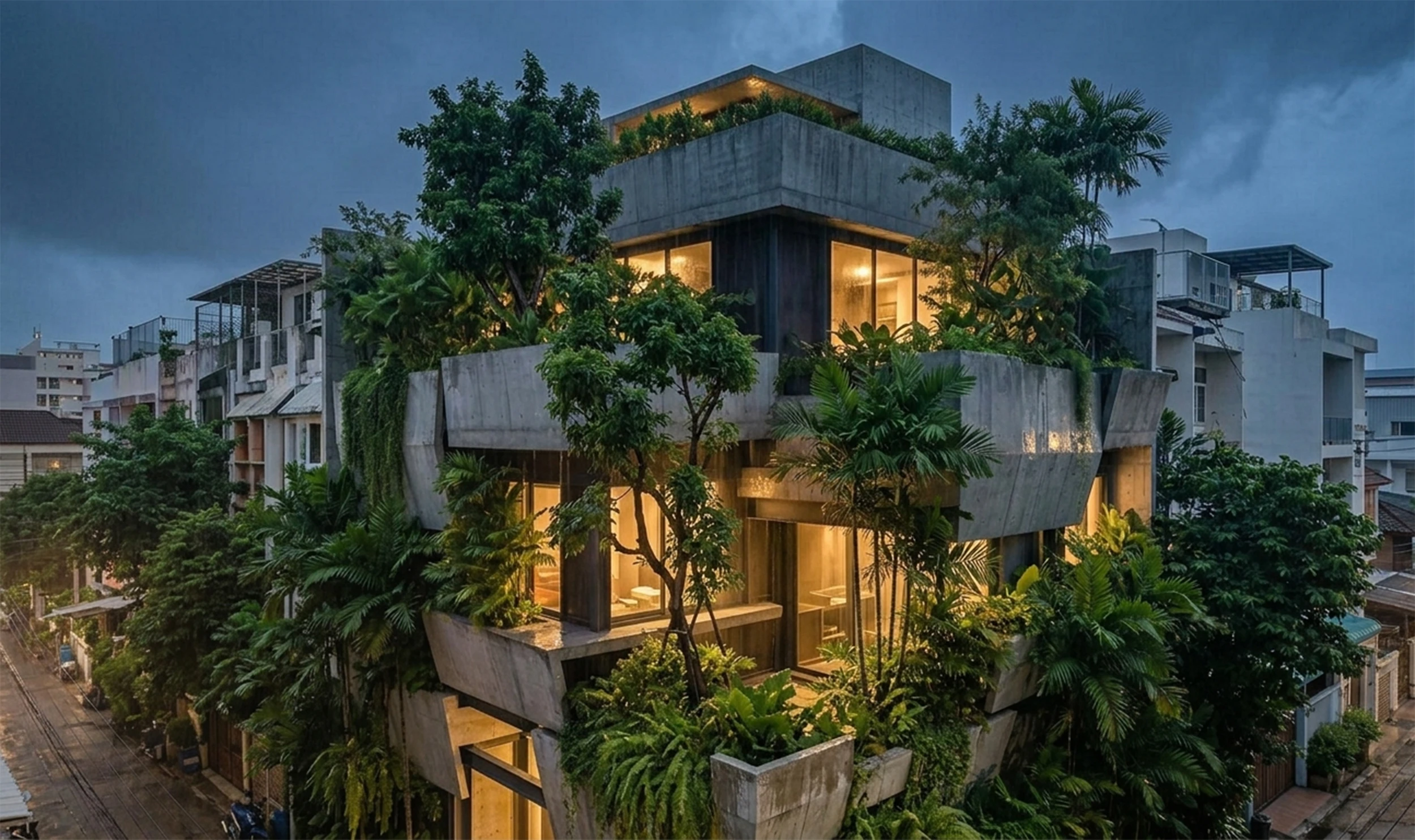
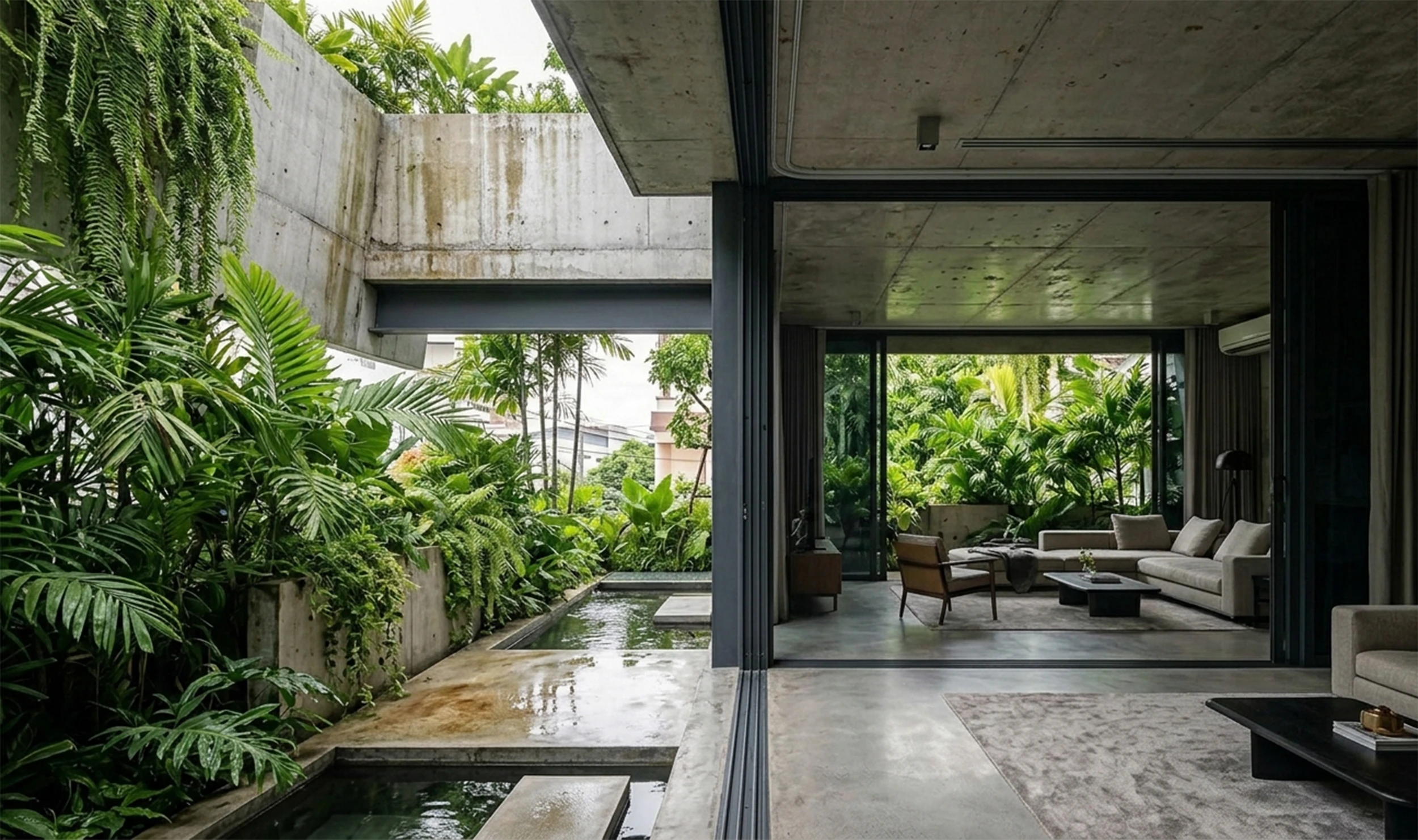
At the center of the project, deep patios penetrate the building vertically, introducing light, air, and vegetation into the heart of the structure. These excavated voids generate specific atmospheric conditions where thermal gradients, humidity, and shadow actively shape the spatial experience. Natural light enters from above and is fragmented by the sharp concrete edges, producing constantly shifting patterns throughout the day. Air circulation is regulated through calibrated openings positioned according to precise climatic flows, allowing hot air to escape from higher points while cooler, humid air is drawn inward at lower levels.
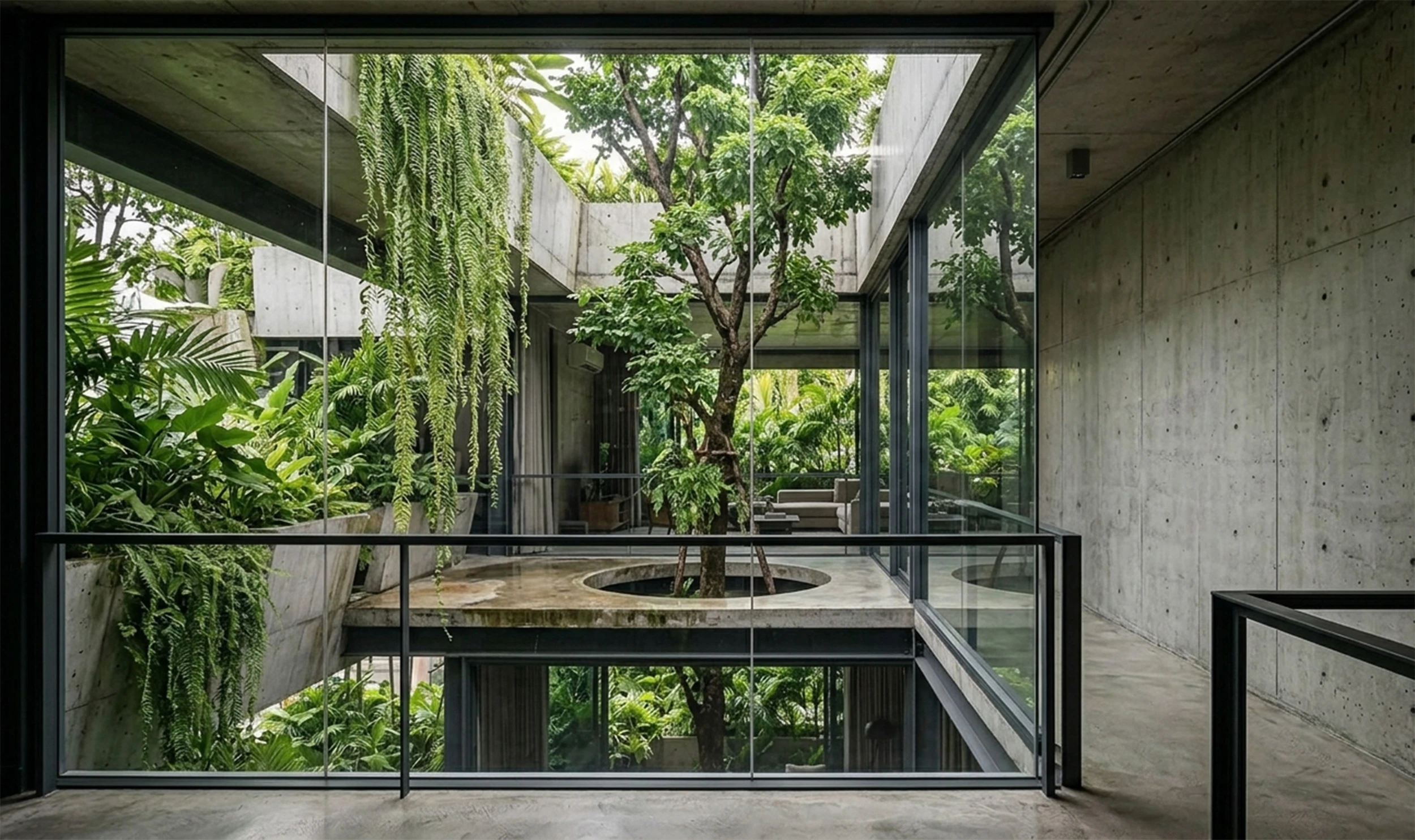
Vegetation is embedded directly within these carved spaces. Trees grow from deep soil wells integrated into the structural system, supported by concealed irrigation and drainage networks designed for long-term development. Their trunks rise through multiple levels of the house, establishing a living vertical continuity between the different spaces. The foliage extends beyond the building envelope, filtering sunlight before it reaches the interior and softening the relationship between architecture and climate.
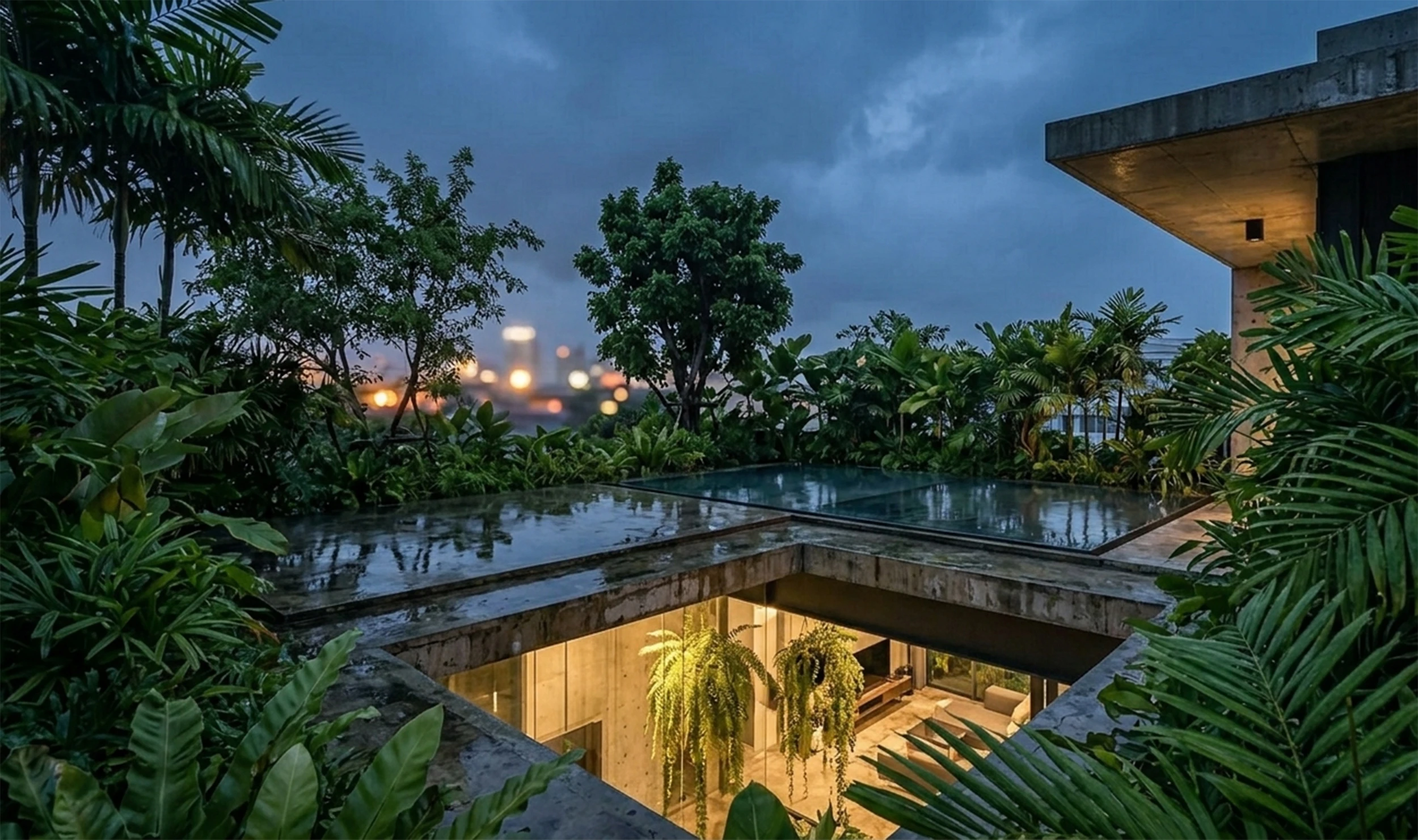
Concrete acts simultaneously as a structure and an environmental regulator. Its substantial thermal mass absorbs heat during the day and slowly redistributes it over time, stabilizing temperature fluctuations in Bangkok’s tropical conditions. Thick walls become transitional climatic membranes between interior and exterior environments, reinforcing the building’s passive cooling strategy.
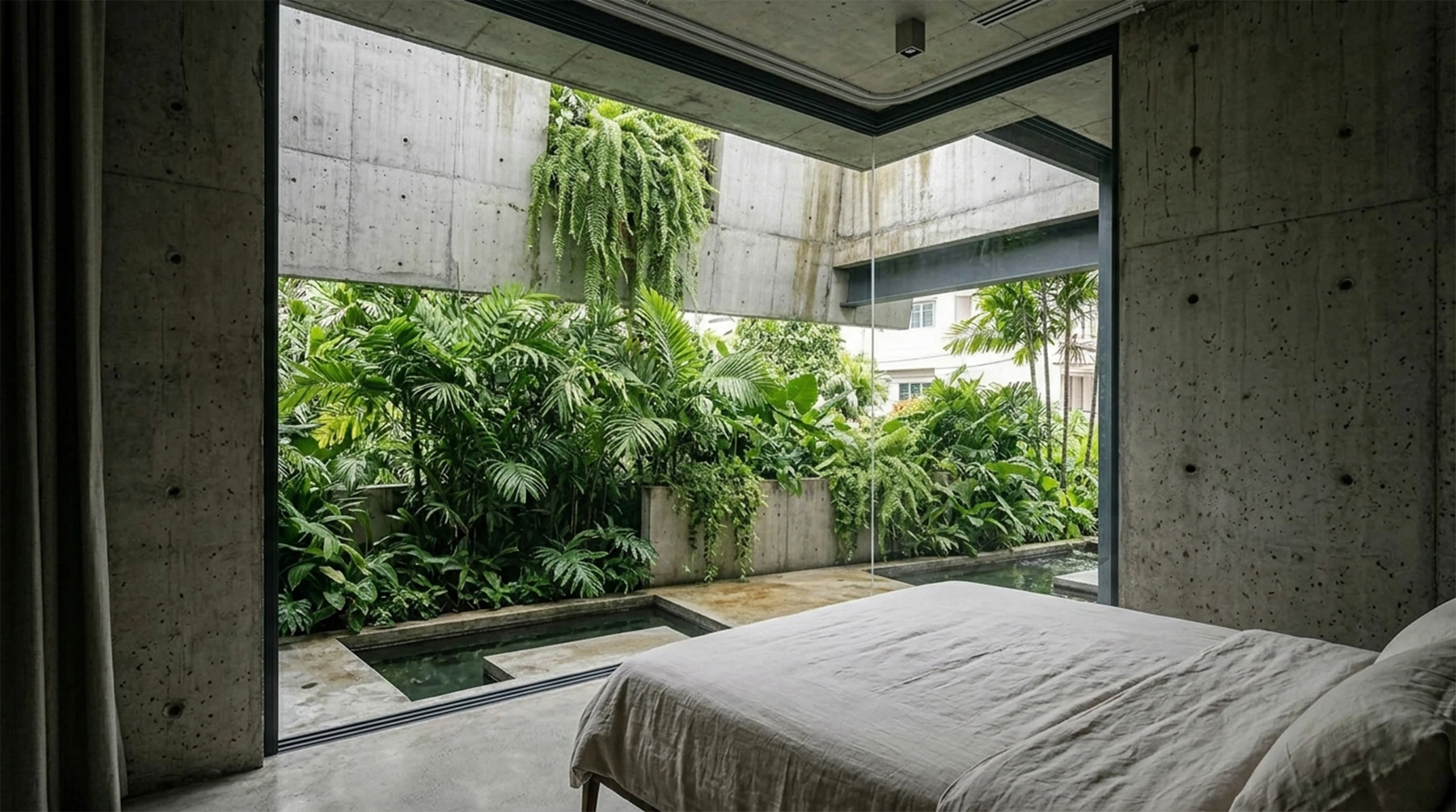
The interior organization is defined by alternating moments of compression and expansion. Dense concrete zones create a strong sensation of gravity and enclosure, while adjacent spaces suddenly open toward planted voids filled with vegetation and filtered light. This continuous variation produces an architectural journey based on contrast, atmosphere, and sensory transition rather than conventional spatial hierarchy.
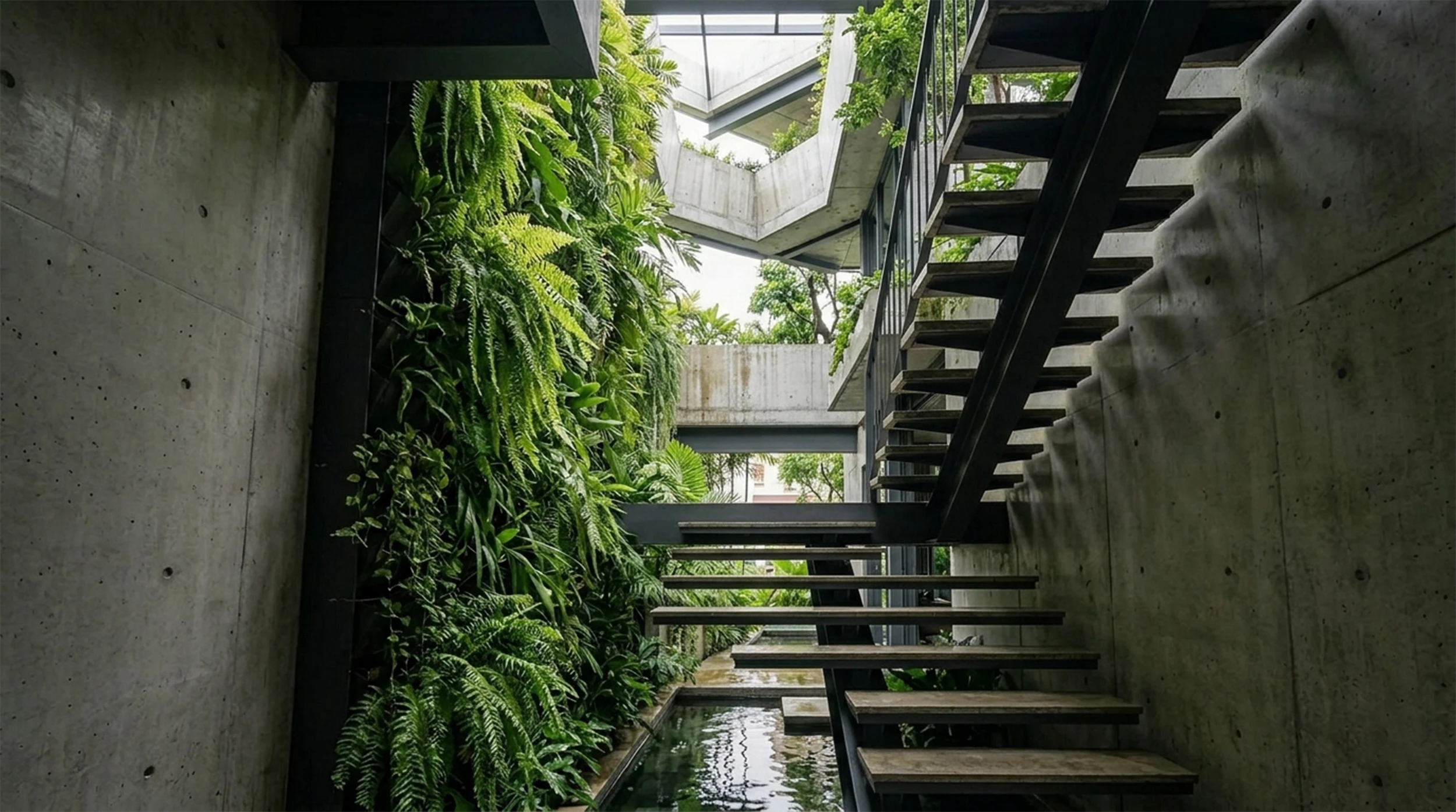
Floors, walls, and ceilings are conceived as a single continuous structural system. Boundaries are not treated as separations between functions but as inhabited thicknesses mediating between mineral mass and biological growth. House of Emptiness ultimately proposes an architecture where concrete inertia and living vegetation coexist in direct balance, creating a climactic refuge within the intensity of the tropical metropolis.
House of Emptiness Project Details
Project Name: House of Emptiness
Location: Bangkok
Architect: Marc DEMAILLY
Program: Private Residence
Area: 540 m²
Climate Context: Dense tropical urban environment
Primary Material: Reinforced concrete