
PUBLISHED : 5 Jul 2026 at 07:10

The government remains committed to making 2026 the “Year of Investment” despite a smaller share of capital expenditure in the 2027 fiscal budget, with plans to mobilise hundreds of billions of baht in public and private investment to support long-term economic growth.
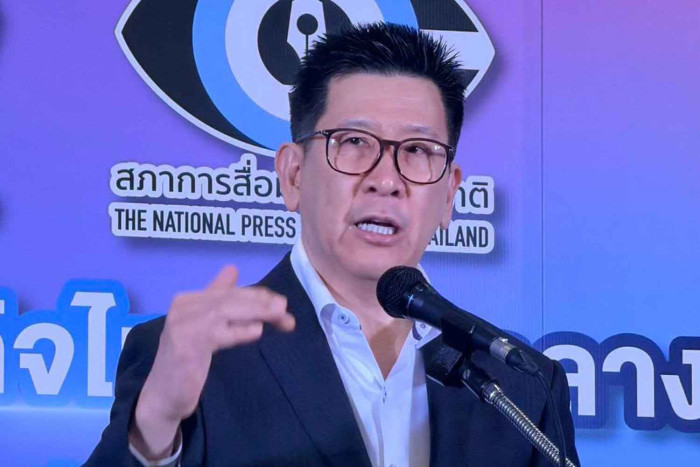
Speaking at the 29th anniversary of the National Press Council of Thailand on Saturday under the theme “Major Challenges for the Thai Economy Amid Global Crises”, Deputy Prime Minister and Finance Minister Ekniti Nitithanprapas said the lower capital budget did not reflect a reduction in overall national investment.
He said the government would increasingly rely on off-budget financing, public-private partnerships (PPPs), state enterprise investment and foreign direct investment (FDI) to drive infrastructure development while easing the fiscal burden.
“The government also plans to inject 270 billion baht in state enterprise investment into the economy and expand the use of the Thailand Future Fund and PPP projects to finance major infrastructure schemes,” Mr Ekniti said.
As chairman of the Board of Investment (BoI), Mr Ekniti said he had set a target of attracting 900 billion to one trillion baht in actual FDI through the government’s Thailand FastPass scheme, which is designed to accelerate approved investment projects. Under the programme, investors receiving BoI incentives will be required to commit at least 20% of their planned investment this year. The government is also promoting a Skill Bridge programme to encourage technology transfer and equip Thai workers with skills needed for emerging industries, he said.
Mr Ekniti said the lower proportion of capital expenditure in the 2027 budget largely reflected efforts to improve fiscal transparency by separating recurring expenditure that had previously been incorporated into other budget categories.
“The investment budget may appear smaller, but that does not mean Thailand will invest less,” he said. “The government will use every available financing mechanism to sustain investment-led growth.”
Mr Ekniti also defended the government’s 400-billion-baht borrowing decree, which is due to face a Constitutional Court ruling on Thursday, saying the measure remained essential to addressing both immediate economic challenges and long-term structural reforms.
The borrowing is intended to finance three priorities: easing the cost of living, accelerating Thailand’s transition to clean energy and investing in human capital, he said, adding Thailand’s heavy reliance on imported oil and natural gas made the energy transition an urgent priority.