
Close Menu
Simply Invest Asia
  • Home
  • About us
  • Explore industries/sectors
    • Automobile
    • Aviation
    • Banking
    • Biotechnology
    • Chemical & Fertilizer
    • Entertainment and Media
    • Food Processing
    • Healthcare
    • Iron and Steel
    • Leather
    • Mining
    • Oil and Gas
    • Pharmaceutical
  • Explore by countries
    • China
    • Dubai / UAE
    • Hong Kong
    • India
    • Indonesia
    • Japan
    • Malaysia
  • Explore cities
    • Bangkok
    • Beijing
    • Chongqing
    • Delhi
    • Dubai
    • Guangzhou
    • Jakarta
    • Kuala Lumpur
  • Why Asia
Facebook X (Twitter) Instagram Threads
Trending:
  • From Hong Kong to Nairobi: Transforming a library in Kenya – World
  • Japan to Study Blockchain-Based Settlement for Stock, Government Bonds
  • Bio Aviation Composites Market Size, Share & Forecast 2036
  • What’s Next for Streaming growth lifts Nine Entertainment (ASX:NEC)?
  • Indonesian Rupiah weakens as domestic protests, inflation risks loom
  • CPAP Store® Dubai Partners With Tabby to Expand Flexible Payment Options
  • China launches science month to boost innovation knowledge
  • Nepal minister urges stronger dialogue mechanisms with India
  • Less than 3 weeks remaining for farms to spread chemical fertiliser
  • Prudential CEO China tax crackdown won’t impact mainland sales in HK
  • Banks refund victims of Legacy fake funeral plans
  • Countdown to BIOHK2026: World-Class Biotech Convention Prepares to Host Global Pavilions, Multi-Track Forums, and Signature Executive Networking
  • KT participates in TechSauce Global Summit 2026 in Bangkok with 12 partner startups
  • Hyundai Motor and Kia Enhance Parts Suppliers’ Fundamentals with New AI Training Hub
  • Dubai–Sharjah traffic update: Heavy congestion, road closures and collisions cause major delays across key routes this Thursday morning
  • Another former Malaysia prime minister faces criminal charges after leaving office
  • Danish Embassy in Malaysia moves to permanent premises
  • Protesters in Jakarta swarm House to demand asset forfeiture, end to graft
Thursday, August 27
Facebook X (Twitter) Instagram
Simply Invest Asia
  • Home
  • About us
  • Explore industries/sectors
    • Automobile
    • Aviation
    • Banking
    • Biotechnology
    • Chemical & Fertilizer
    • Entertainment and Media
    • Food Processing
    • Healthcare
    • Iron and Steel
    • Leather
    • Mining
    • Oil and Gas
    • Pharmaceutical
  • Explore by countries
    • China
    • Dubai / UAE
    • Hong Kong
    • India
    • Indonesia
    • Japan
    • Malaysia
  • Explore cities
    • Bangkok
    • Beijing
    • Chongqing
    • Delhi
    • Dubai
    • Guangzhou
    • Jakarta
    • Kuala Lumpur
  • Why Asia
Simply Invest Asia
Home»Explore by countries»Malaysia»Singapore sends 70 tonnes of unwanted clothes to Malaysia every week in major textile recycling partnership | World News
Malaysia

Singapore sends 70 tonnes of unwanted clothes to Malaysia every week in major textile recycling partnership | World News

By IslaAugust 26, 20265 Mins Read
Share
Facebook Twitter Pinterest Threads Bluesky Copy Link


Singapore sends 70 tonnes of unwanted clothes to Malaysia every week in major textile recycling partnership

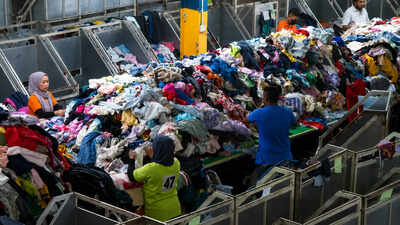
Singapore is sending up to 70 tonnes of unwanted clothing to Malaysia every week under a cross-border textile recycling partnership designed to give discarded garments a second life. The initiative involves social enterprise Cloop, which collects unwanted clothes through its textile recycling bins before sending them to Life Line Clothing in Port Klang, Malaysia. The volume being shipped is now twice what it was two years ago, highlighting both the growing scale of the operation and the enormous challenge of managing textile waste. At Life Line Clothing’s facility, the collected garments are sorted to determine whether they can be reused, recycled or processed into other materials. The arrangement is intended to keep more textiles in circulation and reduce the amount of clothing ultimately sent for disposal.

How Singapore’s unwanted clothes reach a recycling facility in Malaysia

The journey begins with textile collection points across Singapore. Cloop, a social enterprise focused on textile circularity, operates recycling bins where members of the public can deposit unwanted clothing. Instead of treating these garments as ordinary household waste, the collection system channels them into a sorting and recovery process. The scale of the operation has grown substantially. According to CNA, Singapore now sends up to 70 tonnes of unwanted clothing to Life Line Clothing in Malaysia every week, around twice the amount shipped through the arrangement two years ago. The increase demonstrates how a collection network can move significant quantities of discarded textiles across borders for further processing. Once the clothing reaches Port Klang, it enters Life Line Clothing’s textile recovery operation. Garments are assessed and separated according to their condition and material, allowing usable items and recyclable textiles to follow different pathways. The cross-border model also reflects the practical challenges of textile recycling in a densely populated city. Clothing can contain blends of fibres, dyes, buttons, zips and other components that make straightforward recycling difficult. Sorting is therefore an important stage in determining whether a garment can be worn again or needs to be processed into another form.

What happens to the clothes after they arrive in Malaysia

At Life Line Clothing’s facility in Port Klang, the collected garments are sorted for reuse and recycling. The objective is to identify clothing that still has value as a wearable item while directing damaged or unsuitable textiles towards material recovery. CNA visited the Malaysian facility to examine what happens to the clothing after it leaves Singapore. Reuse is generally the simplest way to extend a garment’s life because it keeps the existing product in circulation without requiring the fabric to be broken down and manufactured again. Clothing that cannot be reused can instead enter recycling streams, where fibres and materials may be recovered for other applications. The process illustrates why simply placing unwanted clothing into a collection bin does not necessarily mean every item will become a new garment. Textile recovery involves multiple stages, and the final destination depends heavily on the condition, composition and quality of each item. For Singapore, however, diverting clothing into a dedicated recovery system creates an opportunity to manage textiles as a resource rather than immediately treating them as waste. The growing volume being handled by the partnership suggests that more unwanted garments are entering this recovery pathway.In practice, only about half of the clothing that arrives at the facility is resold, typically compressed into bales and shipped to wholesalers in overseas secondhand markets such as Kenya, Uganda and Papua New Guinea. The remaining half is repurposed into rags or industrial wiping cloths rather than reused as garments. Items that cannot be reused or repurposed in any form are, as a last resort, incinerated to generate electricity.

Why the 70-tonne weekly flow matters for textile waste

The partnership comes against a wider challenge facing cities around the world, the environmental impact of discarded clothing. Textile production requires raw materials, water, energy and manufacturing resources, while discarded garments can represent a significant loss of those resources when they are not reused or recovered. The Singapore-Malaysia arrangement attempts to address part of this problem by extending the useful life of textiles. Sending as much as 70 tonnes of clothing each week for recovery creates a large-scale route through which garments can be sorted, reused or recycled rather than simply discarded. The fact that the volume has doubled compared with two years earlier is also significant. It could indicate that more people are using textile collection points, that larger quantities of clothing are being collected, or that the recovery partnership has expanded its capacity. Nevertheless, there is more to cutting down the wastage than merely recycling the waste. The lifespan of the fabrics can be extended through reuse and repairs and the responsible purchase of new clothes. It thus means that the process of creating a successful circular system will require not only the collection but also changes to the way in which clothes are produced, purchased, used, and discarded. One such example of an organization working to recover waste textiles is the collaboration between Cloop and Life Line Clothing. Through the transportation of 70 tonnes of unwanted clothes per week from Singapore to the processing facility in Malaysia, the project creates a huge recovery pathway for the fabrics that would have ended up as waste.


Source link

Related Posts

Another former Malaysia prime minister faces criminal charges after leaving office

August 27, 2026

Malaysia: bolttech appoints new General Manager

August 27, 2026

HIMSS Signs Historic MOUs at HIMSS26 APAC to Measure AI Value and Accelerate Malaysia’s ‘1 Person, 1 Record’

August 26, 2026
Add A Comment
Leave A Reply Cancel Reply

Top Posts

August 27, 2026, Protest at the DPR: Schedule, Location, and List of Demands

August 25, 2026

China Scraps 12,000 Degrees in Biggest Academic Overhaul in Years

June 14, 2026

Aviation brigade conducts aerial refueling training

July 1, 2026
Don't Miss

From Hong Kong to Nairobi: Transforming a library in Kenya – World

By IslaAugust 27, 2026

The newly opened Amani Kibera Book House in Kibera, Nairobi”s largest informal settlement, was transformed…

Japan to Study Blockchain-Based Settlement for Stock, Government Bonds

August 27, 2026

Bio Aviation Composites Market Size, Share & Forecast 2036

August 27, 2026

What’s Next for Streaming growth lifts Nine Entertainment (ASX:NEC)?

August 27, 2026
SUBSCRIBE TO OUR NEWSLETTER

Get our latest downloads and information first. Complete the form below to subscribe to our weekly newsletter.


I consent to being contacted via telephone and/or email and I consent to my data being stored in accordance with European GDPR regulations and agree to the terms of use and privacy policy.

Stay In Touch
  • Facebook
  • YouTube
  • TikTok
  • WhatsApp
  • Twitter
  • Instagram
Top Trending

KT participates in TechSauce Global Summit 2026 in Bangkok with 12 partner startups

By IslaAugust 27, 2026

Hyundai Motor and Kia Enhance Parts Suppliers’ Fundamentals with New AI Training Hub

By IslaAugust 27, 2026

Dubai–Sharjah traffic update: Heavy congestion, road closures and collisions cause major delays across key routes this Thursday morning

By IslaAugust 27, 2026
Most Popular

Bangkok Beerhouse inferno: Call for nationwide safety review

July 15, 2026

Automobile: Sébastien Buemi just off the podium

May 3, 2026

‘Drug test for all pilots’: Air India e-mail after Phuket-Delhi incident | Business News

August 13, 2026
Our Picks

UAE condemns renewed Iranian attacks on Gulf neighbours

July 17, 2026

Pokémon Soccer Collaboration Kicks Off With Japan’s J League

July 7, 2026

Rights group reports UAE’s involvement in Colombian private military deployment to Sudan – JURIST

May 27, 2026
SUBSCRIBE TO OUR NEWSLETTER

Get our latest downloads and information first. Complete the form below to subscribe to our weekly newsletter.


I consent to being contacted via telephone and/or email and I consent to my data being stored in accordance with European GDPR regulations and agree to the terms of use and privacy policy.

© 2026 Simply Invest Asia.
  • Get In Touch
  • Cookie Policy
  • Privacy policy
  • Terms & Conditions

Type above and press Enter to search. Press Esc to cancel.

SUBSCRIBE TO OUR NEWSLETTER

Get our latest downloads and information first.

Complete the form below to subscribe to our weekly newsletter.


I consent to being contacted via telephone and/or email and I consent to my data being stored in accordance with European GDPR regulations and agree to the terms of use and privacy policy.