
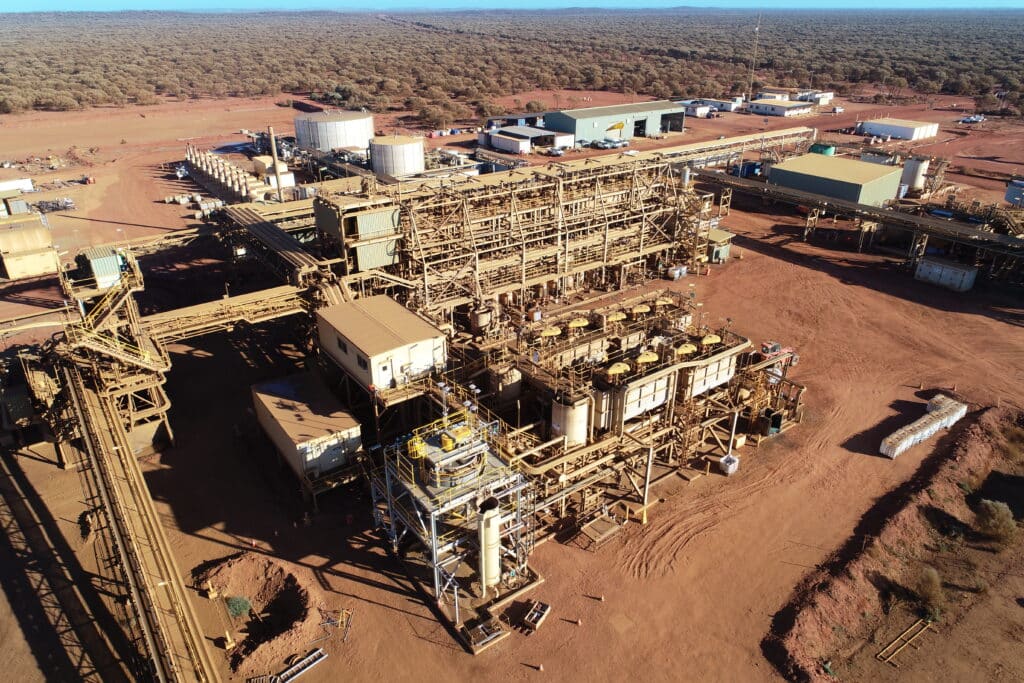
Lynas’ Mt Weld operation. Image: Lynas Rare Earths
Lynas Rare Earths has taken another step towards building an integrated rare earths supply chain outside China, signing a long-term partnership with South Korean manufacturer JS Link.
The agreement will see JS Link establish a rare earth permanent magnet factory in Kuantan, Malaysia, with annual production capacity of 3000 tonnes of neodymium-iron-boron (NdFeB) permanent sintered magnets.
The deal extends Lynas further downstream into magnet manufacturing while locking in long-term demand for its rare earth materials under an exclusive supply arrangement that runs until January 2038.
As part of the agreement, Lynas will invest approximately $50 million in ordinary equity in JS Link, with the funds supporting construction of the Malaysian magnet facility.
Lynas will supply rare earth materials to both JS Link’s existing magnet factory in Yesan, South Korea, and the planned Malaysian facility at commercial prices under the exclusive agreement.
The partnership follows the signing of a memorandum of understanding between the two companies in July.
JS Link has secured a site for the new factory adjacent to the Lynas Malaysia advanced materials plant in Kuantan, creating closer integration between rare earth processing and magnet production. The development is expected to create up to 400 jobs in Malaysia and will supply magnets to automotive, wind energy and electronics manufacturers across Korea, Malaysia and other key markets.
The announcement also reflects Malaysia’s growing importance within the global rare earth supply chain.
According to the Lowy Institute’s Between the superpowers: Southeast Asia’s strategic supply chain dilemma report, Malaysia has emerged as Southeast Asia’s leading rare earth processing hub.
The report said Malaysia accounts for 4 per cent of global refined rare earth production, representing the largest share outside China, and remains the only country beyond China producing heavy rare earths.
It also noted that recent resource discoveries, together with investment in downstream manufacturing such as permanent magnets, position Malaysia to move further up the global value chain following the government’s 2023 ban on rare earth ore exports.
Lynas interim chief executive officer Pol Le Roux said the partnership aligned with the company’s long-term growth strategy.
“This partnership brings together Lynas’ rare earths processing expertise with JS Link’s magnet manufacturing capability to create a new manufacturing industry in Malaysia,” Le Roux said.
“This is an exciting project for the development of a sustainable rare earths industry in Malaysia and delivers on our Towards 2030 growth objective of expanding into the outside China metal and magnet supply chain.”
JS Link chief executive officer Jun Y. Lee said the agreement would help establish a more resilient international supply chain.
“This partnership with Lynas, which is the most credible and trusted RE [rare earths] supplier in the Western world, will assist JS Link to create a stable and optimal permanent magnet value chain,” Lee said.
Listed on Korea’s KOSDAQ exchange, JS Link already operates a 1000-tonne magnet manufacturing facility in South Korea that is preparing for commercial-scale production.
The company also invested $US223 million last year to establish a new production facility in the United States, signalling its broader ambition to expand global magnet manufacturing capacity.
Subscribe to Australian Resources & Investment and receive the latest news on commodity prices, resource developments, executive movements and more.