
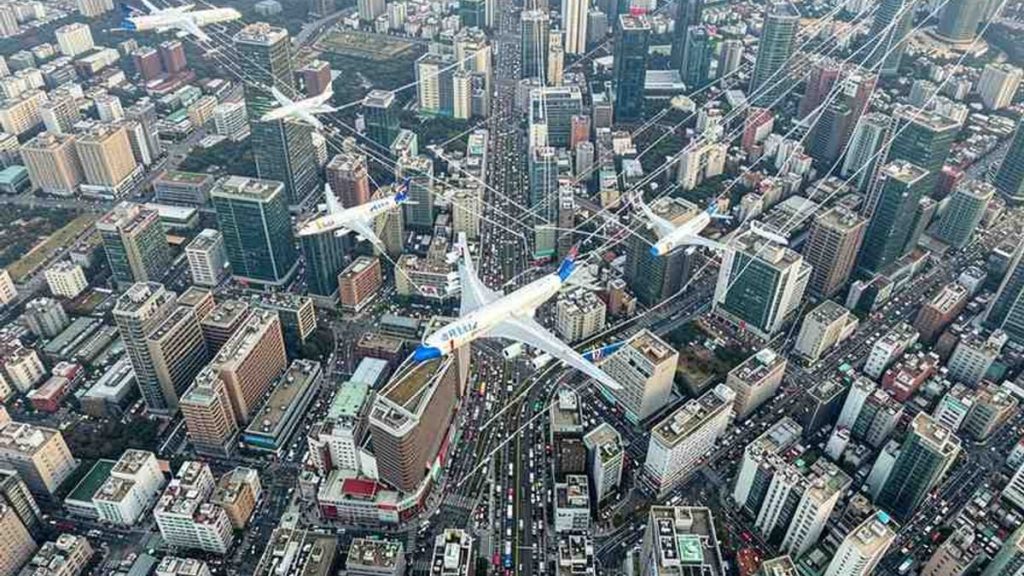
A landmark visa-free regime between China and Malaysia, backed by aggressive airline expansion and discount-driven campaigns, is unleashing a sharp rebound in two-way travel and intensifying competition for tourist spending across Asia.
Get the latest news straight to your inbox!

Mutual Visa-Free Access Reshapes Regional Travel Flows
The mutual visa exemption now in force between China and Malaysia allows ordinary passport holders of both countries to enter the other without a visa for short stays of up to 30 days, subject to a 90-day cumulative cap within any 180-day period. Publicly available policy documents describe the arrangement as part of a broader push by Beijing and Kuala Lumpur to ease people-to-people exchanges and business travel.
China has steadily widened its visa-free portfolio, lifting or relaxing entry requirements for dozens of countries since late 2023. Malaysia was among the first Asian beneficiaries of China’s unilateral visa-free trials and later moved into a full reciprocal framework, giving Malaysian travelers parity with many European and regional peers now entering China visa-free.
On the Malaysian side, visa exemptions for Chinese and Indian nationals were first rolled out as a time-limited liberalisation plan in December 2023. Government circulars and immigration updates indicate that this policy has since been refined, with clearer rules on maximum days per stay and cumulative time in-country, but the core offer of 30-day visa-free entry for Chinese tourists remains central to Kuala Lumpur’s tourism growth strategy.
Immigration and consular guidance underline that the new deal covers a wide range of short-term purposes, including holidays, family visits, business meetings, cultural exchanges and medical tourism. Longer stays, work and study still require conventional visas, but industry analysts argue that removing the first layer of bureaucracy for short visits is enough to tilt travel decisions toward the China–Malaysia corridor.
Tourist Numbers Surge as Discounts and Campaigns Kick In
Tourism statistics released in Malaysia over the past year show a pronounced surge in arrivals from China following visa liberalisation. During the initial 30-day visa-free period that began in December 2023, Malaysia recorded more than four million Chinese visitors, rapidly restoring China to its position among the country’s top inbound markets and outpacing much of the broader recovery in long-haul tourism.
More recent figures highlighted by tourism agencies and local business chambers suggest that Malaysia is closing in on pre-pandemic benchmarks. Travel trade assessments point to rolling promotional campaigns, bundled with visa-free access, as a key factor behind the renewed momentum. Many packages target price-sensitive Chinese travelers with hotel discounts, theme park passes, shopping vouchers and bonus nights, particularly in Kuala Lumpur, Penang and coastal resort areas.
China is pushing in parallel to attract more Malaysian visitors by tying visa-free entry to a broader national effort to boost inbound tourism. Data released in Beijing for 2024 show that foreign arrivals under visa-free schemes more than doubled compared with the previous year, with Southeast Asia singled out as a high-growth source region. Malaysian tour operators have responded by expanding itineraries to secondary Chinese cities and promoting seasonal deals built around festivals, shopping events and winter tourism.
Analysts in the region note that this two-way dynamic is creating a travel boom rather than a one-sided surge. Airlines, hotels and online travel platforms report rising cross-border demand in both directions, with an increasing share of bookings driven by dynamic pricing, flash sales and loyalty point redemptions that are marketed specifically to capitalize on visa-free spontaneity.
Airlines Race to Add Capacity and Cut Travel Times
The aviation sector has moved quickly to match the new travel appetite. Airline schedules tracked by aviation data providers show that Chinese and Malaysian carriers have restored or launched additional routes linking major hubs such as Beijing, Shanghai, Guangzhou and Shenzhen with Kuala Lumpur, Penang and Kota Kinabalu. Several of these routes are now operating at or above pre-pandemic capacity.
Industry briefings and route announcements describe a clear emphasis on reducing total door-to-door travel times. This includes deploying widebody aircraft on trunk routes, adding daytime and late-night frequencies to support weekend trips, and coordinating schedules to improve connections to smaller cities in both countries. Low-cost carriers headquartered in Southeast Asia have expanded their presence on China–Malaysia routes, pitching short, frequent flights at competitive fares to young and budget-conscious travelers.
Aviation analysts say the return of dense point-to-point networks between second-tier cities is particularly significant. Direct links allow travelers from provincial Chinese cities to bypass longer transit journeys through third countries, while Malaysian travelers gain easier access to inland Chinese destinations that were previously served only via regional hubs. Shorter journeys and fewer layovers are viewed as a crucial advantage for converting interest generated by visa-free access into concrete bookings.
Some airports in both countries have also accelerated investments in digital border processing tools, self-service immigration gates and electronic arrival cards to cope with higher passenger volumes. These measures are designed to keep queues manageable as traffic grows, reinforcing the perception that the new travel corridor is not only cheaper but also faster and more convenient.
Visit Malaysia 2026 and China’s Global Tourism Push Align
The timing of the China–Malaysia tourism alliance aligns closely with Malaysia’s flagship Visit Malaysia 2026 campaign, which sets ambitious targets for international arrivals and tourism receipts. Government planning documents and recent promotional materials highlight China as a priority market, with aspirations to bring Chinese arrivals back above five million visitors annually through a mix of marketing, new routes and continued visa facilitation.
Malaysia’s tourism authorities have flagged a pipeline of China-focused promotional activities leading up to 2026, including city-specific roadshows, digital campaigns on Chinese social media platforms, and themed travel products centered on food, culture and nature. Industry groups believe that maintaining visa-free access throughout this period will be critical to sustaining momentum and convincing airlines to keep expanding capacity.
For China, the Malaysia agreement forms part of a multi-continent strategy to expand visa-free entry, now extended to more than 70 countries. Official statistics show that tens of millions of foreign visitors have benefited from the relaxed regime, giving China a faster rebound in inbound tourism while strengthening trade and investment ties with key partners. Southeast Asia has been a central testing ground for this approach, with Malaysia frequently cited as a proof-of-concept for how reciprocal deals can accelerate regional connectivity.
Policy watchers see a convergence of interests. Malaysia gains a powerful growth engine for its tourism sector at a pivotal moment when global competition for visitors is intensifying, while China cements its role as both a leading source and destination market in Asian tourism. The result is a corridor where policy, infrastructure and commercial incentives are aligned to favor rapid growth.
Opportunities and Challenges in a Rapidly Expanding Corridor
The rapid expansion of visa-free travel between China and Malaysia is creating opportunities that reach far beyond leisure tourism. Business councils and trade bodies expect increased flows of short-term business travelers, investors and conference delegates, particularly in sectors such as manufacturing, green technology and digital services, which already have strong bilateral links.
At the same time, regulators are fine-tuning the framework to balance openness with immigration control. Clarifications issued earlier this year on cumulative stay limits for Chinese visitors to Malaysia, coupled with enhanced passport analytics at entry points, illustrate efforts to prevent abuse while preserving the attractiveness of visa-free entry. Chinese authorities have adopted similar monitoring tools as they expand their own roster of visa-free partners.
Tourism industry representatives in both countries are closely watching capacity constraints in airports, popular attractions and urban transport systems. Concerns include seasonal overcrowding, pressure on local infrastructure and the risk that service quality could slip if visitor growth outpaces investment. Environmental advocates have also raised questions about the sustainability of rapid tourism expansion, urging authorities to fold conservation criteria into destination development plans.
Despite these challenges, travel analysts broadly characterise the China–Malaysia tourism alliance as one of the most consequential shifts in Asia’s post-pandemic travel landscape. With visa-free access entrenched, mega discounts proliferating across the travel ecosystem and flight timings steadily improving, the corridor is emerging as a test case for how targeted policy changes can unleash a travel boom across an entire region.