
June 9, 2026
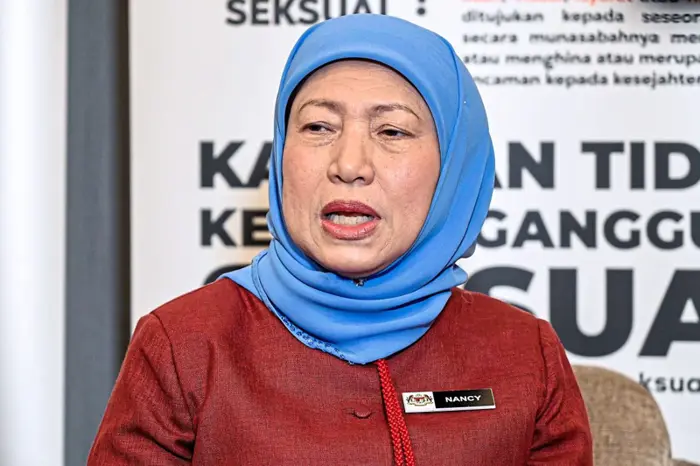
PETALING JAYA – Malaysia is losing billions in invisible labour as families shoulder unpaid caregiving duties, says Datuk Seri Nancy Shukri (pic).
The Women, Family and Community Development Minister highlighted the need to expand the care ecosystem, saying it is now an economic imperative and not just a social need.
“While unpaid care and domestic work has historically remained under-recognised within conventional economic measurements, its implications for labour participation, productivity and economic resilience are becoming increasingly difficult to ignore,” she said.
Nancy cited a 2024 research by the Institute of Strategic and International Studies (Isis) Malaysia which showed that unpaid care and domestic work is worth RM379bil annually.
“Yet 3.2 million Malaysians, mostly women, remain constrained from full workforce participation.
“That is why we must expand the care ecosystem, so families can contribute fully to the nation’s growth,” she said during the Apec Business Advisory Council’s Malaysia Care Economy Roundtable 2026 yesterday.
Nancy said enabling greater workforce participation through more accessible and reliable care systems could contribute RM77bil annually to the country’s economy, which is about 5% of Malaysia’s gross domestic product.
Strengthening the care economy will depend not only on expanding services, but also on ensuring that careers within the sector are viewed as skilled, meaningful and economically sustainable professions, she added.
“Greater emphasis will need to be placed on workforce professionalisation, accreditation, career pathways and talent development capable of attracting and retaining future generations of care workers,” she said.
In addition to that, Nancy said the National Care Standards for older persons and persons with disabilities may be released in October.
“These are standards setting minimum benchmarks to ensure quality, safety and accountability in care services,” she explained.
She said the development of these standards, which is supported by the Finance Ministry and Economy Ministry, would protect the dignity and rights of care recipients and create consistency across institutional, community and home‑based care.
During the event yesterday, Nancy sat through a session where moderators and policy experts highlighted the realities on the ground.
Among the issues discussed were women dropping out of the workforce as they have more children, as well as the need for stronger care infrastructure such as childcare centres and formal caregivers.