
-
By Jonathan Chin / Staff writer
Japan’s rare two-pronged deployment near Taiwan during its first-ever participation in Philippine drills as an “operational combat unit” underscores a shift in first island chain posture and reflects Tokyo’s efforts to play a more central role in regional alliances, analysts said.
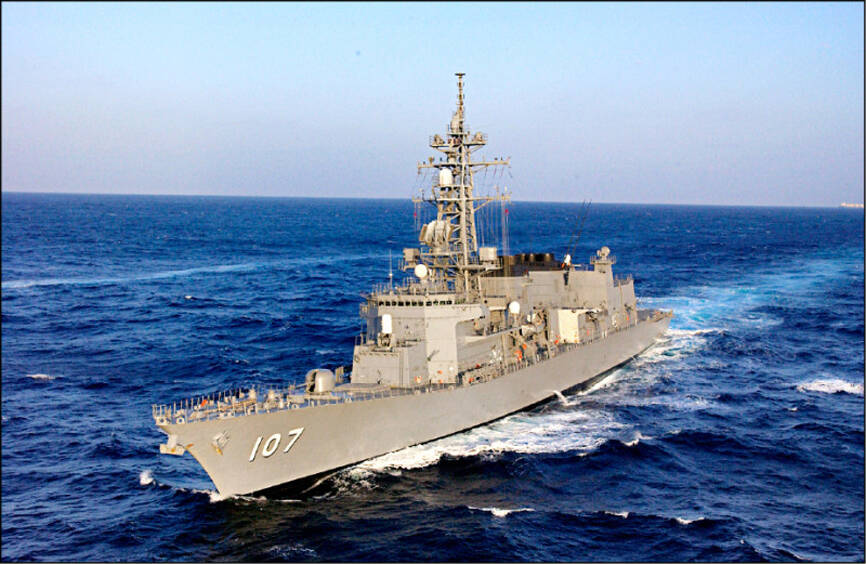
Japanese destroyer Ikazuchi on Friday transited the Taiwan Strait as part of a Japanese Maritime Self-Defense Force group taking part in the annual Balikatan military exercises of the US and the Philippines.
The Ikazuchi passed through the Taiwan Strait while helicopter destroyer Ise — Japan’s largest warship — and landing ship the Shimokita sailed through waters to the east of Taiwan proper, Kyodo News reported.
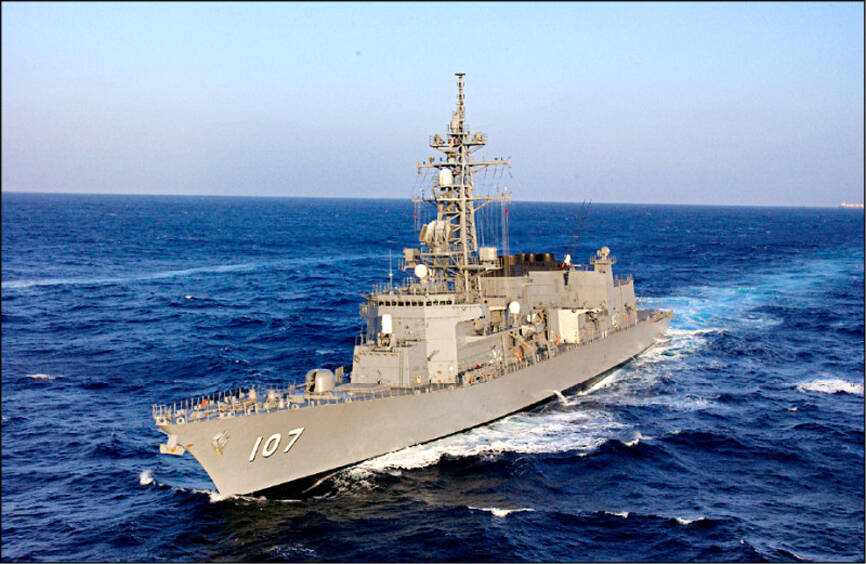
Photo: Screen grab from Japan Ministry of Defense, Japan Maritime Self-Defense Force’s Web site
Japan’s unprecedented participation in the exercises, which starts tomorrow and would continue until May 8, would transform the bilateral war games into a multilateral event.
Citing the Japanese Ministry of Defense, the US Naval Institute said Tokyo is sending three warships, a C-130H transport aircraft, and US-2 amphibious search and rescue aircraft to the drills.
Japan is also deploying its Type 88 surface-to-ship missile system to conduct a ship sinking exercise, the institute said, citing Philippine Balikatan spokesperson Colonel Dennis Hernandez.
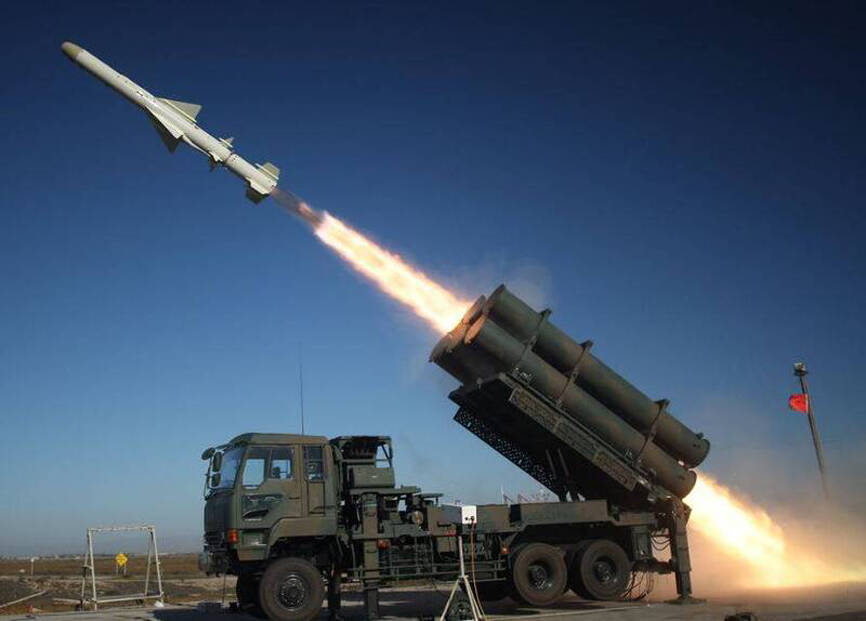
Photo: Screen grab from the Japan Ground Self-Defense Force’s Web site
The exercise would involve sinking a decommissioned ship near the South China Sea and Taiwan, with Japanese Minister of Defense Shinjiro Koizumi observing the event, Hernadez was cited as saying.
“Tokyo will take part in exercises across air, land, sea and cyberspace domains, including maritime strike operations, counter-landing live-fire exercises, integrated air and missile defense, medical operations, and airfield runway repair,” the institute said. “The drills will be held across the country, although only key exercises facing the South China Sea and Taiwan have been so far publicly identified.”
The Balikatan exercises come amid intense military tensions between Taiwan and China. Japan and the Philippines are US allies that form part of the First Island Chain, a strategic line deemed key to keeping in check Beijing’s territorial ambitions in the region.
South China Morning Post reported that the Japan Self-Defense Forces’ participation in the exercises has been viewed by military analysts as a significant development.
The significance of the move lies in the linkage between the Taiwan Strait and the South China Sea, it quoted analysts as saying.
Sailing warships through the Taiwan Strait and taking part in high-intensity drills reflects Tokyo’s efforts to take on a more central role in regional alliances aimed at addressing potential threats, it said.
Balikatan covers a wide range of military operations, and is primarily aimed at improving the participating forces’ readiness and joint combat capabilities, the report cited the US army as saying.
By conducting drills on Philippine islands closest to Taiwan, the US, Japan and the Philippines are effectively carrying out a substantive assessment of force posture along the First Island Chain, it quoted analysts as saying.
The Ikazuchi’s transit through the Taiwan Strait carried a clear message that Japan is opposed to China’s attempts to transform that stretch of ocean into Beijing’s internal sea, Kyodo News cited sources with knowledge of the matter as saying.
The Ise is a warship capable of carrying Lockheed Martin F-35B Lightning II jets and its passage east of Taiwan proper is a demonstration of Japan’s ability to secure vital western Pacific sea lanes, it said.
The Japanese Self-Defense Forces’ deployment of 1,400 service members signaled Japan was shifting from being a Balikatan observer to a participant, it added.
The Japanese Ground Self-Defense Force fields Type 88 and Type 12 as the mainstay of its ground-based anti-ship missile capabilities, with both utilizing mobile transporter erector launchers.
An extended-range variant of the Type 12, which could allegedly strike targets up to 900km away, is being developed, Japanese media said.
In Taipei, national security expert Chen Wen-chia (陳文甲) said that, at the military level, the transit of the Japanese warship reflects a combination of “freedom of navigation” and joint operations, indicating that Tokyo is gradually treating the Taiwan Strait as a routine route in Indo-Pacific security operations rather than a highly sensitive restricted zone.
It suggests that Japan’s role is shifting from passive defense toward more active engagement, he added.
At a time when Beijing is emphasizing the “internalization” of the Taiwan Strait and accusing Japan of “neo-militarism,” Japan is responding through concrete actions, rejecting unilateral sovereignty claims and stressing that the Taiwan Strait is international waters, Chen said.
The key message of Japan’s passage through the strait is that Indo-Pacific security is shifting from being US-led to being jointly shared among allies, he said, adding that Japan has become an active participant and shaper of the Indo-Pacific strategic order.
Additional reporting by Lo Tien-pin and Fang Wei-li