
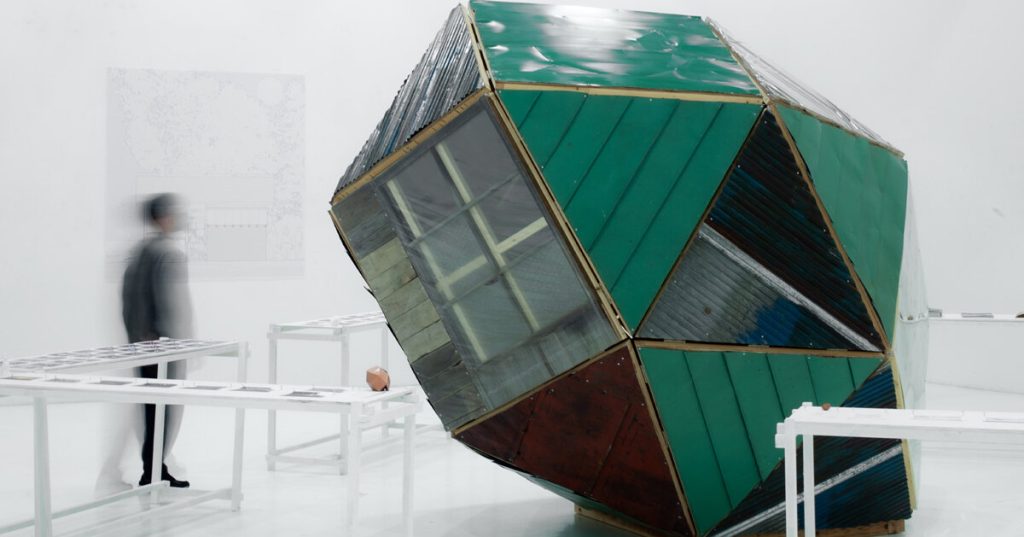
exploring how architecture can persist beyond demolition
In Disassembly and Memory, Japanese artist and architectural designer Go Izumita dismantles an abandoned agricultural shed in rural Aomori and reconstructs its materials into a monumental sculpture inspired by megaliths. By transforming a structure on the verge of disappearance into a new landscape, the project explores the relationship among architecture, memory, and the traces of human presence. The sculptural project explores how architecture can persist beyond demolition.
The work was created from an abandoned agricultural shed located in Fujisaki, a rural town in northern Japan. Rather than preserving the structure in its original form, the project dismantled the building and reconstructed its materials into a new sculptural monument inspired by megaliths and ancient standing stones. The original shed had long been left unused and was gradually deteriorating. While such buildings are often regarded as waste or removed without a trace, the project approached the structure as a repository of memories, labor, and material history.

Disassembly and Memory at Aomori Museum of Art | all images by Hayate Yagi unless stated otherwise
Disassembly and Memory Rebuilds A Shed using Its Own Materials
By dismantling the shed by hand and carefully sorting its components, artist and architectural designer Go Izumita sought to reveal qualities that are often overlooked in architecture, including weathered textures, accumulated traces of use, and the unique character of aging materials. The sculpture was constructed entirely from materials salvaged from the shed, including timber, earthen walls, corrugated steel sheets, patterned glass, and other architectural fragments. The form intentionally differs from that of the original building.
By separating material from architectural form and assigning it a new geometry, the work investigates the displacement between structure and surface, an idea developed through the ‘Texture Displaced’ concept. Depending on the viewer’s position, the sculpture reveals different silhouettes and material relationships. It functions as what the artist describes as a ‘Safe Ruin,’ a monument that preserves the presence of a lost building while preventing physical occupation. Through this transformation, Disassembly and Memory proposes an alternative future for architecture facing abandonment and demolition, allowing its memory to persist as part of a new landscape.

its appearance changes depending on the viewing angle

a sculptural work inspired by megaliths, reconstructed entirely from the materials of a dismantled agricultural shed

exterior view of the agricultural shed before dismantling | image courtesy of Go Izumita

interior view of the agricultural shed before dismantling | image courtesy of Go Izumita

1:10 scale model of the shed, built from the same wood, earth, and metal as the original structure

installation view of the final exhibition of the Agency for Cultural Affairs’ Media Arts Creators Development Support Program at TODA HALL & CONFERENCE TOKYO

the earthen walls of the shed were reclaimed, reworked, and formed into new panels

rare patterned glass, a type seldom produced today | image courtesy of Go Izumita

blue-painted corrugated steel, its weathered surface bearing the traces of time | image courtesy of Go Izumita

red-painted steel panels, where layers of rust create a rich and distinctive texture | image courtesy of Go Izumita

corrugated steel whose surface reveals a rich texture when examined closely | image courtesy of Go Izumita
project info:
name: Disassembly and Memory
designer: Go Izumita | @go_izumita
photographer: Hayate Yagi
designboom has received this project from our DIY submissions feature, where we welcome our readers to submit their own work for publication. see more project submissions from our readers here.
edited by: christina vergopoulou | designboom