
Democracy in Indonesia still offers avenues for change, the author argues — but for minority faiths, belonging remains an unfinished, uphill fight.
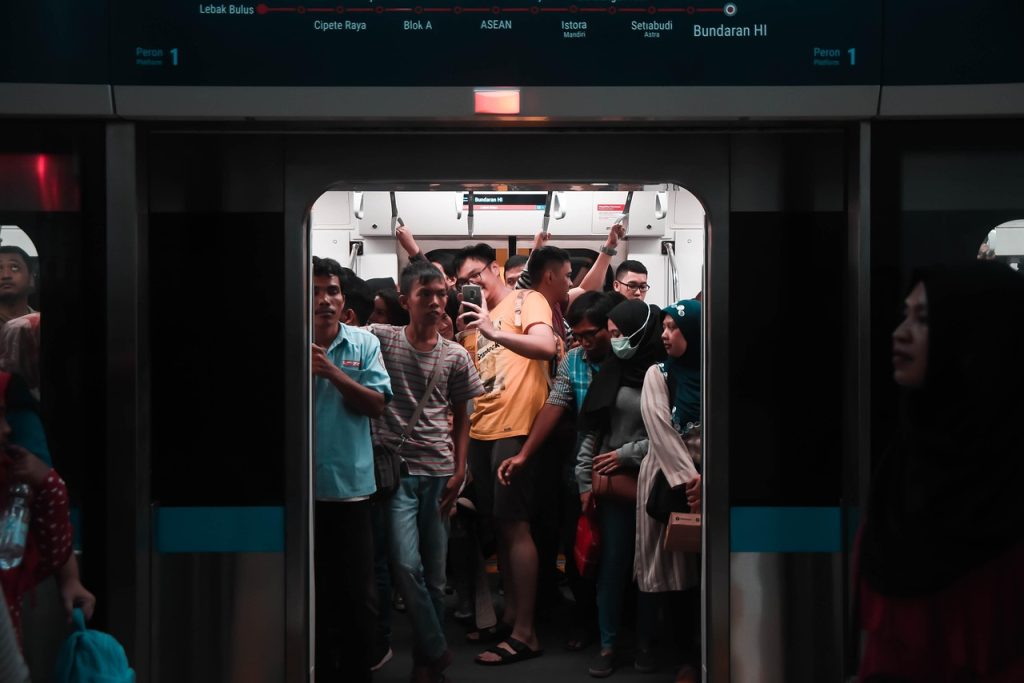
Indonesia is a vast archipelagic nation-state characterized by a rich diversity of religions and beliefs. At the busy Manggarai station, some women wear hijabs in different colors and styles while others opt not to. Veiled or not, they head to work or school — a sign of the progress Indonesia has made on gender equality. Following a government regulation, train stations across Indonesia play the national anthem, Indonesia Raya, at 10 a.m. on weekdays. This practice serves as a reminder that Indonesia is a vast and diverse nation that must remain united.
Much has changed in Indonesia in the nearly 80 years that have passed since independence. However, the reality still falls short of the anthem’s call for unity and prosperity for all. Minority religious groups in Indonesia continue to experience discrimination—a highly complex and troubling reality.
In 2020, NA, a 17-year-old resident of Sampang, passed away and was denied burial in the area because she spent some time with her grandfather, who was a Shi’i, at the relocation site. Her story is one of many illustrations of how Shi’i communities have not only faced persecution that has cost lives and forced displacement but have also been subjected to criminalization through blasphemy charges.
Meanwhile, recently, Repan, a 16-year-old Baduy Dalam member who was injured in a mugging, was denied treatment by a hospital because he could not provide proper identification. Dessy Purba, a member of Ugamo Bangsa Batak, had difficulty landing a job because her ID card left the religion blank, as her indigenous belief is not state-recognized. Many other members of indigenous beliefs cannot register their marriage or obtain their children’s birth certificates.
Indeed, discrimination against minority groups is a deeply complex issue, and addressing it comprehensively in this article would be challenging, as it is not my primary intention here. Instead, my aim is to highlight that there are consequences arising from the political choices made by the framers and reformers of the constitution on religious matters, which have ultimately affected historically disadvantaged groups. They opted to hand over the task of interpreting politically sensitive issues, such as religious matters, to the lawmakers and the judiciary. Indonesia is defined as a pan-religious nation-state.
They made the decision for a good reason to maintain the nation-state’s unity despite deeply rooted disagreement over the nation’s philosophy. Nevertheless, what is then left to administer in law-making and judicial review, given that Islam has always been the majority religion and influential in the nation’s politics?
Islam has been influentially shaping the relationship between the state and religion, as illustrated by two key pieces of legislation: Law No. 1/PNPS/1965 on Blasphemy and Law No. 23 of 2006 on Population Administrative Law. First, under the Elucidation of the Blasphemy Law, six religions—Islam, Protestantism, Catholicism, Buddhism, Hinduism, and Confucianism (Kong Hu Cu)—are officially recognized by the state. This recognition is based on the substantial number of followers of these religions in Indonesia. Other religions and beliefs may exist, but they may not violate the main religious teachings. Anyone or any group who publicly disseminates, seeks support, or encourages others to follow what is deemed as deviant teachings may be warned and end up in prison if they do not follow the government’s instructions.
Shi’i and Ahmadi communities have not only suffered arbitrary violence and forced displacement by individuals, but have also been targeted by government policy. Following the declaration from Islamic authorities such as the Majelis Ulama Indonesia (MUI) that they violate the main religious teachings of Islam, for example, the government issued the Joint Ministerial Decree (SKB Tiga Menteri) declaring Ahmadis’ activities illegal. A similar approach was taken to Shi’is, where the leaders were imprisoned. Consequently, Shi’is and Ahmadis have been exiled for several years. After years of suffering, several Shi’is decided to pledge to follow Sunnism.
Following the designation of state-recognized religions under the Blasphemy Law, the Population Administrative Law was interpreted to allow inclusion of only one of these six religions on ID cards. As a result, adherents of indigenous beliefs, such as Dessy Purba, often had to leave the religion column on their ID cards blank or declare affiliation with one of the six recognized religions to obtain official documentation. Consequently, they have been suffering as they are not able to access the government’s services like other citizens, followers of the state-recognized religions.
Their “second-class” citizen status as minority religious groups, of course, hindered them from influencing law-making, leading them to a new source of hope: the possibility of seeking judicial review at the Constitutional Court. As of 2025, the Blasphemy Law has been challenged multiple times. NGOs, convicts, Shi’is, Ahmadis, and citizens requested the Court to provide a new interpretation. The Court has consistently rejected their petitions. It interpreted the law to mean that the external expression of religious freedom can be restricted and further stated that the internal expression of religious freedom must also be conducted in accordance with the main religious teachings. The Court held that “non-standard” interpretations of the main teachings do not have a place in the nation-state, reasoning that this is necessary to protect religious harmony.
Meanwhile, members of indigenous belief communities requested that the Court provide a new interpretation so that the Population Administrative Law accommodates the inclusion of beliefs not recognized by the state. In this case, the Court was able to discuss their rights. It held that religious freedom must also include freedom to hold beliefs. Consequently, the religion column must accommodate beliefs.
These two cases exemplified the Court’s inconsistency in protecting minority religious groups. In blasphemy cases, it seems that the Court was not able to resist the influence of Islamic conservative groups, as seen in the consistent use of the religious harmony concept to avoid discussing rights. This differed sharply from the case regarding the ID card, where the Court was able to review and provide protection to indigenous belief members.
In conclusion, minority religious groups in Indonesia continue to face discrimination, inconsistent treatment by the bureaucracy, and arbitrary rejection from other groups. Changing legislation remains extremely challenging, as lawmakers tend to prioritize the interests of the majority. Even the Constitutional Court often reflects this tendency. Nevertheless, this does not mean that democracy in Indonesia is not functioning; the procedures and avenues for legal change do exist. It remains the ongoing battle for minority groups, lawyers, and advocates to persistently push for progress and ensure that every citizen belongs in the nation-state and receives equal protection from the state.
Laras Susanti is a lecturer at Civil Law Department, Faculty of Law, Universitas Gadjah Mada (UGM). In 2026, she earned a Doctorate of Judicial Science at the University of Pittsburgh School of Law, where she conducted research at the intersection of politics and the judiciary, mainly focusing on family law matters
Opinions expressed in JURIST Commentary are the sole responsibility of the author and do not necessarily reflect the views of JURIST’s editors, staff, donors or the University of Pittsburgh.