
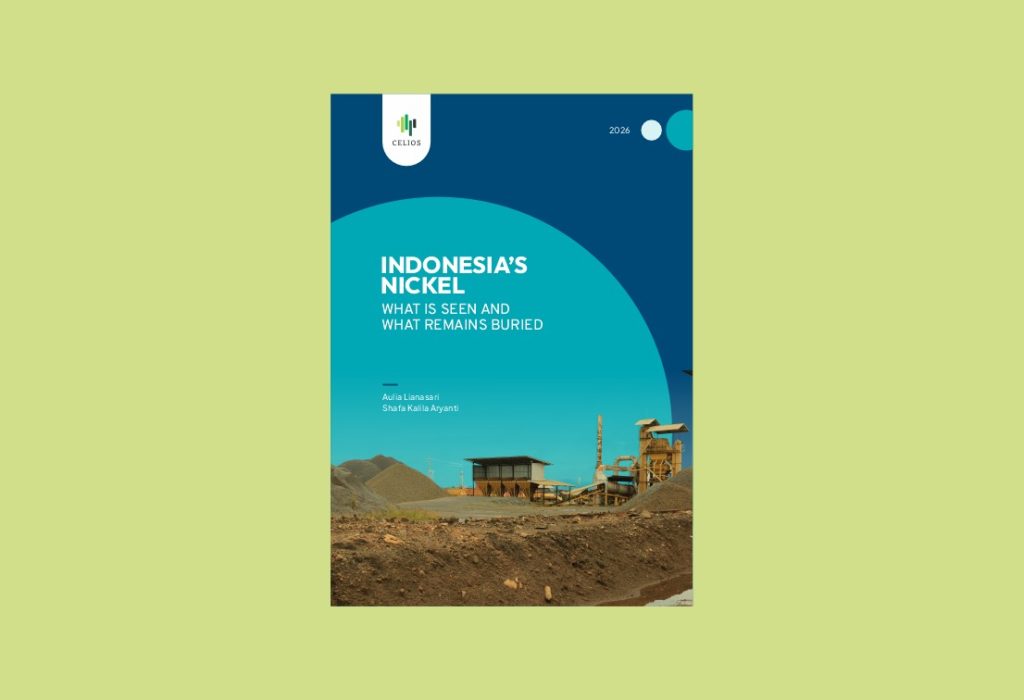
Indonesia sits at the center of one of the most consequential resource stories of our time. As the world’s largest nickel producer, it holds a pivotal position in the supply chains feeding the electric vehicle boom — a position its government has worked deliberately to strengthen through downstream processing mandates and a rapid buildout of smelting infrastructure. Nickel exports have climbed sharply over the past five years, and on paper, the country looks like a rare winner in the global clean energy transition.
The reality on the ground is messier. Ecological damage in mining regions, communities that have seen little of the wealth passing through their territories, and a deepening reliance on foreign industrial capital complicate the triumphant narrative considerably.
In this report, Indonesia’s Nickel: What Is Seen and What Remains Buried, CELIOS explores the hidden dimensions of Indonesia’s nickel industry by examining trade misinvoicing in nickel and nickel-based products during 2020–2024. The report reveals how billions of dollars in potential financial leakages through export and import misinvoicing may reduce state revenue and weaken the government’s capacity to address the environmental and social impacts experienced by communities in nickel-producing regions.