
If you listen, the accounts of religious persecution against Catholics in India are difficult to ignore.
Many of those working with and for Catholics in the country have to speak carefully, and often with hesitation. The fear of retaliation is real — it shapes what can be said publicly and what must remain unsaid. But the consistency of their concerns across regions, ministries, lay and clerical lines, points to a reality that is becoming harder to dismiss: conditions for Catholics in India are worsening.
For those paying attention, their situation is getting more urgent week by week.
That concern is sharpened by a development now moving through India’s Parliament.
In March, the government introduced a bill to amend the Foreign Contribution Regulation Act (FCRA), a law governing the receipt of foreign funding by non-governmental organizations. The FCRA has already been used to restrict Christian charities. The proposed amendment would go further, authorizing the government to assume control over the assets of organizations that lose their eligibility to receive foreign funding.
That authority would not be limited to financial restrictions. It would extend to the management and potentially the repurposing of physical infrastructure built and maintained by religious communities. For Catholic dioceses and religious orders, the implications are immediate.
Many rely at least in part on international support, including donations from the United States, to fund schools, hospitals, orphanages, and clinics serving populations that often lack reliable state support. If access to that support is revoked, and if the assets tied to that work can then be transferred to state control, the result is not simply financial strain. It is the possible loss of institutional independence and, in some cases, the effective appropriation of resources intended for the Church’s charitable mission.
This is not an abstract concern. For the communities that depend on them, often because the state provides no comparable services, the consequences would be immediate, and dire. And the timeline is short.
The legislation is expected to advance in the coming months. Once enacted, its effects would likely be difficult to reverse. And against that backdrop, a steady narrowing of the space in which Christians in India can operate is already underway.
Violence remains part of the picture. Churches have been vandalized, clergy harassed, and congregations disrupted. In several states, “anti-conversion” laws have been enforced in ways that extend well beyond preventing coercion. In practice, they have been used to investigate, detain, and discourage ordinary expressions of Christian faith. The cumulative effect is not only the punishment of individual actors, but the creation of an environment in which religious activity carries increasing legal risk.
Despite these developments, India has not been designated a Country of Particular Concern under the International Religious Freedom Act. The U.S. Commission on International Religious Freedom has recommended that designation repeatedly, citing “systematic, ongoing, and egregious” violations. But the State Department has declined to act.
That decision carries consequences. The designation is one of the few formal mechanisms available to signal that religious freedom violations will affect bilateral relations. Without it, there is little reason to expect sustained pressure.
At the same time, the United States lacks a Senate-confirmed ambassador-at-large for international religious freedom. The position exists to ensure that these concerns are raised consistently and at a high level. Without it, they are easier to sideline.
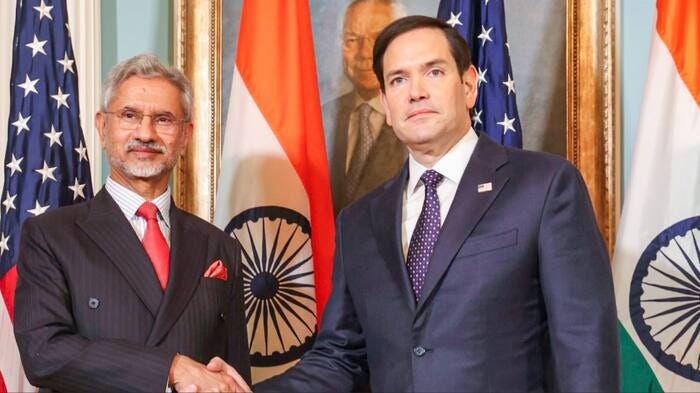
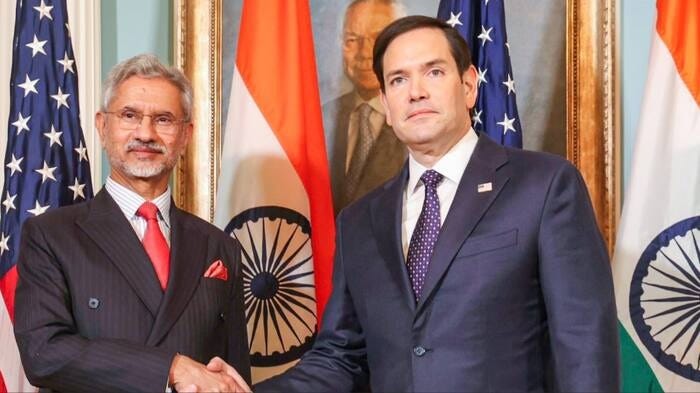
These gaps are especially notable at a moment of increased engagement between the United States and India. Vice President JD Vance, a Catholic, recently visited India with his wife, Usha Vance, underscoring the strength of the bilateral relationship. Later this month, Secretary of State Marco Rubio, also Catholic, is expected to travel to India for high-level meetings.
That expected visit carries particular weight.
Rubio is not new to the issue of international religious freedom. As a senator, he played a central role in strengthening the legal framework that governs U.S. engagement on these issues, including the Frank R. Wolf International Religious Freedom Act of 2016. He has consistently supported the work of the U.S. Commission on International Religious Freedom and has been recognized for his leadership in this area.
This background matters. It gives him both credibility and clarity about what is at stake.
These visits reflect the strategic importance of the U.S.-India partnership. They also present a limited window in which concerns that might otherwise remain secondary can be raised directly.
Religious freedom will not be the only issue on the agenda, to be sure. But it is reasonable to expect that it be addressed clearly, and at a level commensurate with the evidence already documented.
The situation for Catholics in India does not lend itself to quiet or purely symbolic engagement. Violence continues. Legal restrictions are expanding. And legislation under consideration would provide a mechanism for the state takeover of religious institutions that have long operated independently.
For American Catholics, the implications are not distant. The same networks of support that sustain dioceses across India like mission appeals heard in parishes and charitable contributions directed overseas are directly affected by the FCRA framework. If the proposed amendment is enacted, those funds may no longer reach the communities for whom they are intended.
There is still time for the United States to respond in a way that is consistent with its stated commitments.
The administration can nominate, and the Senate can confirm, an ambassador-at-large for international religious freedom. The State Department can revisit the Country of Particular Concern designation in light of the record already developed. And senior officials engaging with Indian counterparts can ensure that these issues are not omitted from the conversation.
None of these steps would resolve the situation on their own. But their absence is not neutral.
Catholic institutions play an essential role in India. A significant benefit is their ability to deliver high-quality services by working directly in the communities where they are needed. Moreover, in a democratic society like India, they serve as an expression of the people’s freedom of association and religion.
As Alexis de Tocqueville observed of our own nation almost two centuries ago, democracy depends on a vibrant network of autonomous associations, spontaneously organized from the ground up by individuals united by shared civic and religious purposes.
When governments restrict the ability of religious communities to worship, to serve, and to sustain their institutions, they do more than regulate. They redefine the boundaries of civil society.
And when those developments proceed without sustained response from countries that have committed themselves in both law and policy to the defense of religious freedom, that too communicates something: about priorities, about limits, and about what will, and will not, draw attention.