
22
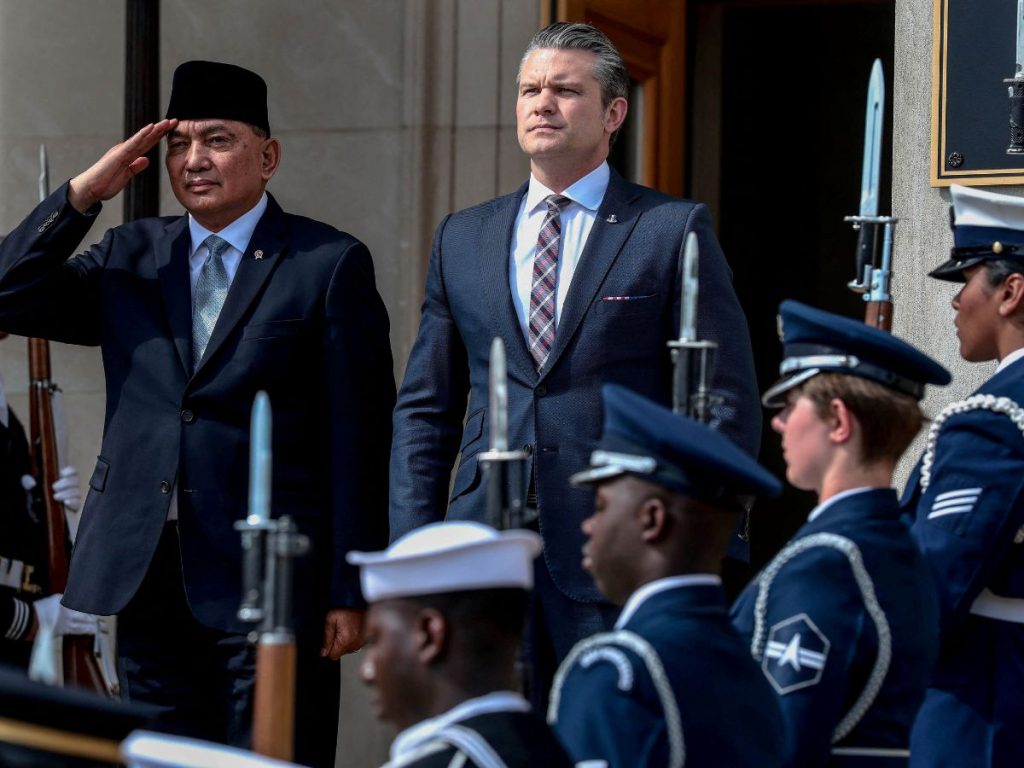
On 13 April, Indonesian Defence Minister Sjafrie Sjamsoeddin flew to Washington to meet US Secretary of Defence Pete Hegseth at the Pentagon. Two Indonesian government sources say the meeting was meant to include the signing of an overflight arrangement that would have granted American military aircraft broad, notification-based access through Indonesian airspace, effectively replacing the country’s existing system of case-by-case authorisation for foreign military flights.
The signing did not happen.
Four days earlier, on 12 April, The Sunday Guardian had published a report which was based on a classified US defence document. The document proposed that Indonesia authorise blanket transit clearance for US military aircraft conducting contingency operations, crisis response missions and joint exercises, with access remaining active until the United States itself chose to deactivate it. The proposal had emerged from a bilateral meeting between President Prabowo Subianto and President Donald Trump earlier this year, and, according to the document, both governments had already reached consensus on its text.
Once published, The Sunday Guardian report moved rapidly through the regional and international press which confirmed that discussions between Washington and Jakarta were underway and within 48 hours what had been a quietly advancing security arrangement became a public controversy.
The consequences inside Indonesia were swift and, for the Prabowo government, uncomfortable. The foreign ministry, which had not been the driving force behind the negotiations, sent an urgent and confidential letter to the defence ministry warning that granting blanket overflight rights risked entangling Jakarta in external conflicts, particularly in the South China Sea. The letter pointed to a specific and unresolved grievance. US military aircraft had conducted surveillance operations in Indonesian territorial waters and airspace on 18 occasions between January 2024 and April 2025, and Indonesian protests had never received a formal response from Washington.
Indonesian Parliament entered the picture next. Members said they had not been consulted on any aspect of the proposed arrangement. That disclosure reframed the story from a technical defence negotiation to a question of democratic oversight, and made quiet finalisation politically impossible.
Opeds and articles, questioning the expected deal, published in the region, pointed that Indonesia’s airspace management law, passed by parliament, requires case-by-case authorisation for foreign military aircraft on unscheduled flights. A standing notification-based system, of the kind described in the leaked document, would likely require legislative amendment to be lawfully implemented. The proposed arrangement, in other words, could not simply be signed and quietly operationalised, which the government was trying to do.
By the time Sjafrie arrived at the Pentagon, the political ground in Jakarta had shifted. The Pentagon statement issued after the meeting announced a Major Defence Cooperation Partnership covering training, modernisation and joint exercises. It made no mention of overflights. Indonesia’s defence ministry spokesperson subsequently confirmed that overflight clearance was not “a pillar of cooperation agreed upon within the partnership.”
What the arrangement would have meant strategically is not in dispute. Indonesian airspace spans the critical corridors between the Indian Ocean and the Pacific. US platforms such as the P-8A Poseidon, RC-135 Rivet Joint and B-1B Lancer, operating with notification-based clearance, could have reached the South China Sea and the Strait of Malacca significantly faster during any regional contingency. For Washington, it would have been the most significant military access gain in Southeast Asia in years. For Indonesia, it would have represented a quiet but fundamental departure from the “free and active” foreign policy doctrine the country has maintained for decades, one that has allowed Jakarta to preserve equidistance between the United States and China, its largest economic partner.
That departure, had it been signed on 13 April, would have gone unannounced. There was no indication that the Indonesian public, Parliament or the foreign ministry would have been informed in any structured way. The classified nature of the underlying document, and the notification-based mechanism it proposed, were designed for operational discretion, not public debate.
It was a report from New Delhi that ensured that debate happened—in Jakarta, in Washington, and across the region.
The proposed overflight arrangement now remains, in the Indonesian government’s own description, a non-binding draft under internal discussion. Whether it returns in revised form, is quietly shelved, or becomes a sustained point of friction between Jakarta’s foreign and defence establishments is not yet clear. What is clear is that the version that was approaching signature on 13 April did not get signed, and that a provision designed to operate without public scrutiny is now subject to it.