
Coordinated government effort ahead of submission deadline
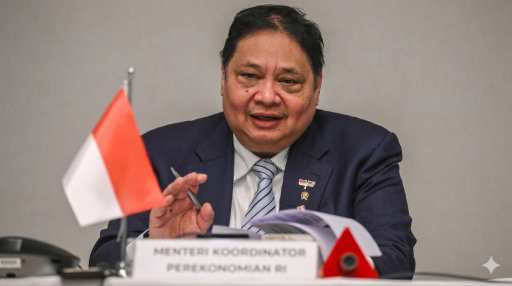
The Indonesian government is finalizing its official response to a trade investigation launched by the United States under Section 301, as authorities move to safeguard national trade interests. A high-level coordination meeting was convened in Jakarta on Monday, April 13, 2026, led by Coordinating Minister for Economic Affairs Airlangga Hartarto, alongside Trade Minister Budi Santoso and Manpower Minister Yassierli, as well as representatives from the Ministry of Industry and the Ministry of Finance.
The meeting focused on consolidating Indonesia’s defense and aligning inter-ministerial responses ahead of the formal submission to U.S. authorities.
Read more: U.S. opens trade investigation into Indonesia as public hearings set for May 5
Understanding Section 301 and its implications
The investigation falls under Section 301 of the U.S. Trade Act of 1974, which authorizes the Office of the United States Trade Representative (USTR) to examine and respond to foreign trade practices deemed unfair, unreasonable, or discriminatory. Potential countermeasures include the imposition of tariffs on targeted countries.
According to Airlangga, the USTR’s investigation into Indonesia centers on two primary concerns: industrial overcapacity and the importation of raw materials allegedly linked to forced labor practices.
Government focuses on fact-based response
“We have been asked to respond, and after we do so, we will submit it, followed by further review. The important thing is that we provide a clear response,” Airlangga said on April 13.
He emphasized that the U.S. investigation is commodity-specific rather than regulatory in nature, indicating that scrutiny is directed at particular sectors rather than Indonesia’s broader trade policies.
“For example, cement, we have never exported cement,” he added, underscoring that some sectors under review may not even form part of Indonesia’s export portfolio.
Uncertainty remains over potential outcomes
Airlangga noted that the government is not yet in a position to assess the possible consequences of the investigation, particularly regarding allegations of forced labor and their potential implications for tariff measures.
“We don’t know yet, as this is still under investigation, and we are not making assumptions,” he said.
Final response deadline set for April 15
Trade Minister Budi Santoso confirmed that Indonesia’s formal written response will be submitted on April 15, 2026. Officials have completed the necessary preparations, incorporating feedback gathered during the coordination meeting.
“Earlier, we discussed preparations for the submission. On the 15th, we must submit our response regarding the initiation of the Section 301 investigation. Everything has been prepared, and we still have time for final input,” Budi said.
He reiterated that the process remains on track, with all required documentation nearing finalization ahead of the deadline.
ASEAN urged to reform trade systems amid Section 301 pressure
Commenting on the broader implications of the investigation, Japanese economist Seiya Sukagawa, as cited by The Jakarta Post, argued that the issue extends beyond tariffs to the structural dynamics of global trade governance.
In his analysis, Sukagawa noted that countries like Indonesia and other ASEAN members must confront deeper systemic challenges embedded in the Section 301 mechanism. He emphasized that the core issue lies not in tariffs themselves, but in how “unfairness” is defined and applied within the framework.
“What ASEAN must confront is not the tariffs themselves, but the ‘structure of unfairness determination,’” Sukagawa wrote on March 30.
According to Sukagawa, this structure grants significant discretionary power to the United States in defining and judging trade practices, potentially placing developing economies at a disadvantage. He suggested that ASEAN countries strengthen institutional frameworks, enhance transparency, and reform domestic systems to better navigate such external pressures.