
India has set itself an ambitious goal: to become a fully developed nation by 2047, the centenary of its independence. The momentum is real. India is one of the fastest-growing major economies and already ranks among the world’s five largest. But achieving the vision of Viksit Bharat will hinge on one decisive factor: jobs.
Over the next decade, India will add more working-age people to the global economy than any other country. If it can harness this demographic dividend, it could unlock faster growth and broader prosperity. Failing to do so risks leaving millions of young people without meaningful economic opportunity.
The challenge is already visible. Youth make up the majority of India’s unemployed, and many struggle to transition from education into work. Meanwhile, employers often report difficulty finding workers with the right skills. That mismatch between what young people learn and what firms need is increasingly evident in a labor market reshaped by digital technologies, artificial intelligence (AI), and the transition to a greener economy. Without addressing the jobs and skills challenge, India will find it significantly harder to achieve its 2047 ambitions.
Four priorities can help accelerate progress.
First, aligning skills training with industry demand. India’s network of roughly 15,000 Industrial Training Institutes (ITI) play a critical role in workforce preparation. Yet, job placement rates for graduates average under 50 percent. That suggests training programs do not always match labor market needs.
Moving toward industry-led training models where employers help design curricula, equipment standards, and apprenticeship opportunities will help address this mismatch. The new Pradhan Mantri Skilling and Employability Transformation through Upgraded ITIs (PM-SETU) program, which aims to forge genuine partnerships between training institutions and industry, is a good example of such a model. Industry-responsive institutions like the Central Tool Room & Training Centre (CTTC) in Bhubaneswar show what’s possible—integrating relevant technical training with manufacturing for industries ranging from automotive to aerospace, and catalyzing broader ecosystems through industry partnerships to produce job-ready graduates at scale. This CTTC also provides support for startups and entrepreneurs in areas such as intellectual property, product development, and business management. The challenge now is to replicate such models at scale.
Second, strengthening the MSME ecosystem. Micro, small, and medium enterprises (MSMEs) are central to job creation, accounting for a large share of employment and playing a critical role in innovation and regional development. The broader ecosystem needs strengthening. Making it standard practice to offer skills-upgrading courses for MSME operators, such as the ones offered by the Technology Centre Systems Programme (TCSP) and its national network of tool rooms and technology centers, gives small manufacturers access to advanced training, design, and prototyping services.
The Raising and Accelerating MSME Performance (RAMP) program is also supporting 729,000 MSMEs by enhancing firm capabilities, improving access to markets and finance, and promoting technology adoption, including for women-owned enterprises. Another promising innovation in improving access of MSMEs to markets and finance is the wider use of Trade Receivables Discounting Systems (TReDS), a Reserve Bank of India-regulated digital platform that helps MSMEs get paid faster on approved invoices. Better cash flow means small firms can scale up, invest in technology, and hire more workers.
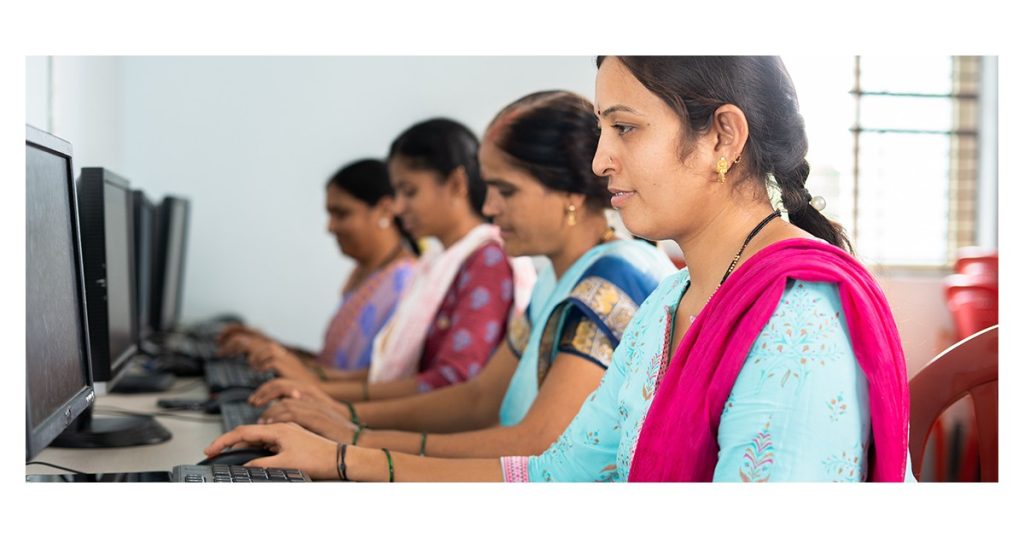
Third, expanding opportunities for women and youth. India cannot fully realize its economic ambitions while leaving large segments of its workforce underutilized. Female labor force participation in India remains far below that of men—roughly one-third of working-age women compared with more than three-quarters of men. Although women’s participation has increased in recent years, paid employment remains limited. Expanding access to quality employment for women could unlock substantial productivity gains and accelerate economic growth.
Expanding job creation in labor-intensive manufacturing and services, as well as in sectors such as creative industry, textiles, and fashion, could create more opportunities for women and young people. So will lowering supply-side barriers: affordable childcare, safe transport, housing support for women who relocate for work and sustained efforts to shift social norms. Investing in the care economy could be particularly transformative. In India, International Labor Organization projections suggest that public spending of 2 percent of GDP on care services could generate millions of jobs, many of them for women.
Fourth, building more effective Labor Market Information Systems (LMIS). India’s labor market is vast and dynamic, but it suffers from major information gaps. Policymakers, employers, and job seekers often lack timely data on where jobs are being created, which skills are in demand, and what wages are being offered – especially in the large informal sector.
Stronger information systems can guide better policy, improve training programs, and help job seekers find opportunities. In Maharashtra, the World Bank–supported DAKSH Program is establishing a Labor Market Observatory to collect and analyze real-time labor market data. This model could be replicated across other states, providing policymakers and businesses with sharper insight into India’s evolving job market.
Whether India fully captures its demographic dividend will depend on how effectively the economy creates productive, private-sector-led employment. Giving young people—women and men alike—the skills they need to find and thrive in those jobs will be central to realizing the vision of Viksit Bharat. If India succeeds, it will not only transform millions of lives at home. It will also help shape the global economy in the decades ahead.