
Published on
May 16, 2026

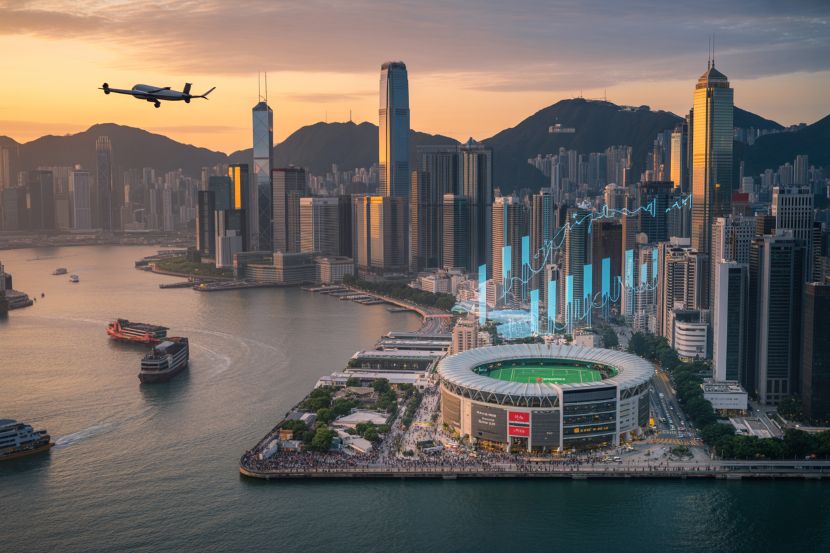
Image generated with Ai
Hong Kong’s economy is showing renewed strength in 2026 as rising tourist arrivals, expanding AI-linked exports, and stronger consumer demand continue to support one of Asia’s most important financial and travel hubs. The city has retained its full-year economic growth forecast of 2.5 to 3.5 per cent after recording an impressive 5.9 per cent year-on-year expansion during the first quarter, marking its fastest quarterly growth pace in nearly five years.
The latest economic data reflects a city benefiting from multiple recovery engines at once. Hong Kong tourism, retail spending, business travel, and cross-border commercial activity have all accelerated alongside increasing global demand for advanced electronics and artificial intelligence-related products flowing through regional supply chains.
The rebound is also carrying significant implications for the broader travel sector. Hotels, airlines, event organizers, luxury retailers, and MICE tourism operators are seeing stronger momentum as international arrivals and mainland visitor traffic continue climbing. Major sporting events, particularly the globally recognised Hong Kong Sevens tournament, have added fresh energy to the city’s tourism economy while helping restore international travel confidence across Asia.
At the same time, inflation risks linked to rising oil prices and geopolitical tensions in the Middle East remain an area of concern for businesses, airlines, and tourism operators dependent on stable fuel costs and aviation capacity.
Advertisement
Advertisement
Hong Kong’s Key Economic Indicators Signal Broad-Based Recovery
The city’s latest macroeconomic figures indicate that growth is no longer being driven by one isolated sector. Exports, tourism, domestic consumption, and investment spending all contributed to the stronger performance.
Hong Kong Economic Snapshot for 2026
| Economic Indicator | Latest Figure |
|---|---|
| Q1 2026 GDP Growth | 5.9% |
| Previous Quarter Growth | 4.0% |
| Full-Year 2026 Forecast | 2.5% – 3.5% |
| 2025 Annual Growth | 3.5% |
| Revised Inflation Forecast | 2.6% |
| February Inflation Projection | 1.8% |
| Export Growth | 23.7% |
| Private Consumption Growth | 4.9% |
| Investment Expenditure Growth | 17.7% |
| Unemployment Rate | 3.7% |
The substantial rise in exports has largely been linked to robust international demand for AI-related exports, semiconductors, advanced electronics, and technology supply-chain services moving through Hong Kong’s established trade ecosystem.
Advertisement
Advertisement
Industry analysts increasingly view Hong Kong as a strategic legal and logistics gateway for international buyers sourcing high-value technology products from mainland China.
Tourism Rebound Continues to Fuel Hotels, Retail and Aviation
The travel sector remains one of the most visible contributors to Hong Kong’s ongoing recovery story. Visitor arrivals continued climbing during April, supported by events tourism, improved regional connectivity, and stronger inbound demand from mainland China and overseas markets.
Advertisement
Advertisement
Hong Kong Visitor Arrivals in 2026
| Tourism Metric | Figure |
|---|---|
| April 2026 Visitor Arrivals | 4.21 million |
| Growth in April Arrivals | 10% |
| Total Visitors Jan-Apr 2026 | 18.52 million |
| Growth for First Four Months | 15% |
| Non-Mainland Visitors in April | 1.11 million |
| Growth in Non-Mainland Visitors | 8% |
| Non-Mainland Visitors Jan-Apr | 4.34 million |
The increase in international arrivals reflects a broader recovery trend across Asia-Pacific travel markets. Airlines serving Hong Kong have gradually restored frequencies while hotels in major tourism districts such as Tsim Sha Tsui continue experiencing stronger occupancy levels during weekends and event periods.
The return of large-scale international events is also reshaping the city’s tourism narrative. The Hong Kong Sevens, held at the new Kai Tak Stadium, generated a noticeable influx of sports tourists, hospitality demand, and premium spending activity across restaurants, nightlife districts, and retail centres.
For travel businesses, the resurgence of events tourism has become increasingly important because high-spending international visitors tend to stay longer and contribute significantly to hotel and entertainment revenues.
AI-Driven Trade Gives Hong Kong a Strategic Edge in Asia
One of the most important shifts within the Hong Kong economy is the growing role of technology-driven trade. The city is benefiting from expanding international demand for AI infrastructure, chips, and advanced electronics moving through regional supply chains.
Advertisement
Advertisement
Hong Kong’s longstanding role as a re-export centre continues to provide advantages for multinational firms seeking internationally recognised legal frameworks and commercial services. This position has become particularly valuable as global businesses diversify sourcing and strengthen Asia-based technology procurement networks.
The trend is also indirectly benefiting business travel. Technology conferences, cross-border financial meetings, and corporate investment activities are driving additional demand for premium hotels, airlines, and convention venues.
Business travel operators across Asia are increasingly monitoring Hong Kong’s recovery because the city remains one of the region’s most influential aviation and finance gateways.
Rising Oil Prices Could Create New Pressure for Airlines and Travelers
Despite the positive economic momentum, rising fuel prices linked to geopolitical instability in the Middle East could create challenges for the tourism and aviation sectors later in 2026.
Higher oil prices generally affect airline operating costs, airfare pricing, logistics expenses, and hotel operating margins. If tensions involving Israel and Iran continue escalating, travel operators may face additional uncertainty regarding route planning and operational expenses.
However, Hong Kong’s access to stable mainland energy supplies may help cushion some inflationary pressures compared with other international markets more heavily exposed to energy volatility.
Advertisement
Advertisement
Travel analysts also note that Asia’s tourism rebound remains relatively resilient despite global geopolitical concerns, particularly as regional travel demand from mainland China continues supporting major destinations.
Why Travelers Are Returning to Hong Kong Faster Than Expected
Several factors are helping Hong Kong regain momentum as a tourism and business destination.
Key Drivers Behind Hong Kong’s Tourism Recovery
| Growth Driver | Tourism Impact |
|---|---|
| Major Sports Events | Increased hotel occupancy and international arrivals |
| AI and Business Trade | Higher corporate travel demand |
| Mainland China Visitors | Retail and hospitality recovery |
| Expanded Flight Connectivity | Improved regional tourism flows |
| Luxury Shopping Demand | Stronger spending in tourism districts |
| New Infrastructure Projects | Better event and convention capacity |
The launch of new entertainment venues and tourism infrastructure around Kai Tak is also contributing to Hong Kong’s positioning as a modern events destination capable of hosting large-scale international gatherings.
For travelers, the city’s recovery means broader airline choices, more hotel inventory, improved tourism experiences, and a growing calendar of international events.
Hong Kong’s Next Phase Could Depend on Travel Confidence and Global Stability
While the latest economic indicators suggest strong momentum, the remainder of 2026 will likely depend on how global inflation, geopolitical tensions, and international travel demand evolve.
The combination of rising Hong Kong visitor arrivals, stronger consumer spending, expanding AI trade, and resilient business activity has placed the city in a stronger position than many analysts expected earlier in the year.
Advertisement
Advertisement
For the travel industry, Hong Kong’s performance is becoming a key barometer for broader Asia-Pacific tourism recovery trends. Airlines, hotel groups, luxury retailers, and investors are closely watching whether the city can sustain this pace of expansion through the second half of 2026.
If tourism demand remains stable and trade activity continues accelerating, Hong Kong could potentially exceed current growth expectations while reinforcing its role as one of Asia’s most dynamic aviation, finance, and tourism gateways.
Advertisement
Advertisement
