
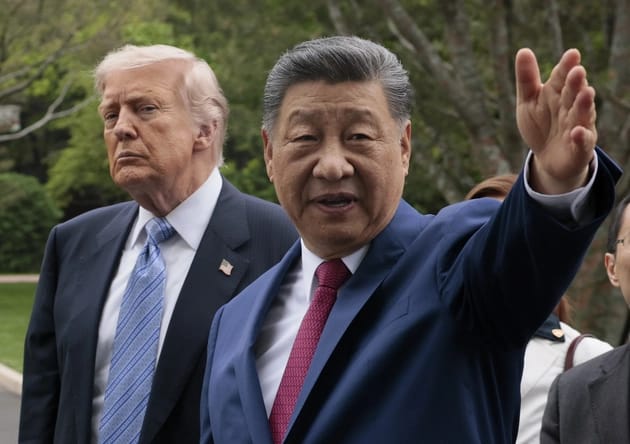
Trump provided no details of a potential U.S. sale of soybeans to China beyond a vague assertion that China would buy “billions of dollars” worth.
He touted the sale of 200 Boeing aircraft to China but that was less than half of what some analysts and investors had expected. Beijing didn’t confirm either agreement and Boeing did not respond when asked to confirm the sale. Trump also confirmed that he and Xi had discussed “possibly working together for guard rails” on the development and application of artificial intelligence systems.
And despite repeated assurances from White House officials that U.S. policy toward Taiwan would not be on the summit agenda, Trump said that the two leaders had discussed U.S. ties to the island at length. Trump told reporters he was willing to reconsider U.S. arms sales to the self-governing island — a key longtime demand of Beijing — despite long-standing U.S. commitments to provide defensive weaponry to deter potential Chinese aggression.
“I’ll make a determination over the next fairly short period,” Trump said when asked if he’ll continue arms sales to the island. Trump added that he would speak to “the person who is running Taiwan” — an apparent reference to Taiwan’s President Lai Ching-te — as part of that decision-making process.
The “Monumental Event” that Trump pitched does not appear to have materialized, leaving in its place a fragile but stable trade truce. Still, that’s a far cry from the all-out trade war that broke out a year ago, and the Trump administration walked away from the meeting having accomplished its broad goal of preserving the status quo — one that leaves tariffs on Chinese goods at around the same rate as the rest of the world.
“The summit produced modest, marketable and managed outcomes, which is about all the U.S.-China relationship can bear right now,” said Craig Singleton, a China fellow at the hawkish Foundation for Defense of Democracies think tank.