
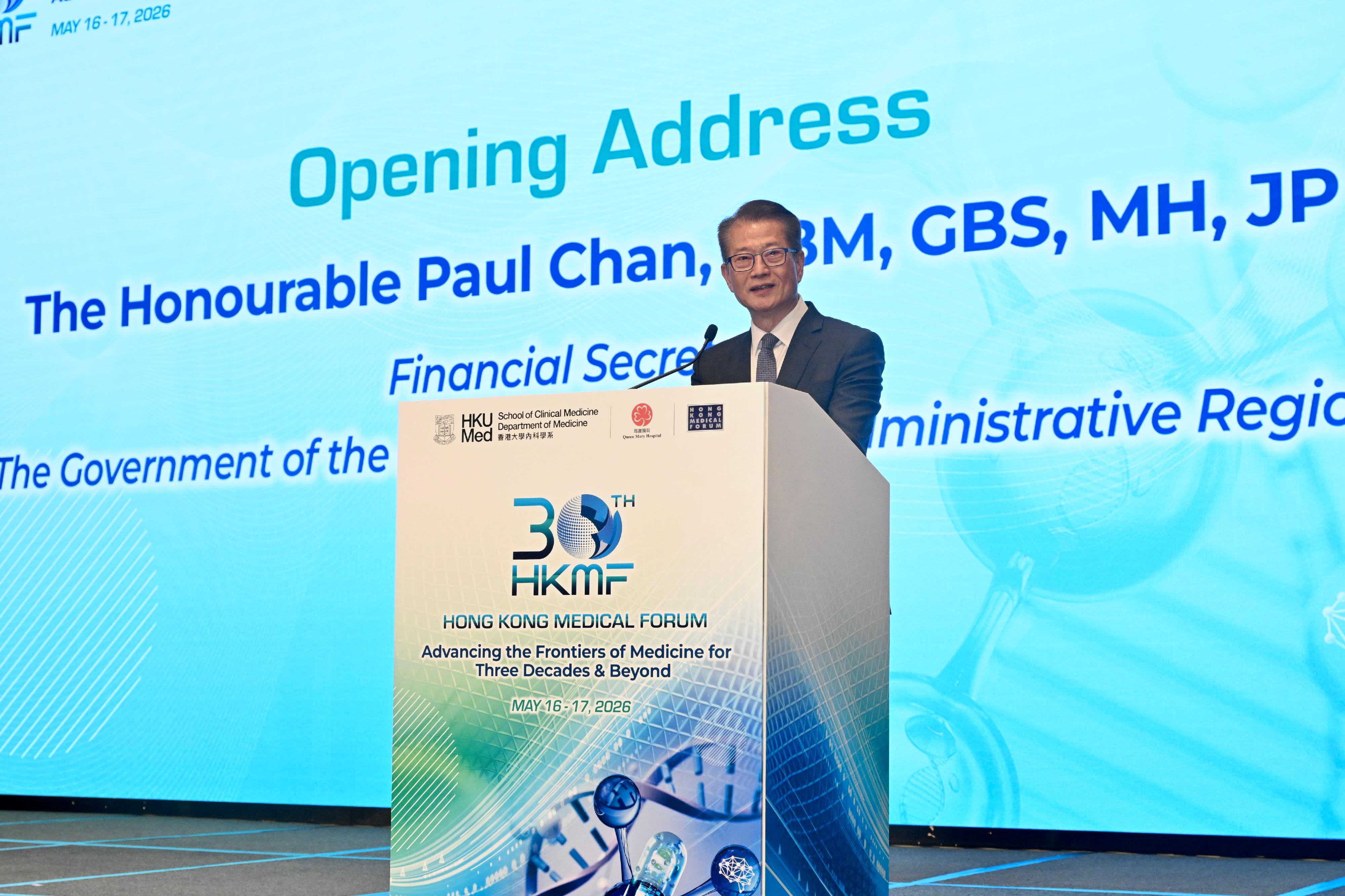
HONG KONG – The Hong Kong Special Administrative Region is pursuing a multi-pronged strategy to become one of the world’s premier launch pad for new therapies, the city’s finance chief said on Saturday.
“And we are working to set things in greater motion. Because our ambition is for Hong Kong to be the beating heart of this global medical innovation ecosystem,” Paul Chan Mo-po said while delivering a speech at the 30th Hong Kong Medical Forum.
The Hong Kong Centre for Medical Products Regulation, which will be established this year, will enable the city to conduct primary evaluation of new drugs and medical devices, he said, adding that this will materially accelerate the path to market for innovative therapies.
In the Hetao Shenzhen-Hong Kong Science and Technology Innovation Co-operation Zone, the authorities will enable cross-boundary flow of biological samples and clinical data — building the architecture for data-intensive, cross-boundary medical research, said the financial secretary.
“Clinical trial institutions from both the (Chinese) mainland and overseas are already operating there. We are working to secure the establishment of branch of mainland regulatory authority in the Zone, to facilitate quicker access to the Chinese mainland market,” he added.
Referring to the Committee on AI+ and Industry Development Strategy, which was announced in this year’s Budget, Chan said the new committee will bring together experts from academia, business and the city’s science and technology parks to chart a roadmap for integration of AI across industries, with biotech and embodied intelligence as initial priorities.
RELATED ARTICLES
Pointing to how artificial intelligence is profoundly changing medical discovery, he said, “The question for us is not just how this transformation will applied, but who will shape it — and where.”
Under the “one country, two systems” framework, Hong Kong’s common law framework, a judiciary exercising powers independently and alignment with the best international professional and regulatory standard provide intellectual property (IP) security, which is a precondition for life-sciences investors, he said.
Speaking about institutions and talent, the financial secretary said Hong Kong’s two medical schools are among global top 25 and a third medical school will join the ecosystem soon. “It will expand clinical research and talent training capacity at precisely the moment when global demand for medical expertise is at an all-time high.”
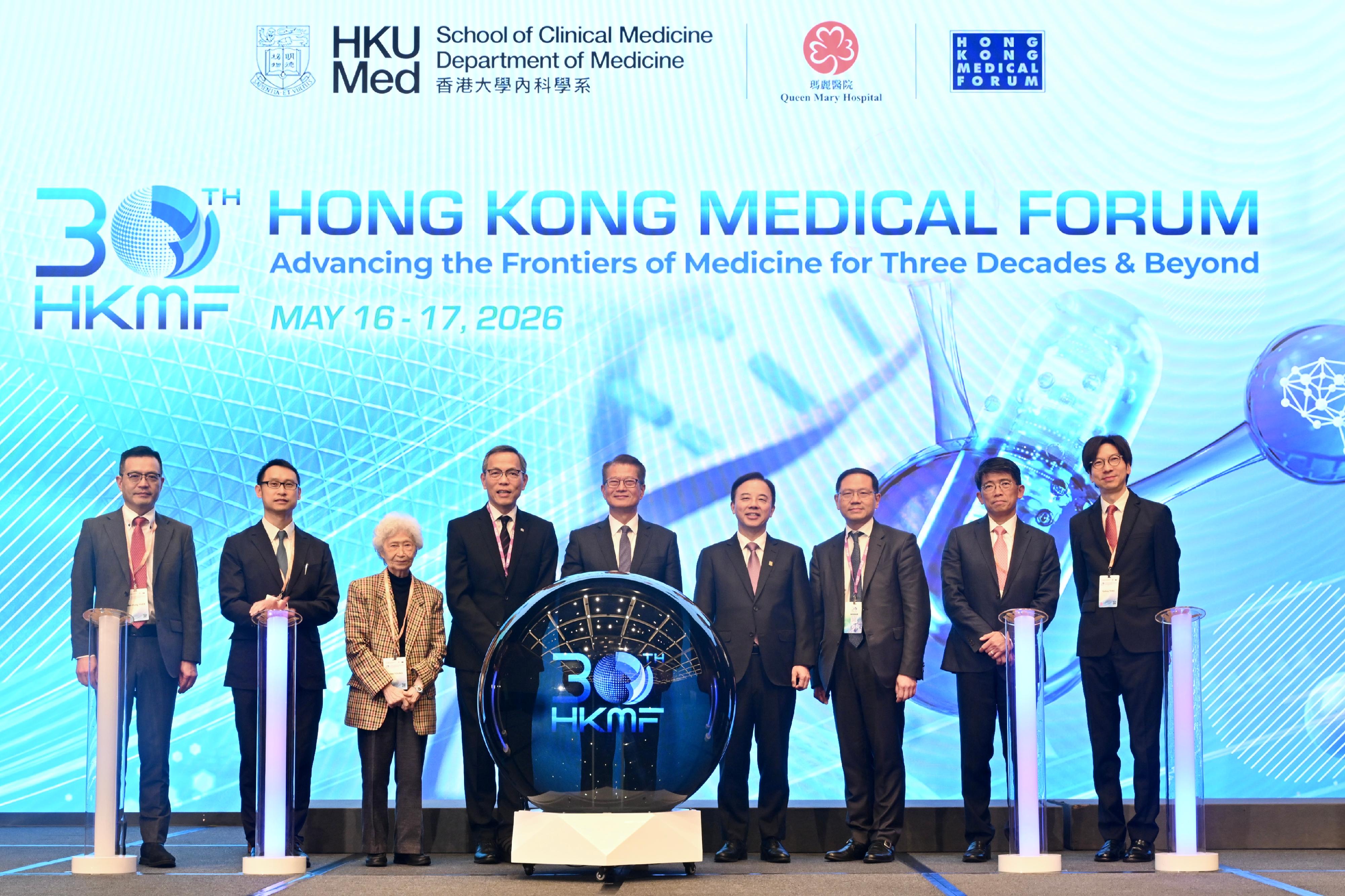
With its “excellent law and order, connectivity, quality education, diverse cultural offering and natural scenery”, the city remains one of the most compelling cities to build a career, Chan said, adding: “Our talent admission schemes continue to welcome talent from all over the world.”
On capital, he said the Hong Kong Stock Exchange is a premier global venue for biotech listings, with over 80 biotech firms listed currently with a total market capitalization of HK$120 billion.
“Beyond public markets, Hong Kong hosts the second-largest private equity pool in Asia only after the mainland, plus a very vibrant venture capital and patient capital ecosystem. The full spectrum of funding for basic research, outcomes translation, clinical trials to commercial scale-up is available right here,” he added.
The Guangdong-Hong Kong-Macao Greater Bay Area is an innovation corridor encompassing top research universities, vibrant startups, world-leading technology firms and advanced manufacturing, he said. “For a medical innovator, nowhere else puts lab bench, patient bedside and factory floor within one-hour drive. And it is not just physical distance, but the highest collaborative efficiency.”
It is no surprise that five of the world’s top 10 pharmaceutical companies have chosen Hong Kong as the base for their regional R&D operations, he added.