
Published on
June 20, 2026

Image generated with Ai
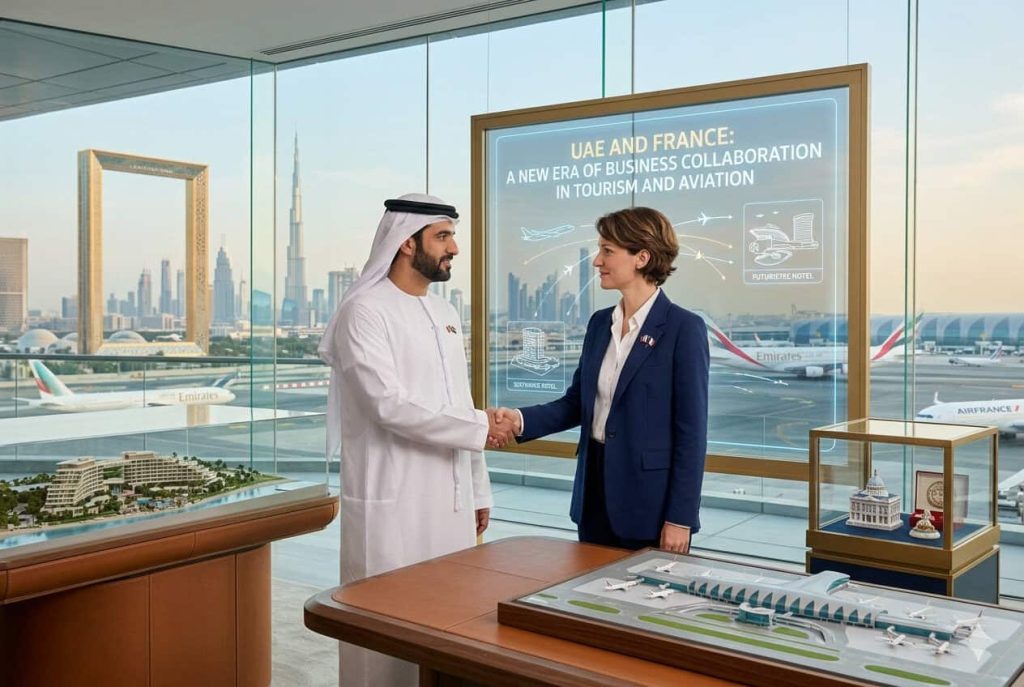
The United Arab Emirates and France have significantly deepened their bilateral cooperation across key economic sectors, specifically targeting tourism expansion, aviation connectivity, and small and medium-sized enterprise (SME) development. This strategic alignment, led by UAE Minister of Economy and Tourism Abdulla bin Touq Al Marri and French Minister Serge Papin, highlights a shared commitment to sustainable economic growth. Driven by a forty-four per cent surge in French companies operating within the UAE and robust air connectivity featuring fifty-three weekly flights, the partnership leverages advanced technology and academic exchange to foster long-term mutual investment.
Strategic Ministerial Alignment in Paris
The framework for this enhanced cooperation was solidified during a bilateral meeting between the economy and tourism ministers in Paris. The timing coincided with the VivaTech 2026 exhibition, emphasizing the integration of artificial intelligence and advanced technology into traditional economic sectors. Both nations are focusing on creating a resilient economic corridor that supports entrepreneurship and modernizes hospitality frameworks. The leadership underscored that the synergy between the two republics extends beyond trade, fostering deep cultural exchange and institutional alignment that will shape regional travel dynamics for the next decade.
Scaling Aviation Connectivity and Tourism Influx
Air connectivity serves as the backbone of this bilateral relationship, with fifty-three weekly flights continuously linking major hubs between the nations. This robust aviation network successfully brought approximately 840,000 French visitors to the UAE in 2025, marking a steady four per cent annual increase. Ministers noted that these numbers reflect successful cross-promotional destination marketing. The consistent flow of travelers not only boosts the hospitality sector but also provides vital logistical support for private-sector partnerships, international business conferences, and commercial trade routes connecting Europe and the Middle East.
Academic Synergy in Hospitality Management
A core focus of the new agreement involves capacity-building initiatives through partnerships between top-tier academic institutions specializing in hospitality management. By aligning educational standards, the UAE and France aim to cultivate a highly skilled workforce capable of leading luxury travel sectors. Joint training programs, student exchanges, and collaborative research projects will allow future industry professionals to study global best practices. This institutional bridging ensures that both French heritage in gastronomy and the rapid infrastructure innovation of the Emirates enrich the global hospitality talent pipeline.
Advertisement
Advertisement
Advancing Sustainable Tourism Frameworks
Sustainability remains at the absolute forefront of the joint agenda, with both nations actively participating in global initiatives under UN Tourism. The discussions in Paris established potential joint frameworks aimed at reducing the carbon footprint of long-haul travel and promoting eco-conscious hospitality models. As the UAE prepares to host the upcoming UN Tourism Executive Council meeting later this year, the nation is positioning itself alongside France to lead global dialogues on biodiversity protection within major tourist destinations, responsible resource management, and sustainable community-based tourism.
Empowering Startups and Foreign Ownership
The UAE presented its competitive business ecosystem designed to attract international startups, highlighting provisions like one hundred per cent foreign ownership and full profit repatriation. With access to more than two thousand distinct economic activities, French entrepreneurs are finding fewer barriers to entry in the Middle Eastern market. The Emirati government has deployed more than ten specialized programs dedicated entirely to SME incubation and scaling. These regulatory reforms ensure that foreign innovators can easily establish operational bases, secure local funding, and scale their technological solutions efficiently.
Advertisement
Advertisement
The Vital Economic Contribution of SMEs
Small and medium-sized enterprises form the bedrock of the Emirati economy, accounting for roughly ninety-five per cent of all operating companies. These enterprises generate more than eighty-five per cent of private-sector employment and contribute a staggering sixty-three per cent to the national Gross Domestic Product. By focusing on SME cooperation, France and the UAE are targeting the most dynamic sector of their respective economies. The ministerial discussions emphasized creating joint accelerators that allow French and Emirati small businesses to share market insights, co-develop intellectual property, and access new regional consumer bases.
Unprecedented Growth in French Enterprises
The commercial presence of French businesses in the UAE has experienced historic momentum over the past two fiscal years. Registered French companies climbed from 7,089 at the end of 2024 to 10,202 by late 2025, representing an exceptional forty-four per cent growth rate. This upward trajectory shows zero signs of slowing down in 2026, with an additional 1,153 new French entities established during the first five months alone. This brings the current operational total to more than 11,000 French firms actively contributing to the local marketplace.
Advertisement
Advertisement
Safeguarding Intellectual Property and Trademarks
The commercial relationship is further reinforced by the protection of more than twenty thousand registered French trademarks within the UAE market. This extensive legal framework provides French luxury brands, industrial corporations, and tech innovators with the security needed to invest heavily in local operations. Ensuring robust intellectual property rights encourages long-term corporate commitments and facilitates seamless retail expansion. This mutual legal trust reassures investors that their corporate identity and proprietary technologies remain completely secure while operating within the expanding Gulf economic zone.
Advertisement
Advertisement
