
For nearly six months, coverage of the Strait of Hormuz crisis has been, essentially, an oil story: how many barrels can bypass the chokepoint; how much spare capacity sits on the UAE’s east coast; whether pipelines and storage terminals can absorb the shock.
Those questions matter less with each passing week because the calculation that matters now is the one counting down to September.
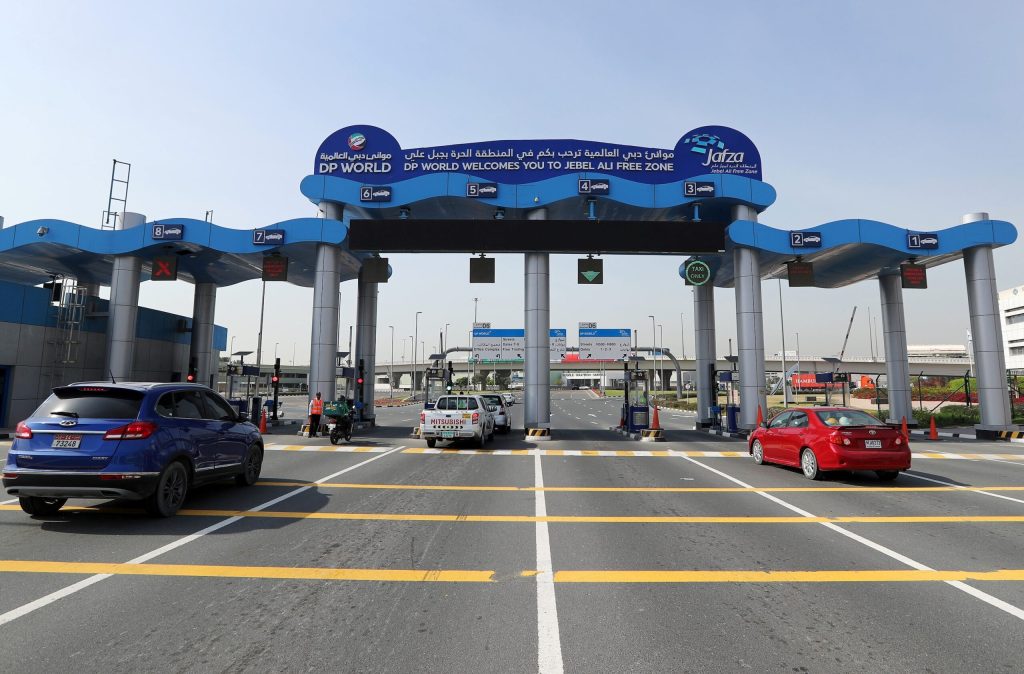
From a UAE perspective, the potential damage runs well beyond hydrocarbons. The logistics ecosystem built around Jebel Ali, Jafza and the industrial and port complexes at Kizad has suffered more from the protracted hostilities than the energy sector itself.
Dubai’s status as the region’s commercial capital rests on the assumption that goods move freely to and from the huge Jebel Ali complex. Abu Dhabi’s energy ambitions rest on the same assumption of transactional access. A prolonged stand-off threatens not just oil revenue, but the economic model on which both cities were built.
Workarounds for Dubai and Abu Dhabi have been effective, and are likely to become permanent. But they cannot replace the UAE’s existing economic infrastructure.
So the conversation is no longer confined to oil ministers. It has become a question for traders, shipowners, insurers and logistics executives, whose logic runs differently from that of politicians.
A transit levy – or whatever term is used for what will remain a Hormuz toll – can be priced, and a surcharge can be hedged.
What markets cannot absorb is uncertainty: insurance premiums quadrupling overnight, vessels stranded for weeks, supply chains rewritten by the latest escalation, and economic recession becoming hard-baked into the next 12 months’ forecasts.
Asked recently whether the Gulf should be negotiating directly with Tehran, one senior Dubai policymaker did not reach for a position paper. “We have to,” he said with a shrug.
If the stand-off is still unresolved next month, the recessionary drag becomes more serious
Price is where that view will be tested. Early proposals envisaged a token charge of around $1 a barrel – little more than 1 percent of the cargo value of a fully laden VLCC (very large crude carrier), and a cost most Gulf exporters were prepared to absorb without much complaint.
Since then, the numbers have moved. Iranian negotiators are understood to be seeking 5 to 7 percent of cargo value; Omani mediators have floated something closer to 3 percent.
Where a toll becomes intolerable is, in part, an accounting question. But it is also a judgment about what premium would end the open-ended stalemate in one of the world’s most important waterways.
The taboo has already been broken. Gulf governments that initially dismissed the idea of paying Iran for passage are now said to be engaging with Omani-brokered proposals that would give Tehran a formal role in administering the strait.
The live question in Gulf capitals is no longer whether to talk to Iran, but what terms are tolerable.
Where the money goes remains the most sensitive part of the discussion. No Gulf government wants to be seen underwriting Iran’s missile or drone programmes, and American sanctions currently rule out any systematic payment mechanism in any case – though that could change quickly.
Various alternatives have been floated: a reconstruction fund administered under GCC and Iranian supervision; or a Gulf-backed insurance and reinsurance facility, on the logic that Western underwriters’ withdrawal of cover has done as much to choke traffic through the strait as any drone or naval deployment.
Further reading:
These details are subject to negotiation. But none of this will move fast enough to matter this year unless it moves in the next few weeks.
September and the autumn months are, for the Gulf and especially for the UAE, the season that carries the rest of the year, as business resumes after the long, hot summer.
It is traditionally the most productive quarter, and 2026 has been billed as the time when resilience turns into recovery.
If the stand-off is still unresolved next month, the recessionary drag becomes more serious. The UAE has the reserves to withstand a difficult year, but the risk of long-term damage to the economic model that built Dubai into a trading hub and Abu Dhabi into an energy giant grows each week.
Whether paying for passage through an international waterway amounts to rewarding coercion is a question historians can settle later. For the economists, traders, insurers and logistics executives whose forecasts run only to the next quarter, the calculation is narrower – and it is starting to resolve itself.
As always, the situation can be thrown into disarray by one rash military misjudgement from Washington, Tel Aviv or Tehran. But the consensus is growing in the UAE’s commercial community: pay the toll and get back to business.
Read more from Frank Kane
Read more from Frank Kane
Frank Kane is Editor-at-Large of AGBI and an award-winning business journalist