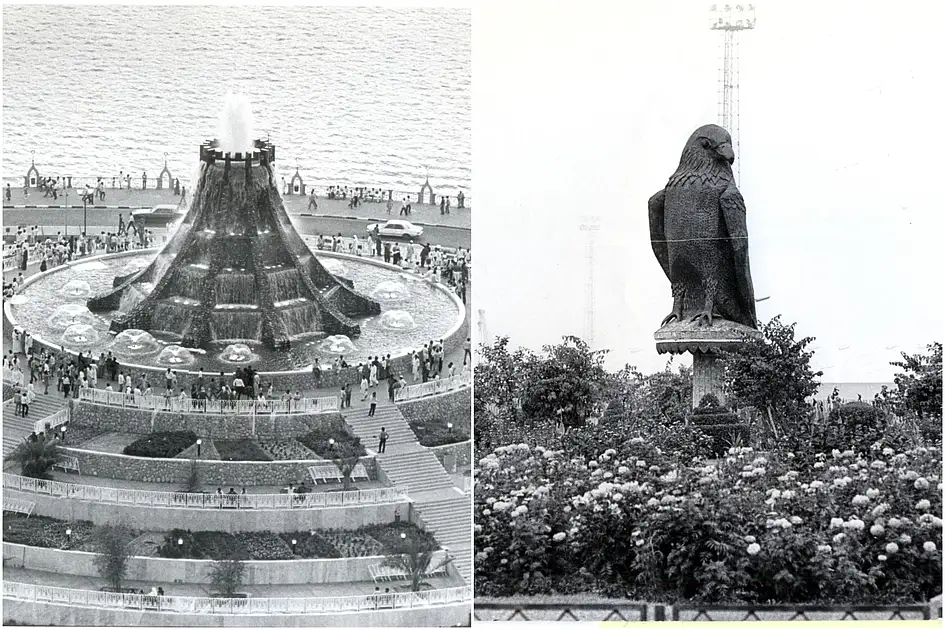
The UAE has always been a country shaped by change. From new roads and tunnels transforming familiar neighbourhoods to iconic UAE landmarks making way for what comes next, the sights that define the landscape are constantly evolving.
For many, seeing a familiar roundabout, mall or building change can bring a sense of nostalgia. But change is also part of the UAE’s story, a sign of a country that continues to grow, adapt, and look ahead.
Here’s a look at what has changed — and is changing — over the years:
Stay up to date with the latest news. Follow KT on WhatsApp Channels.
1. Mina Plaza in Abu Dhabi
For years, the Mina Plaza towers in Mina Zayed formed a striking part of Abu Dhabi’s waterfront skyline, with the four high-rises overlooking the capital’s historic port area.
In 2020, the towers were brought down in a controlled implosion that lasted just 10 seconds. The demolition marked a major step in the redevelopment of Mina Zayed, as the area was being transformed into a new tourism, commercial and residential destination.
Check out the photos below, showing before and during the demolition of the building in November 2020.

2. Volcano Fountain
Another Abu Dhabi landmark long-time residents may remember is the Volcano Fountain, a distinctive Corniche landmark built in the 1980s. Its tiered design and colourful evening lights made the cascading water look like lava flowing down a volcano, turning it into a popular meeting point and backdrop for family photographs.
The landmark was demolished in 2004 as part of the redevelopment and expansion of the Corniche, making way for new waterfront facilities and public spaces.
3. Metropolitan Hotel
When the Metropolitan Hotel opened its doors in 1979, the landscape around it looked very different, with much of Al Quoz still little more than open desert. For decades, it stood as one of Dubai’s early hotels before being demolished in 2012 to make way for the sprawling Al Habtoor City development.
4. Flame Monument Roundabout
Long before Dubai’s roads became the sprawling network they are today, the Flame Monument Roundabout offered arriving visitors a memorable first glimpse of the city. Its story began in 1969, when the original Fire Monument was built and its flame was lit by the late Sheikh Rashid bin Saeed Al Maktoum, then Ruler of Dubai.
In 1975, the monument was moved to a roundabout at the junction of Sharjah and Airport Roads as part of major road upgrades. For years, it stood along a route used by travellers arriving through Dubai’s then-new airport.
As the city grew and traffic volumes increased, the roundabout was eventually removed to make way for a more modern and efficient road network.
5. Strand Cinema
Long before Dubai’s modern multiplexes became part of everyday life, Strand Cinema was a familiar name for moviegoers in Bur Dubai. Opened in the 1970s, it became a popular destination for generations of residents and a fondly remembered part of the neighbourhood.
The cinema eventually closed around 2004 and was later demolished. The site went on to become home to Ansar Gallery in Karama, marking another chapter in the changing landscape of old Dubai.
6. Falcon Roundabout
For decades, the Falcon Roundabout was a familiar sight at the junction of Al Mina Road, Bank Street and Al Ghubaiba Road, with its distinctive golden falcon sculpture becoming a recognisable part of old Dubai.
The landmark, which dates back to the 1970s, was eventually removed as the area underwent major redevelopment to accommodate new road infrastructure, including the Al Shindagha Corridor and Infinity Bridge.
7. Al Amal Psychiatric Hospital
For decades, Al Amal Psychiatric Hospital stood along Al Wasl Road, with the original complex dating back to the 1980s. As Dubai’s Jumeirah area began to take on a new shape, the hospital was relocated to a purpose-built facility in Al Rowaiyah Third, Al Aweer, along Dubai-Hatta Road.
The new state-of-the-art complex officially opened in December 2016, while the original site was later cleared to make way for the modern City Walk retail and residential district.
8. Toyota Building
For decades, the Toyota Building has been part of the familiar Dubai skyline. Built in 1974, the early residential tower became instantly recognisable after its large Toyota sign was installed in 1981, turning it into a landmark for residents and motorists along Sheikh Zayed Road.
Now, after standing through decades of Dubai’s transformation, the Toyota Building is set to be demolished. There is currently no timeline for the demolition, while tenants are being asked to vacate the property.
9. Al Taawun Roundabout
Some landmarks have already disappeared, while others are simply being reshaped as the UAE continues to grow. Not every familiar place is making way for something entirely new, some are undergoing major transformations to meet the needs of a changing city.
Sheikh Dr Sultan bin Muhammad Al Qasimi, Supreme Council Member and Ruler of Sharjah, earlier announced the construction of a new double-lane underground tunnel connecting Sharjah to Dubai.
The project will require the temporary removal of the iconic Al Taawun roundabout monument. The landmark, however, is not disappearing for good — it will be rebuilt in its original location once the tunnel is completed.
For many who have watched the UAE over the years, these changes are another reminder of how quickly the country continues to evolve, with familiar places becoming part of the memories of one chapter as the next takes shape.