
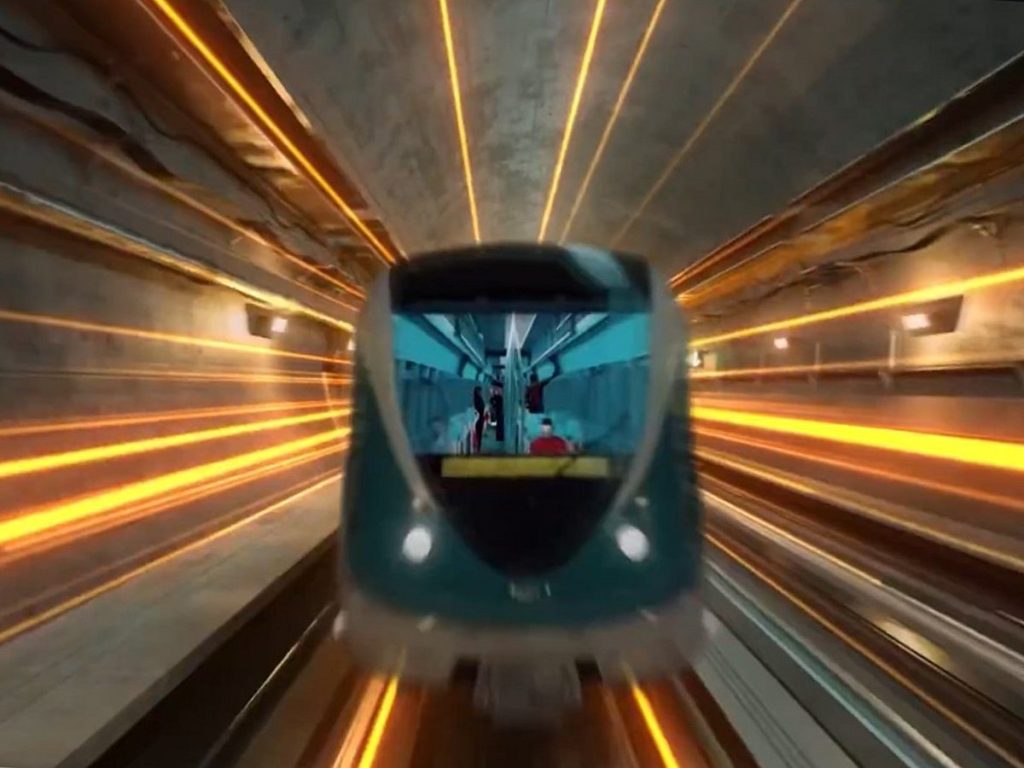
Here’s how three ways the Gold Line is expected to impact commuters and the wider network:
1. Targets congestion on the busiest corridor
According to the Roads and Transport Authority (RTA), the Gold Line is expected to ease congestion between BurJuman and ONPASSIVE by 23%, one of the most heavily used sections of the Red Line. The project is also projected to remove more than 40 million road journeys annually, while daily ridership on the new line is expected to reach 465,000 passengers by 2040.
Dubai Metro currently serves around one million passengers per day and accounts for about 40% of total public transport use. Since its launch in 2009, it has carried more than 2.8 billion passengers, including 295 million in 2025, marking a 7% increase compared to 2024. The existing network includes the Red Line (52km, 28 stations), Green Line (23km, 18 stations), and Route 2020 (15km, 7 stations), all of which connect key residential and commercial areas across the emirate.
2. Expected to deliver massive economic returns
Mattar Al Tayer, Director General of Dubai’s Roads and Transport Authority, said the Gold Line is projected to generate a 430% economic return over 20 years, driven by savings in travel time and fuel, along with reductions in road accident fatality rates and carbon emissions.
The RTA said these gains are expected to come from improved efficiency across the transport network, including reduced journey times, lower operating costs for commuters, and a shift away from private vehicle use. The integration with existing metro lines and Etihad Rail is also expected to strengthen Dubai’s position as a connected urban and economic hub.
3. Property values near stations to spike by 20%
The RTA said improved connectivity is expected to enhance the value and appeal of residential and mixed-use developments located near metro stations along the route. Areas served by the line are projected to see property values increase by up to 20%, reflecting demand for transit-linked communities.
This trend has been observed in previous metro expansions, where proximity to stations influenced both residential demand and commercial activity. The Gold Line corridor includes several growth areas such as JVC, Meydan, and Al Barsha South, where improved access is expected to support ongoing development and increase occupancy rates.

Justin is a personal finance author and seasoned business journalist with over a decade of experience. He makes it his mission to break down complex financial topics and make them clear, relatable, and relevant—helping everyday readers navigate today’s economy with confidence.
Before returning to his Middle Eastern roots, where he was born and raised, Justin worked as a Business Correspondent at Reuters, reporting on equities and economic trends across both the Middle East and Asia-Pacific regions.