
“China’s green energy push has not made coal disappear; it has changed coal’s role,” says Roc Shi, professor of energy and environmental economics at the University of Technology Sydney. “Coal is moving from being the engine of growth toward being a backstop for energy security and power system reliability.”
Coal has long been black gold for China’s economy, and remains indispensable to keeping the lights on for its population of 1.4 billion people.
In Shanxi, it’s also a lifeline for those with few other options.
“I’ll keep doing this job, because in our county, apart from work at the mines, it’s hard to find anything else. Otherwise you have to leave home and go somewhere else,” one coal miner tells the BBC.
He is an electrician and works above ground, which makes his job less risky than those who venture into the mines. When he heard about the disaster at Liushenyu, he says his “mind just went blank”.
Another worker says his only thought after the tragedy was: “Ordinary people’s lives are wretched.”
Yet even for an industry so fraught with perils and pitfalls, Chen, the miner who previously worked at Liushenyu, suggests there will always be desperate people willing to take their chances in the mines. As he points out, “miners all work voluntarily” to “feed their families”.
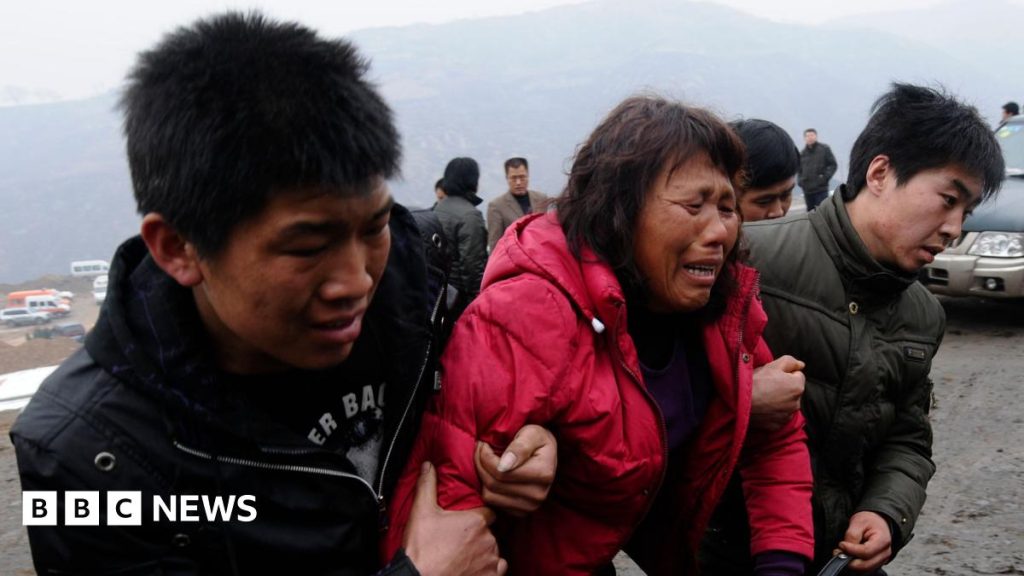
The Chinese government has vowed to hold those responsible for the Liushenyu incident to account. But for miners like Chen, it is “all too late”.
“The state attaches great importance to it. But can the miners who died come back to life?”