
My earliest memories are of Methodist Mission quarters in the diocese of Dilkusha, Fiji. Dilkusha, the name of a minor Indian principality, was mentioned in E.M. Forster’s classic novel A Passage to India: its name literally means “Heart’s Delight” in Hindi–Urdu.
Dilkusha was the Indian wing of the much larger Fijian diocese of Davuilevu (in Fiji’s Rewa province), site of the famous Baker Hall – named after Reverend Thomas Baker, an Australian Methodist evangelist who ended up in the pot of a disgruntled Fijian chief on July 20 1867.
We were told the reverend had humiliated the high chief in front of his people by touching his hair: a clear affront to Fijian aristocratic protocol. His spare boots, however, survived. They may be seen in the Fiji Museum.

Praveen Chandra
Dilkusha, the lesser sister diocese, had no such epic tale. But it quickly became a vibrant centre for Australian Christian evangelists, eager to convert Indian heathens. My father, grandson of an indentured labourer on his mother’s side, came here in the mid-1940s as a primary school teacher.
In the end my father, like Mr Biswas in V.S. Naipaul’s great novel on the plantation Indian diaspora, built a house of his own in the adjoining village of Waila (Realm of Floods). But when I remember my homeland, it is through the decade I spent in Dilkusha Methodist quarters, in the 1950s and early 1960s.
We were part of an enclosed community run by successive Methodist priests. Our joys were few: fishing or canoeing in the great Rewa River below, attending Sunday church services or walking across the paddock to the Boys’ Hostel.
Dilkusha’s history was rich – but for me, it was a drab world. And then magic occurred: we discovered Aladdin’s cave.
Across the river from us, in Nausori Town, a Gujarati Muslim entrepreneur built a cinema hall – Empire Theatre – and my life changed.

Praveen Chandra
Cinema was my world
I was five years old in 1950, a year short of six, when you could enter school and would be considered mature. Then, in 1951, Raj Kapoor’s film Awaara (The Vagabond), about geneticism and social determinism, came to Empire Theatre. Aged six, my life began to change.
I was never good at reading, unlike my Dilkusha mate Sarwesh (“Tomato”) Thakur, who was an exceptional reader. At school, we learned to read in English, but we spoke in Fiji Hindi at home. My father’s side of the family, however, were more comfortable with Fijian, or iTaukei – the language of the country’s First Nation peoples.
It mattered little that I wasn’t a good reader (or a reader at all). On Saturdays, I entered a world of my own. Over a period of time, I had a repertoire of films in me, thanks to the weekly allowance of a shilling from my parents and another shilling from my Dādī (grandmother), Nausori market’s foremost coconut-oil seller. (I have yet to work out why she did it for me alone when she had some 20 other grandchildren!)

Vijay Mishra
So cinema – and Empire Theatre – became my world. It was my literature, my culture, my dream world. It was my escape from failure to compete with my peers, and my school of drama – indeed, my language too. I look back and ask myself how I could have lived without the Saturday matinees – the 10am Hindi film and the 2.30pm Hollywood film.
I lived for Saturdays until I left Fiji aged 18, in 1964. In the Empire Theatre’s downstairs, one shilling (ten cents) seats, infested with khaṭmal (bed bugs), my fantasies were created.
While the films I watched there would connect me with the India I had never physically inhabited, the worlds they opened to me were like temples of desire: elusive and mysterious, as well as enchanting. This would change – but long after I had left Fiji, after I had become a film scholar, writing from distant, sometimes cold lands.

Felix Colatanavanua/Wikipedia, CC BY
Years later, writing from Perth, Australia, I watched Bollywood fantasies shift from their roots in melodrama to an endorsement of a nation ideologically defined as Hindu. This often involved demonising India’s non-Hindus, especially its age-old Muslim inhabitants. Under Prime Minister Narendra Modi, elected in 2014, this is also the nation’s political agenda.
It is strikingly displayed in the jingoistic espionage thrillers Dhurandhar I (The Stalwart, 2025) and Durandhar II (The Revenge, 2026) – the latter currently screening in Perth. These films, based on the adventures of an Indian spy in Karachi, Pakistan, define an Indian nation obsessed by the spectres of an enemy that is both another nation (Pakistan) and a “nation”, the Muslim minority within India.
Fantasies on film
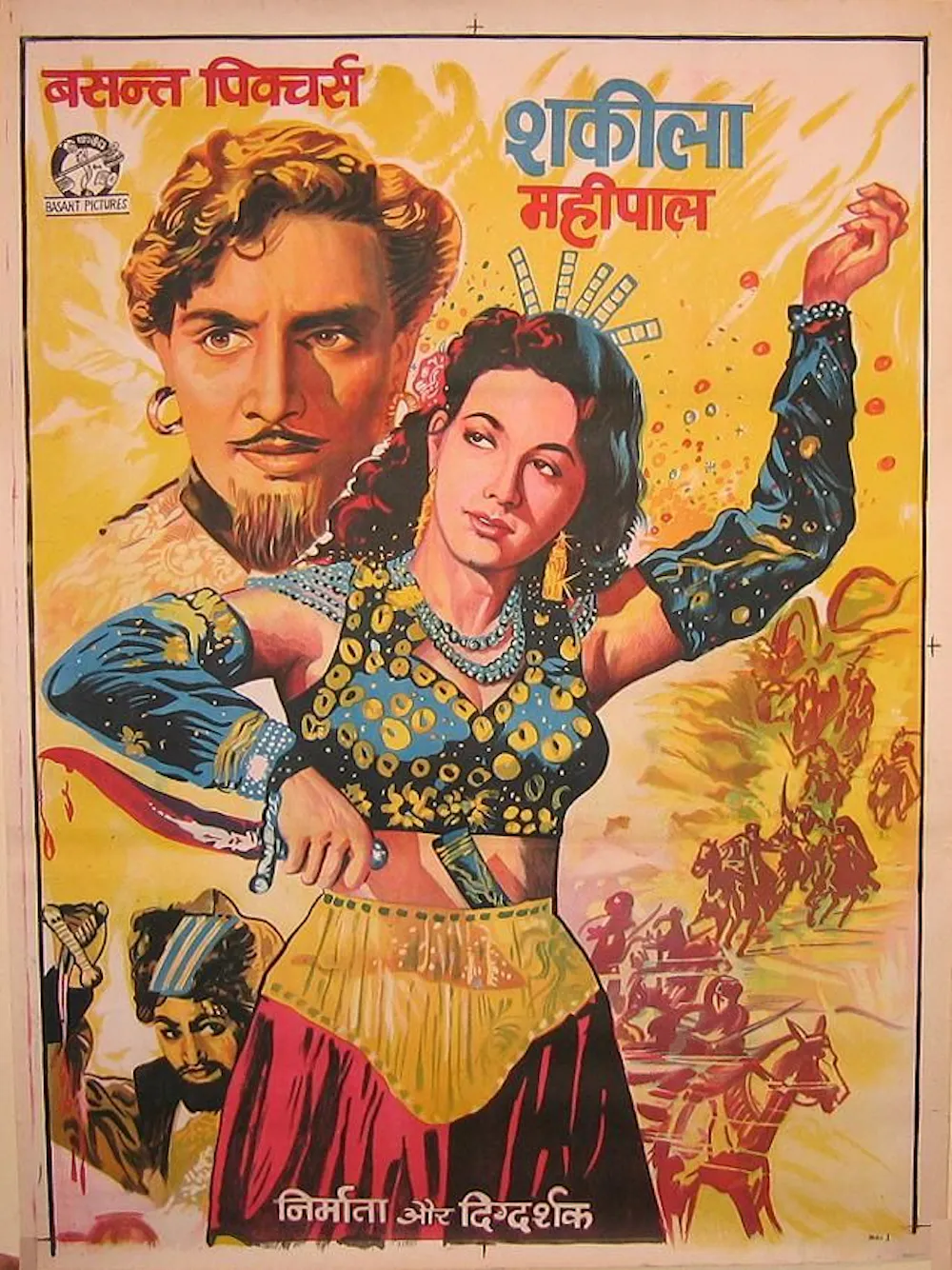
Back in 1950s Dilkusha, my Empire Theatre fantasies were of a different order. They began with the Arabian Nights. The defining film in that genre, Homi Wadia’s Alibaba and the Forty Thieves (1954), was properly introduced to me when my father’s friend, the cook at Dilkusha Boys’ Hostel, took me to watch it one Wednesday night in 1955.
IMDB
I knew the Alibaba tale, but Wadia’s rendition is a great piece of cinema. It captured Oriental fantasies way better than his Hollywood counterparts. I have seen it more than any other film – and consider it the finest version of an Arabian Nights tale ever.
I also loved sentimental songs from the films of Bollywood’s Golden Age, roughly spanning the films made between Deedar (Sight, 1951) and Gumrah (Infidelity, 1963) – and often marked by a final shot of the lonely hero walking away towards the horizon.
It was in Empire Theatre that I saw the original version of Aah (Sighs, 1953), actor and director Raj Kapoor’s homage to P.C. Barua’s foundational 1935 Bollywood film Devdas (based on a Bengali novel by Saratchandra Chatterjee). Sadly, soon after its initial release, the tragic ending of Aah was changed and the original is no longer available.
Barua’s film had celebrated the entry of the English melodramatic “Man of Feeling” – for whom sentiment and sensibility were allied with true virtue – into the Indian film aesthetic for the first time. (The concept goes back to 18th-century English writer Henry Mackenzie, whose novel The Man of Feeling named it.) The sentimental hero, unable to declare his love, takes to drinking and dies a lonely man.
Raj Kapoor’s Shree 420 (1955) transformed the Man of Feeling into a picaro figure around whom the tensions of tradition and modernity in capitalist India unfold. It also holds a special place, with its appealing cosmopolitanism noted as well in Salman Rushdie’s The Satanic Verses.

Praveen Chandra
In spite of Shree 420’s political message, melodrama remained the overarching genre of Bollywood films. Melodramatic sentimentality found its consummate expression in the films of Dilip Kumar, Bollywood’s finest actor. We sang our own songs of love and longing through films such as Deedar (Sight, 1951), Daag (Blemish, 1952) and Madhumati (1958).
But we also felt at home in his phenomenal banditry drama of peasant rebellion, Gunga Jamna (1961), because of Dilip Kumar’s extraordinary mastery of Avadhi, a Hindi dialect very close to Fiji Hindi. Although the film’s theme of agrarian rebelliousness against the landed gentry was not uncommon, we were attracted to its use of a language that returned the one repressed in us.
Bollywood and Indian nationalism
When I left for New Zealand in February 1964, my relationship with Empire Theatre came to an end. I never returned to that theatre, but it had already made me.
Some 35 years later, quite suddenly, in the subzero temperatures of Edmonton, Canada, where I was a professor of English at the University of Alberta, Wordsworth’s sense of place and spots of time resurfaced as the repressed “aching joys” of times past. The second millennium, too, was coming to an end.
Vijay Mishra
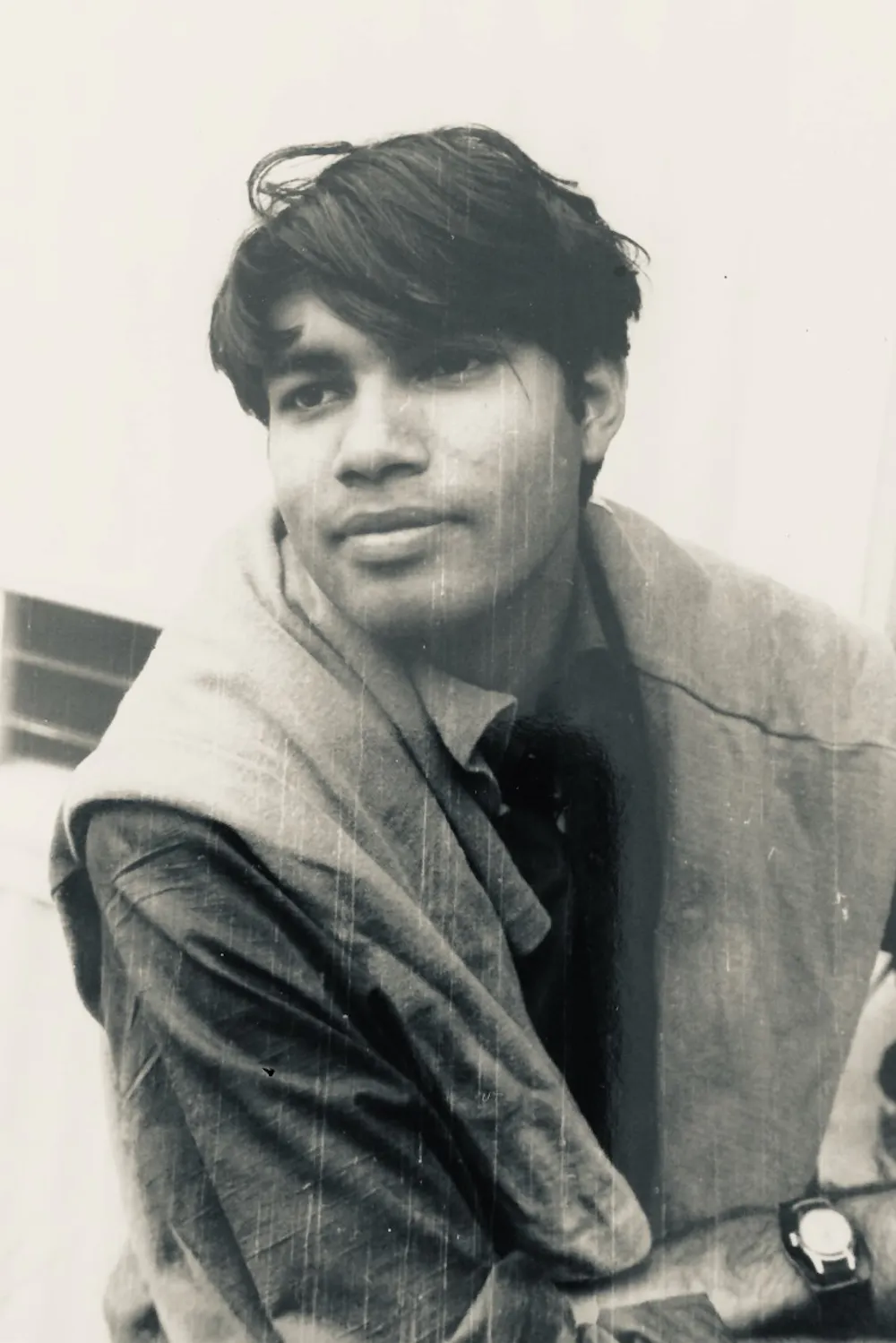
Sitting at my desk in an office overlooking the Saskatchewan River, I took out my Waterman fountain pen to write the first sentence of what would grow into a book, Bollywood Cinema: Temples of Desire (2002).
In that first sentence, written in longhand, I described cinemas, recalling films seen in Empire Theatre as “the temples of modern India”. While in the book I wrote the films remained temples of desire, Bollywood cinema this century embodies a different kind of desire: a desire where the nation itself is at the centre.
The founding fathers of independent India (notably Mahatma Gandhi and Jawaharlal Nehru, India’s first prime minister) established a multicultural India within a secular state. But under Modi and his Bhartiya Janata Party (the BJP), India has been discarding these credentials in favour of a religiously sanctioned nation state.
Bollywood’s new nationalism is a radical refashioning of Gandhi’s idea of the nation, which was based on the principle of denial. He promoted fasting, vegetarianism and non-violence as ways of “renouncing” the self – and hence, the nation.
Naturally, that idea produced cinema such as Guru Dutt’s classic Pyaasa (The Thirsty One, 1957) and Kaagaz Ke Phool (Paper Flowers, 1959), which positioned the hero as renouncer: the melodramatic sentimentalist whose life was one of sacrifice. The songs the hero sang embodied mourning and melancholy.
No foundational film captured that renouncer ideal better than the 1935 version of Devdas, in both Bengali and Hindi, about two lovers – Debdas and Parbati – divided by class. Essentially, it is a film about a Man of Feeling, for whom abjection and denial define love, with death the redemptive act.
Bollywood cinema endlessly reprised the narrative – finding in it, precisely if absurdly, the ideal of renouncement. The better known 1955 Bimal Roy version endorses this reading.

Wikipedia
But in the 21st century, the Man of Feeling’s sentimentality has been repackaged as glossy spectacle.
Sanjay Leela Bhansali’s 2002 remake of Devdas was the most expensive production in Indian film history at the time. Its extravagance pushes the old sentiments of the Man of Feeling aside, presenting the historical past as bold, eye-catching performance.
The operatic form of Bhansali’s Devdas, with its elaborate sets and costumes, and its overwhelming “item numbers” (where the song is carefully choreographed), emphasises a new Indian modernity and self-assuredness. The renouncement theme of earlier versions is less important.
It is as if, in the new tech-savvy India, one lives with the sentimental past only as spectacle. A decade later, under Modi, this would become a national mantra.

IMDB
Shammi Kapoor and desire
The cinema of desire and spectacle had existed last century, too (a point, regrettably, not made in the book I wrote) – but with a difference. In the 1960s, Bollywood superstar Shammi Kapoor began to redefine the Bollywood hero by embracing, through bodily gestures, the nation itself as the object of desire.
Wikipedia
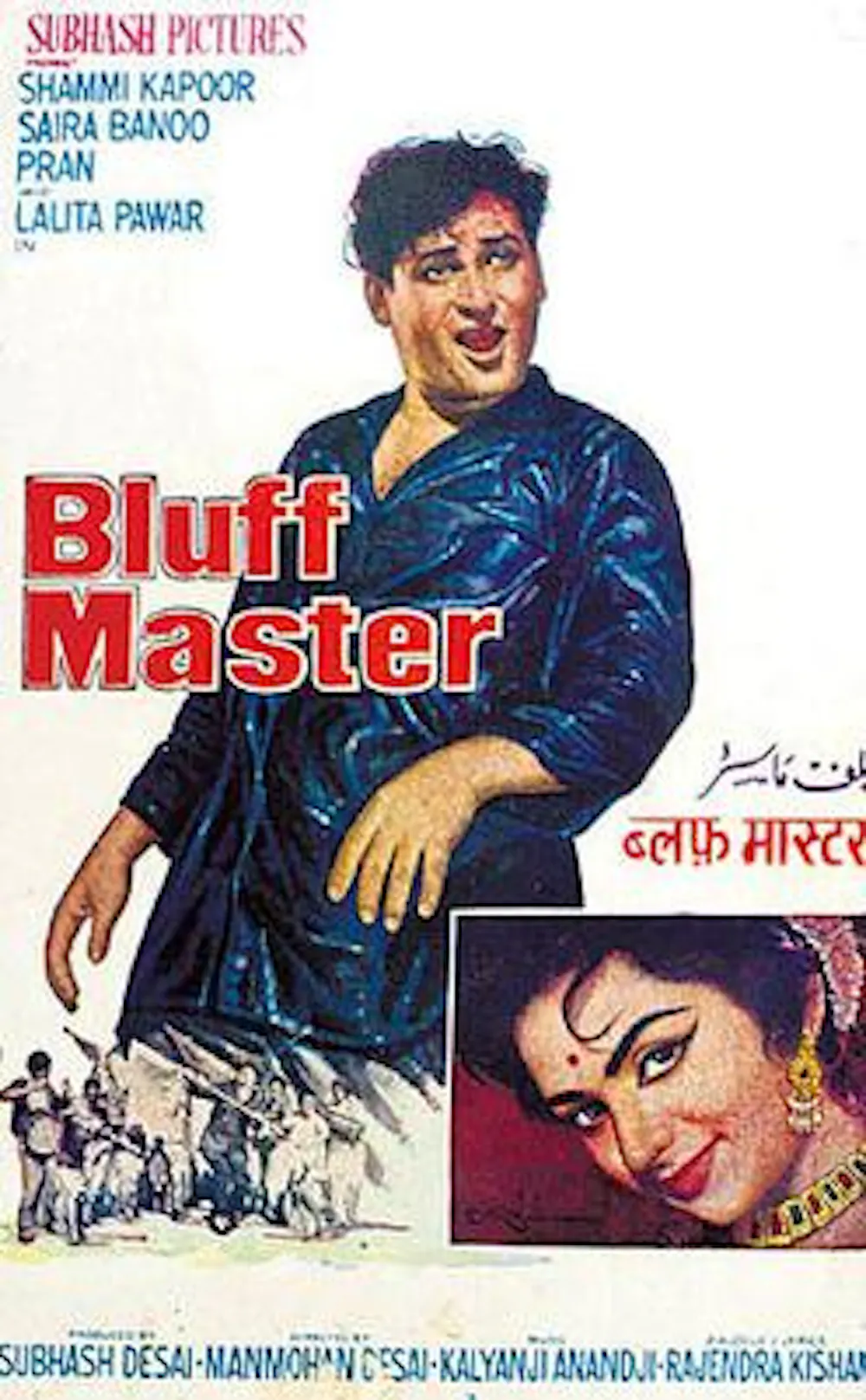
His homoerotic moves, with Elvis Presley-inspired pelvic gyrations and gestures, marked his signature style – notably in Junglee (1961), Bluff Master (or Wild, 1963) and Laat Saheb (Leisured Dandy, 1967).
In films such as these, the Indian nation suddenly came alive. Here was an actor who would show us how to enjoy a nation, to embrace it. He spoke through his body – and unlike the dominant sentimental heroes of melodrama, there were no songs of loss and love-longing. Desire had to be grasped and experienced.
Kapoor also made me and my Empire Theatre friends enjoy the Fijian nation state – which we felt was ours, as much as the First Nation people’s – after some 80 years of longing for a faraway nation, as descendants of indentured labourers.
Our forefathers and mothers had come to Fiji as the answer to its dwindling supply of labour. From May 1879 until 1917, 87 shiploads of Indians travelled to Fiji to work out their five years of indentured slavery – the girmit (from the word agreement). The first ship brought 463 immigrants. Conditions on the cane plantations were miserable and the Indians called that part of their lives narak (hell). Once the five years of servitude were over, the Indians were given a certificate of residence.
Only after another five years would they become eligible for a paid ticket back to India. But few returned.
After all those years, Shammi Kapoor, in a strange sort of a way – and belatedly – reminded us the Fijian nation state was ours too, and that we too could enjoy it, which we did as we guzzled large quantities of Fiji’s national drink, yaqona (kava).
In spite of this, we Fiji Indians – who had no other homeland – lost our nation in 1987, because we forgot the First Nation people (who also guzzled huge amounts of yaqona) enjoyed the same nation differently. That difference led to a military coup that pitted two incommensurable readings of the nation against one another: one ancestral or “nativist” and culturally rooted, the other a reading of the nation as an abstract democratic polity with equal rights.

Vijay Mishra
Hindu superheroes and spectacle
Indian cinema now is unabashedly – even uncritically – celebratory. The nation state itself functions as its revisionist historical backdrop. In many ways, Bollywood films now are a propagandist instrument of Modi’s Hindu India, as it repackages and reformulates its narratives into an Indian version of Marvel Comics.
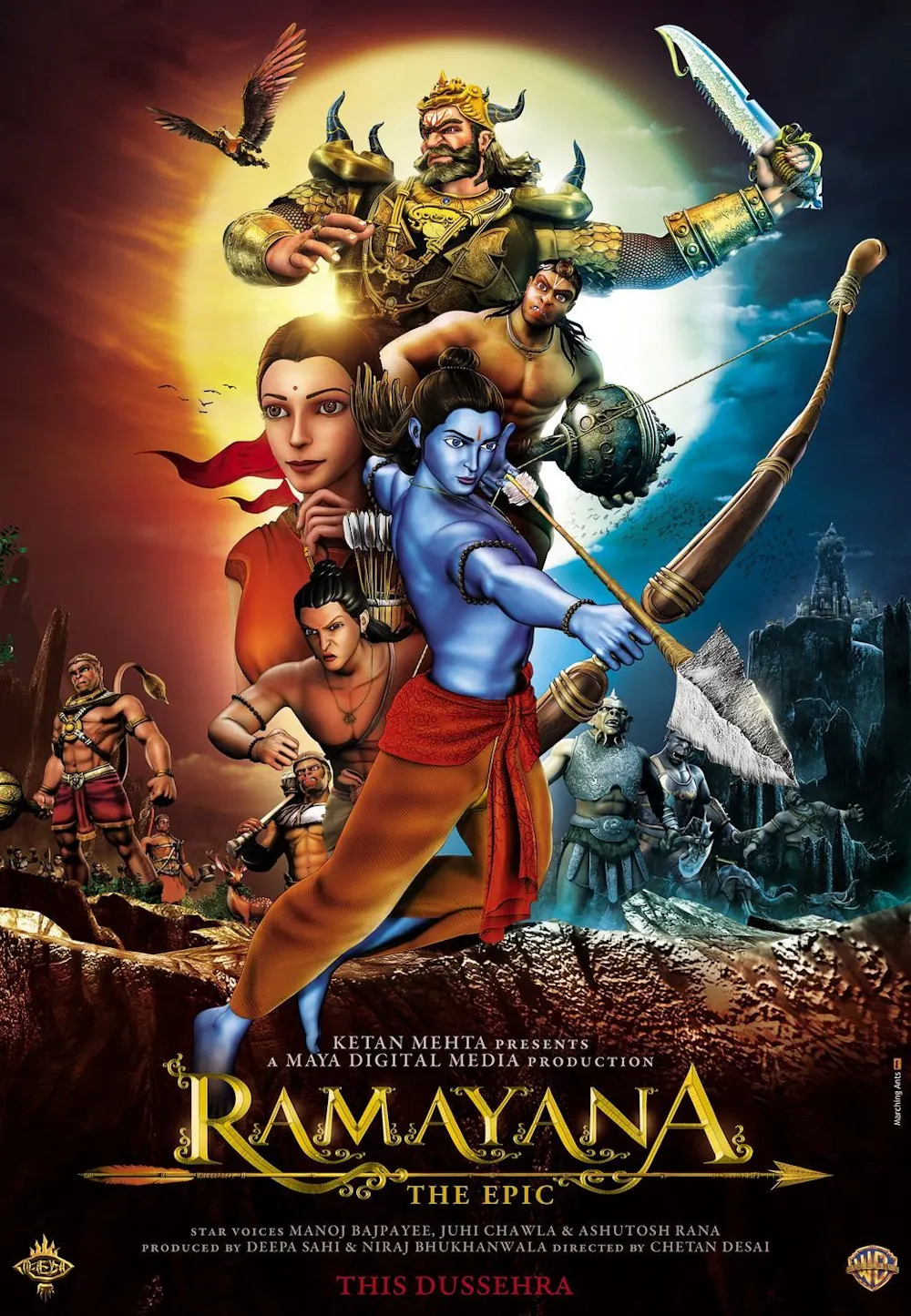
The superheroes re-enact the roles of Hindu gods – notably the great epic god Rama, whose life combines heroism with the possibilities of a new, paradise-like nation state. This is promised by Hindutva politics.
IMDB
Indeed, a new Bollywood film, Ramyana (2026), following Rama’s life story and clash with a demon king that will “determine the fate of gods and mortals”, will be released this year, directed by Nitesh Tiwari.
Hinduism does not have a unified system of personal and common law – and for almost two millennia, Hindus have not had an empire comparable to the Ottomans or the Mughals. In the absence of a sophisticated technology of writing and reproduction, historical documentation and its preservation of Hindu empires did not carry the same weight. Dates and detailed references to governance are simply not readily available.
Indian history, based on documentary evidence and accounts of witnesses, was thus principally written by the Muslim Mughals or British colonials. Bollywood steps in to fill the void, turning once again to fantasy linked to a revisionist version of Indian history.
Bhansali’s body of work traces Bollywood’s shift from last century’s mournful detachment from the nation – and, in the case of Shammi Kapoor, a subdued libidinal desire for it – to today’s nationalism. In Saawariya (The Beloved, 2007), Bhansali’s first major work after Devdas, the familiar theme of love-in-estrangement (key to Bollywood’s old sentimental melodramas) is depicted with a new colour and excitement.
Bhansali self-assuredly confronts Luchino Visconti’s 1957 Italian romantic melodrama Le Notti Bianche (White Nights) – based on Dostoevsky’s 1848 short story. Visconti’s manifestly fake scenery functioned like “stilled” photographs. Bhansali takes this up to create a dream scenario, its scenes dominated by blue and red colour palettes. The new India does not just imitate, but transforms the borrowed text.
Bhansali’s films also transform the sentimental Bollywood song – traditionally the cornerstone of Indian popular cinema – into a choreographed item number.
Song-in-performance once made concessions to Indian Muslim culture, through chaste Urdu poetry and the qawwali, or the dance of the courtesan – marks of cultural incorporation for a multicultural society. But as early as 1999, in films such as Hum Dil De Chuke Sanam (I Gave My Heart Away, My Love), that concession is gone, and the display of the body elicits a collective erotic or libidinal desire in viewers.
Now, Bollywood cinema characteristically doubles as both digital spectacle and sociopolitical statement.
Celebration and protests
This self-assuredness made its way into Bhansali’s other work, too. Goliyon Ki Raaslila: Ram-Leela (A Dance of Gunshots: Ram-Leela, 2013), set among two warring families in Bhansali’s home state of Gujarat, takes Shakespeare’s Romeo and Juliet as its source.
The tragic ending is maintained, but the spectacle is what truly impresses the viewer, with its lavish, computer-generated arrangements of props, scenery and backgrounds.
The film was originally titled Ram Leela. But in this new India, Hindu sensitivities dictate culture. Critics petitioned a Delhi court, saying “the movie hurt the religious sentiments of Hindus as it contains sex, violence and vulgarity”, according to the Times of India. There was also unease about the film’s depiction of Hindu history.
The staged performance of the final episode of the Rāmāyaṇa (the Ram-Leela) – which marks the triumph of Lord Rama over the demon kind Ravana – is presented as a grand spectacle without its redemptive religious meaning.
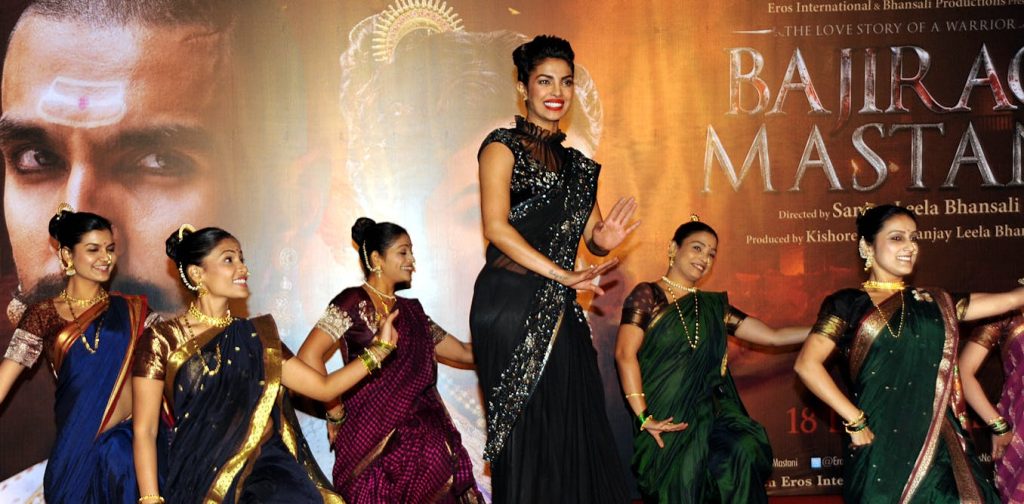
This cinematic style is maintained in Bajirao Mastani (2015), another tale of doomed love, this time set during the Maratha Empire’s ascendancy.
This empire (1674–1818), which originated with a Hindu warrior, is revered by Hindu nationalists today. The film follows the life and career of Bajirao Ballal, the peshwa, or chief minister, of the Maratha Empire from 1720 to 1740. His conquests contributed to the decay of the Muslim Mughal Empire.
Ram-Leela had a unified narrative, while Bajirao Mastani functions as a series of set pieces with item numbers. Yet in both films, a Hindutva cultural unity of the nation is endorsed.
This is true, too, when the source text is pure fantasy. Bhansali’s Padmavaat (2018) tells the story of a 14th-century Muslim emperor’s attack on a kingdom after forcefully abducting Hindu queen, Padmavati. Bhansali transformed 16th-century poet Malik Muhammad Jayasi’s epic poem Padmaavat (written in the Hindi dialect of Avadhi, as a grand Hindu epic of love) into a heroic romance in which the queen and other aristocratic Hindu woman would rather commit sati (self-immolation) than succumb to rape.
In 2018, this film too – essentially a romance – sparked controversy. There were months of protest across India, as well as a physical attack on the director and threats of violence against the lead actress. Again, fantasy is read as real, lived history.
For Bhansali, however, fealty to history (authentic or otherwise) is not the aim. His fealty is to the power of the moving image, which is then consumed uncritically as either Hindu triumphalism or Muslim depravity.

Ajit Solanki/AAP
Hindu propaganda on film
In some films, Bollywood nationalism has taken the form of uncompromised Hindu propaganda, including the outright demonisation of Muslims. Chhaava (The Lion Cub, 2025) is based on the despised Mughal emperor Aurangzeb, who ruled from 1658 to 1707 – and under him, the Mughal empire reached its greatest extent. In the film, he is depicted as nothing but a tyrannical ruler.
Director Vivek Agnihotri’s The Kashmir Files (2022) and The Bengal Files (2025) ostensibly deal with the ethnic cleansing of Hindus on the part of Muslims, but that history – and its portrayal – is contested. In Singapore, The Kashmir Files was banned for its “provocative and one-sided portrayal” of Muslims. In India, Modi praised it as reflecting the “truth”.
The exceptionally popular Dhurandhar franchise (The Stalwart, 2025, and The Revenge, 2026) “paints Pakistan as a lawless, almost barbaric land that’s pathologically hostile towards India”, according to critic Uday Battia. These films have been criticised for their “hyper-nationalist tone”, as well as historical inaccuracies.

IMDB
It’s not uncommon for Bollywood films to be criticised for historical inaccuracy.
Bollywood often chooses fantasy over history. It embraces the nation anew – but within its own conventions of an imagined world.
International Bollywood
Originally, Bollywood mostly meant Hindi–Urdu cinema produced in Bombay/Mumbai. Now, Indian commercial cinema in all its languages (especially Hindi, Tamil, Telegu and Punjabi) are effectively Bollywood.
Two remarkable examples explain the emergence of Bollywood as an international home of Indian popular cinema.
The Bahubali films, directed by S.S. Rajamouli, were made in Telegu and Tamil, and dubbed in Hindi and Malayalam. Together, Baahubali: The Beginning and (2015) and Baahubali 2: The Conclusion were the highest grossing film franchise in India until this year, collecting some US$376 million in total.
In the past, films made in Dravidian languages (non-Sanskrit or Prakrit based languages) were markedly different from the Hindi (Bollywood) films. Different cultural nuances were often highlighted, especially in their song and dance sequences. The generally Shaivite religious ideology (where the worship of Lord Shiva takes pride of place) gave them a different cultural complexion.
In the Bahubali films, however, a pan-Indian world view took over as they internalised Bollywood. The dubbed Hindi version was read as a Bollywood film in both India and the Indian diaspora.
The narrative of the films may have been pure fiction, but they were styled in the great pan-Indian epic tradition of the Mahābhārata, one of two Sanskrit epic poems of ancient India.
Rajamouli’s next film, RRR (2022), won the Oscar for Best Original Song in 2023. The song, Naatu Naatu, was performed (albeit with some non-Indian dancers) on the Oscars stage, to great aplomb.

Chris Pizzello/AAP
For RRR, the song was filmed at Mariinskyi Palace, the official residence of the president of Ukraine, before war broke out. The song’s item number has received around 69 million views on YouTube to date. Many commentators have referred to the song, the Oscar performance and the item number in the film itself, as “Bollywood”. In fact, the film originated in “Tollywood” – the name given to films in the Telegu language.
RRR, like Bahubali before it, is structured on the cinematic principles that define the “new” Bollywood. Thematically, it works on the desire of the nation as a Hindu entity to be embraced uncritically.
Rajamouli’s films, like many of Bhansali’s, have a militaristic temper, whether through a version of Bahubali’s reworking of the old myths, where gods enter the spirit of humans, or through RRR’s political rebellion, where revolutionaries against the British Empire are recast as modern-day Lord Ramas.
In extending and embracing a new Hindutva triumphalism, and internalising it, the new hegemony of Bollywood is complete. The joys of Empire Theatre are now no more than a receding memory.